Private Credit (프라이빗 크레딧 / 사모신용)
Private Credit (프라이빗 크레딧 / 사모신용)
최근 글로벌 금융 시장에서 가장 가파르게 성장하며 핵심 화두로 떠오른 '프라이빗 크레딧(Private Credit, 사모신용)'에 대해 설명해 드리겠습니다.
프라이빗 크레딧이란 은행과 같은 전통적인 예금 취급 금융기관을 거치지 않고, 사모펀드(PEF)나 특수 자산운용사 등 비은행 금융기관이 기업에게 직접 자금을 대출해주는 사모 형태의 신용 공급을 의미합니다. 과거 이 시장은 은행 대출 기준을 충족하지 못하는 중소기업이나 신용도가 낮은 기업들이 주로 이용하는 틈새시장에 불과했습니다.
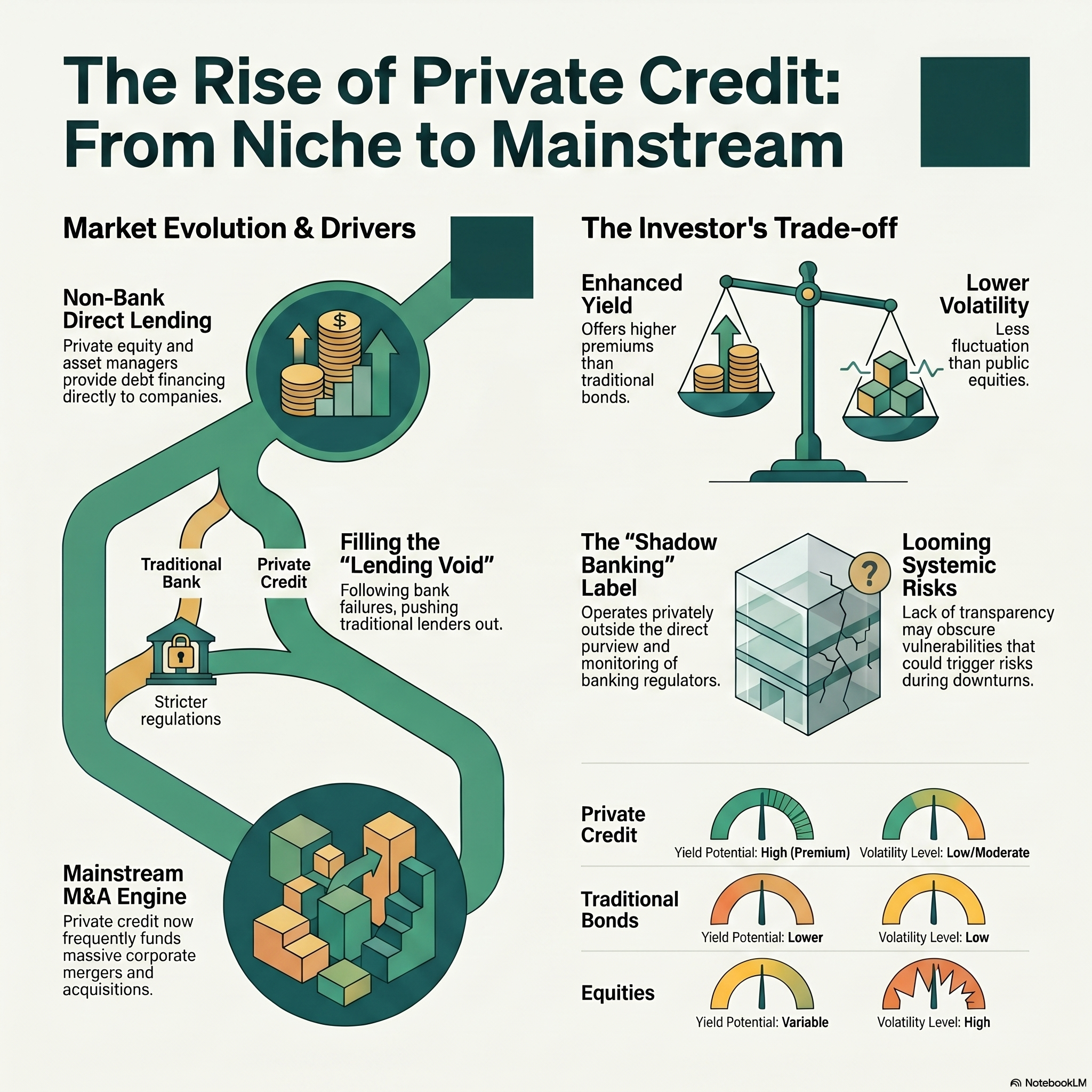
그러나 고금리 기조 장기화와 실리콘밸리은행(SVB) 파산 사태 이후 금융 당국의 규제가 강화되면서 전통 은행들의 대출 문턱이 크게 높아졌습니다. 그 빈자리를 프라이빗 크레딧이 빠르게 대체하며, 현재는 대규모 기업의 인수합병(M&A) 자금까지 책임지는 주류 금융 시장으로 급부상했습니다. 투자자 입장에서는 주식보다 변동성이 낮으면서도 전통 채권보다 높은 수익률(Premium)을 제공한다는 뚜렷한 장점이 있습니다. 다만, 금융 당국의 직접적인 규제와 감시망을 벗어나 있는 '그림자 금융(Shadow Banking)'의 일종이므로, 거시경제 악화 시 시스템적 리스크를 유발할 수 있다는 우려 역시 커지고 있습니다.
Private Credit
Let me explain "Private Credit," a term that currently represents one of the most rapidly growing and closely scrutinized sectors in the global financial markets.
Private credit refers to privately negotiated loans and debt financing provided to companies by non-bank financial institutions, such as private equity firms and specialized asset managers, completely bypassing traditional commercial banks. Historically, this was considered a niche market, primarily serving mid-market or lower-rated companies that were unable to secure conventional bank loans.
However, with the prolonged high-interest-rate environment and stricter banking regulations following recent regional bank failures, traditional lenders have significantly pulled back. Private credit has aggressively filled this void, surging into the financial mainstream to the point where it now frequently funds massive corporate mergers and acquisitions (M&A). For investors, it is highly attractive, offering yields that represent a significant premium over traditional bonds, while providing lower volatility than equities. Nevertheless, because these transactions occur privately and outside the direct purview of banking regulators, authorities are increasingly raising concerns. Many warn that private credit operates as a vast "shadow banking" system that could obscure underlying vulnerabilities and trigger systemic risks during an economic downturn.