-
Global News Update: May 15, 2026손 가는 대로/그냥 2026. 5. 15. 06:25728x90
Global News Update: May 15, 2026
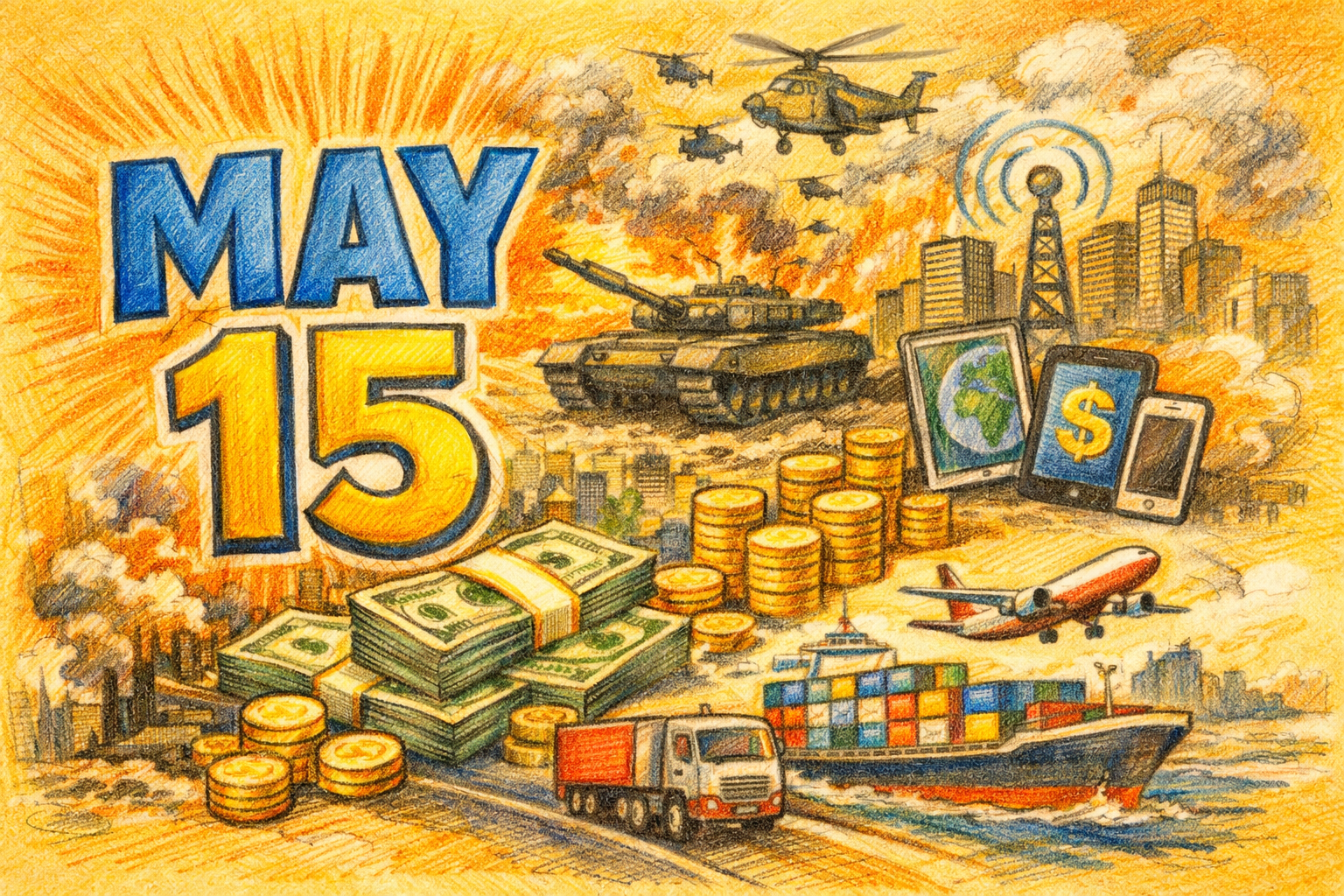
Good morning. It is Friday, May 15, 2026. This is your deep dive daily briefing. I am your anchor, delivering a comprehensive analysis of the pivotal events that have defined the last twenty-four hours.
We begin our broadcast on the world stage, where the strategic landscape of the Middle East has reached a moment of extreme kinetic and diplomatic tension. Overnight, the situation in the Strait of Hormuz has devolved into what naval analysts are calling a dual blockade. While the United States continues its strict naval embargo of Iranian ports to neutralize littoral defense threats, Tehran has countered with an asymmetrical closure of the Persian Gulf. As of this morning, vessel traffic through the strait has plummeted by over 90%, with only a handful of ships attempting the passage in the last sixteen hours. This comes as the White House confirms that American forces have begun providing direct escorts for merchant vessels to break the de facto shutdown, a move that has already led to at least three reported incidents of friction between United States naval assets and Iranian fast attack craft. The humanitarian and commercial toll is escalating, with over 1,500 vessels and 22,500 mariners currently estimated to be caught in the geopolitical crossfire.
Transitioning from the theater of conflict to the broader global economy, the shadow of this prolonged maritime closure is now being formally quantified by the International Monetary Fund. In an emergency update released in Washington, the IMF warned that the persistent disruptions are pushing the global economy closer to its adverse scenario. The Fund has revised its growth projection for 2026 down to 3.1%, while cautioning that if oil prices remain elevated and financial conditions tighten further, global growth could plumment to as low as 2.5%. A central concern highlighted in the report is the weaponization of maritime chokepoints and the resulting spike in commodity prices, particularly fertilizers. As the blockade restricts regional output, the IMF warns of a secondary shock to global food security, noting that historically, a surge in fertilizer costs translates into increased food prices and reduced yields within six months.
In the realm of finance, today marks a historic turning point in monetary policy as the United States Senate has officially confirmed Kevin Warsh as the next Chairman of the Federal Reserve. This development comes as Jerome Powell concludes his term as chair today, May 15. In a rare move for an outgoing chief, Powell has confirmed his intention to remain on the Federal Reserve Board as a governor to finish an ongoing internal investigation, a presence that will create a unique dynamic for the incoming Chairman. Warsh assumes leadership at a moment of unprecedented internal division, following recent policy meetings that saw the highest number of dissenting votes in over three decades. Institutional investors are bracing for a regime change, as Warsh has pledged to prioritize the restoration of price stability and a significant reduction in the Fed's massive balance sheet to correct market distortions fueled by the current wartime economy.
Turning our attention to the technology sector, the focus has shifted toward a massive infrastructure supercycle driven by the critical need for energy independent artificial intelligence. Industry reports released this morning indicate that the global energy consumption of data centers is projected to approach 1,050 terawatt hours by the end of 2026, which would effectively make the sector the fifth largest energy consumer in the world if it were a country. To mitigate the risks of a volatile global power grid, hyperscalers like Oracle and OpenAI are aggressively funding on site energy solutions. This week, the strategic focus has solidified around small modular reactors, with the United States Department of Energy announcing a pilot program to move three advanced reactor designs toward criticality by July. This strategic pivot highlights a new reality where energy security is now as critical to technological leadership as software innovation, as the industry attempts to decouple its digital infrastructure from geopolitical supply shocks.
Finally, we look at the logistics and supply chain networks that serve as the vital arteries of global commerce, which are now undergoing a permanent structural rewiring. Major maritime carriers, including Maersk, have officially reversed their gradual return to Suez Canal transits, reinstating the Cape of Good Hope as the default route for all affected trade lanes. This detour, which adds up to fourteen days to standard voyage times and absorbs roughly 7% of the global fleet's total capacity, is no longer being treated as a temporary workaround. Logistics professionals warn that the world has moved toward a fractured trade model where regional inventory buffers and security of supply are now prioritized over cost optimization. The era of the global just in time model has effectively ended, replaced by a high cost strategy of resilience that will likely persist well into the next decade as shippers seek to insulate world trade from unpredictable maritime chokepoints.
In summary, the global landscape is defined by an escalating maritime standoff in the Middle East that has triggered a significant downgrade in global growth and a historic leadership transition at the Federal Reserve. Technological innovation is pivoting toward energy independent infrastructure, while the global shipping industry has accepted a permanent, high cost rerouting of world trade around Africa.
Based on the current trajectory, I predict that the official takeover by Kevin Warsh as Fed Chair will serve as a definitive signal to the markets that the era of central bank accommodation is over. Even if a diplomatic breakthrough occurs in the Middle East, the structural inflation baked into the new regionalized logistics model and the massive capital redirection toward energy independent AI infrastructure will prevent a return to the low interest rate environment of the previous decade. We are entering a cycle where resilience and national security will consistently outweigh the efficiencies of the old globalized order for the remainder of 2026.
This content was created with the help of AI.https://tv.naver.com/v/99548726
세상 속에서
May 15, 2026
tv.naver.com
안녕히 주무셨습니까. 2026년 5월 15일 금요일입니다. 지난 24시간 동안 전 세계에서 발생한 주요 소식들을 심층적으로 전해드리는 일일 글로벌 브리핑입니다. 저는 오늘 진행을 맡은 앵커입니다.
먼저 국제 소식입니다. 중동의 전략적 지형이 극심한 군사적 및 외교적 긴장 국면에 접어들었습니다. 지난밤 호르무즈 해협 상황은 해군 분석가들이 이른바 이중 봉쇄라고 부르는 사태로 악화되었습니다. 미국이 이란 항구에 대해 엄격한 해상 봉쇄를 지속하는 가운데, 테헤란 당국은 페르시아만을 비대칭적으로 폐쇄하며 맞서고 있습니다. 오늘 아침 현재 해협을 통과하는 선박량은 90% 이상 급감했으며, 지난 16시간 동안 통과를 시도한 선박은 극소수에 불과합니다. 이런 가운데 백악관은 미군이 상선들에 대한 직접적인 호송을 시작했다고 확인했으며, 이 과정에서 미 해군 함정과 이란 고속정 간의 마찰 사례가 이미 최소 3건 보고되었습니다. 현재 약 1,500척의 선박과 22,500명의 선원들이 지정학적 대립의 한복판에 갇혀 상업적 마비 상태에 놓여 있는 것으로 추산됩니다.
분쟁의 현장에서 더 넓은 세계 경제 분야로 넘어가면, 해상 폐쇄의 장기화가 가져올 타격이 국제통화기금에 의해 공식적인 수치로 기록되고 있습니다. 워싱턴에서 발표된 긴급 보고서에서 IMF는 지속적인 물류 차질이 세계 경제를 최악의 시나리오로 몰아가고 있다고 경고했습니다. IMF는 올해 세계 성장률 전망치를 3.1%로 하향 조정하는 한편, 유가가 계속 오르고 금융 여건이 더욱 긴축될 경우 성장률이 2.5%까지 떨어질 수 있다고 내다봤습니다. 특히 보고서는 해상 요충지의 무기화와 그로 인한 비료 가격 폭등을 주요 우려 사항으로 꼽았습니다. 봉쇄로 인해 지역 생산이 제한됨에 따라 비료 비용 상승이 6개월 내에 식량 가격 인상과 수확량 감소로 이어져 전 세계 식량 안보에 2차 충격을 가할 수 있다고 경고했습니다.
금융 분야에서는 오늘 미국의 통화 정책 시대를 정의할 역사적인 전환점이 마련되었습니다. 미 상원은 케빈 워시를 차기 연방준비제도 의장으로 공식 인준했습니다. 이에 따라 제롬 파월 의장은 오늘 5월 15일부로 의장직 임기를 마칩니다. 특이하게도 파월 전 의장은 현재 진행 중인 내부 조사를 마무리하기 위해 연준 이사로 잔류하겠다는 의사를 밝혔으며, 이는 신임 의장에게 독특한 역학 관계를 형성할 것으로 보입니다. 워시 신임 의장은 30년 만에 가장 많은 반대 의견이 나왔던 분열된 연준을 물려받게 되었습니다. 그는 물가 안정 회복과 전시 경제 체제 아래 왜곡된 시장을 바로잡기 위한 대차대조표의 대폭 축소를 최우선 과제로 내세우며 강력한 체제 변화를 예고하고 있습니다.
기술 부문에서는 에너지 자립형 인공지능 구축을 위한 막대한 인프라 투자 사이클이 화두가 되고 있습니다. 오늘 아침 발표된 보고서에 따르면 전 세계 데이터 센터의 전력 소비량은 올해 말 1,050테라와트시에 달할 것으로 전망되는데, 이는 단일 국가로 치면 세계 5위의 에너지 소비국 수준입니다. 불안정한 글로벌 전력망 위험을 줄이기 위해 오라클과 오픈AI 같은 거대 기술 기업들은 현장 에너지 솔루션 확보에 공격적으로 나서고 있습니다. 이번 주에는 특히 소형 모듈형 원자로(SMR)가 핵심 전략으로 부상했으며, 미 에너지부는 7월까지 3개의 첨단 원자로 설계를 임계 상태로 진입시키기 위한 시범 프로그램을 발표했습니다. 이러한 변화는 기술 패권이 이제 소프트웨어 혁신만큼이나 에너지 안보에 달려 있음을 시사합니다.
마지막으로 글로벌 상거래의 동맥인 물류 및 공급망 네트워크 소식입니다. 머스크를 포함한 주요 해운사들은 수에즈 운하 통항 재개 계획을 공식적으로 철회하고, 아프리카 희망봉 우회 항로를 모든 관련 노선의 기본값으로 다시 확정했습니다. 운송 기간을 약 14일 연장시키고 전 세계 선복량의 7%를 잠식하는 이 우회 항로는 이제 일시적인 대책이 아닌 영구적인 구조적 변화로 간주되고 있습니다. 물류 전문가들은 세계 무역이 지역별 완충 재고와 공급의 안전을 비용 최적화보다 우선시하는 분절된 모델로 이동했다고 경고합니다. 글로벌 적기 생산 방식의 시대는 사실상 끝났으며, 지정학적 충격으로부터 무역을 보호하기 위해 향후 10년 이상 지속될 고비용의 회복력 강화 전략이 그 자리를 대신하고 있습니다.
요약하자면, 현재 글로벌 지형은 중동에서의 해상 대치 심화로 인해 성장률 전망이 하향 조정되고 연방준비제도가 역사적인 지도부 교체를 맞이한 상황으로 요약됩니다. 기술 혁신은 에너지 자립형 인프라를 향해 가속화되고 있으며, 글로벌 해운 업계는 아프리카 우회라는 고비용 구조를 영구적인 현실로 받아들이고 있습니다.
현재의 흐름으로 볼 때, 케빈 워시의 연준 의장 취임은 시장에 중앙은행의 완화적인 시대가 끝났음을 알리는 결정적인 신호가 될 것으로 예측됩니다. 중동에서 외교적 돌파구가 마련되더라도, 새로운 지역 물류 모델에 내재된 구조적 인플레이션과 에너지 자립형 AI 인프라를 향한 막대한 자본 이동은 지난 10년간의 저금리 환경으로의 복귀를 가로막을 것입니다. 우리는 2026년 남은 기간 동안 회복력과 국가 안보가 효율성보다 일관되게 중시되는 새로운 경제 사이클로 진입하고 있습니다.
이 콘텐츠는 AI의 도움을 받아 작성되었습니다.https://www.youtube.com/playlist?list=PLT29kw_Abnh1dEdLdoCEiSoA2NA0YXjQC
News
News
www.youtube.com
https://tv.naver.com/v/99548803?playlistNo=1022595
세상 속에서
May 15, 2026
tv.naver.com
 728x90
'손 가는 대로 > 그냥' 카테고리의 다른 글
오늘의 별자리 운세 (2026년 5월 15일) (0) 2026.05.15 12간지 오늘의 운세 (2026년 5월 14일 목요일) (0) 2026.05.14 오늘의 별자리 운세 (2026년 5월 14일) (0) 2026.05.14 Global News Update: May 14, 2026 (0) 2026.05.14 2026년 5월 13일 12간지별 상세 운세 (0) 2026.05.13