-
사모펀드 리포트 (2026년 기준)손 가는 대로/금융자산운용 2026. 5. 18. 20:51728x90
사모펀드 리포트 (2026년 기준)
1. Fundamental Architecture (기본 구조)
사모펀드(Private Equity, PE)의 종합적 정의
사모펀드는 공개 시장(주식 시장)에서 거래되지 않는 기업에 투자하거나, 상장 기업을 인수하여 상장 폐지(Take-private)한 후 기업 가치를 제고하여 수익을 창출하는 자산군입니다. 전통적인 주식이나 채권과 달리 유동성이 낮지만, 장기적인 관점에서 경영권 참여 및 구조조정을 통해 시장 평균을 상회하는 높은 수익률(Alpha)을 추구합니다.
핵심 메커니즘: GP와 LP, 그리고 수수료 구조
PE 펀드는 자금을 운용하는 무한책임사원(General Partner, GP)과 자금을 출자하는 유한책임사원(Limited Partner, LP) 간의 파트너십으로 운영됩니다. LP는 연기금, 국부펀드, 대학 기금 등 대형 기관 투자자들로 구성됩니다.
* 2/20 룰 (수수료 구조): 전통적으로 GP는 매년 약속된 총 운용 자산(AUM)의 2%를 관리 수수료(Management Fee)로 받으며, 펀드가 특정 기준 수익률(Hurdle Rate, 통상 8%)을 초과 달성할 경우 초과 수익의 20%를 성과보수(Carried Interest)로 수취합니다. 최근 대형 펀드의 경우 LP들의 협상력 강화로 관리 수수료가 1.5% 내외로 압축되는 경향이 있습니다.
주요 투자 전략 (Investment Strategies)
* 바이아웃 (Buyouts): 성숙한 기업의 지분 다수(경영권)를 인수하는 가장 대표적인 전략입니다. 레버리지(차입)를 활용하는 LBO(Leveraged Buyout)가 일반적입니다.
* 그로스 에쿼티 (Growth Equity): 수익 모델이 입증되고 빠르게 성장 중인 기업의 소수 지분에 투자하여 확장을 지원합니다.
* 벤처 캐피탈 (Venture Capital, VC): 초기 단계의 스타트업에 투자하여 높은 리스크를 감수하는 대신 기하급수적인 수익을 노립니다.
* 부실채권 및 특수 상황 (Distressed/Special Situations): 파산 위기나 재무적 어려움을 겪는 기업의 부채나 지분을 할인된 가격에 매입하여 구조조정 후 차익을 실현합니다.
* 세컨더리 (Secondaries): 기존 LP가 보유한 PE 펀드 지분을 만기 전에 다른 투자자에게 매각하는 시장으로, 최근 유동성 확보 차원에서 급성장하고 있습니다.
2. Current Market Landscape & Trends (2025-2026 현재 시장 환경 및 트렌드)
*(참고: 2026년 상반기 기준 정확한 최종 확정 통계는 실시간 집계 지연이 발생할 수 있으며, 본 분석은 Preqin, PitchBook, Bain & Company의 최신 시장 전망 및 2025년 말 데이터를 기반으로 합니다.)*
자금 조달, 드라이 파우더 및 딜 규모
* 드라이 파우더 (미소진 자금): Preqin 및 Bain의 데이터 분석에 따르면, 글로벌 사모시장 드라이 파우더는 3조 5천억 달러를 상회하며 사상 최고치 수준을 유지하고 있습니다. 이는 자본은 풍부하지만 매력적인 밸류에이션의 매물을 찾기 위한 GP들의 신중한 기조를 반영합니다.
* 펀드레이징 양극화: 메가 펀드(Mega-funds)로의 자금 쏠림 현상이 심화되었습니다. 실적이 검증된 대형 운용사(Apollo, Blackstone, KKR 등)는 목표 금액을 초과 달성하는 반면, 신생 운용사(First-time funds)는 자금 조달에 심각한 어려움을 겪고 있습니다.
엑시트(투자 회수) 환경과 과제
* 유동성 경색 (DPI 압박): LP들은 GP에게 투자금 대비 분배금(DPI, Distributions to Paid-In capital)을 요구하고 있으나, 전통적인 엑시트 창구인 IPO 시장은 2024년-2025년 금리 안정화 이후에도 여전히 선택적으로 열리고 있습니다.
* 대체 엑시트 전략의 부상: 이러한 환경을 극복하기 위해 GP들은 우량 자산을 계속 보유하기 위한 연속 펀드(Continuation Funds) 조성과, PE 간에 기업을 사고파는 Sponsor-to-Sponsor 거래(Secondary Buyouts)를 적극 활용하고 있습니다.
거시경제적 요인의 영향 (금리, 인플레이션)
* "Higher for Longer" 시대의 밸류에이션: 2010년대의 제로 금리 시대가 끝나고 구조적으로 높은 금리 환경이 고착화되었습니다. 차입 비용이 증가함에 따라 과거와 같은 재무적 레버리지 중심의 수익 창출(Financial Engineering)은 한계에 달했습니다.
* 가치 창출(Value Creation)의 중요성: 현재 GP들은 단순 멀티플 확장이 아닌, AI 도입, 공급망 최적화, 마진 개선 등 포트폴리오 기업의 실질적인 펀더멘털 개선을 통한 수익 창출에 집중하고 있습니다.
3. Emerging Themes & Regulatory Shifts (신흥 테마 및 규제 변화)
사모시장 리테일화 (Retailization)
* 개인 투자자의 사모시장 접근성이 전례 없이 확대되고 있습니다. 미국과 유럽을 중심으로 초고액자산가(HNWI)와 일반 부유층을 겨냥한 ELTIFs(유럽장기투자펀드), BDC(기업개발회사), 텐더 오퍼 펀드 등의 구조가 급성장하며 PE 운용사들의 새로운 자금줄이 되고 있습니다.
ESG 통합 및 AI의 포트폴리오 관리 도입
* AI 도입: 생성형 AI와 머신러닝은 딜 소싱(잠재 타겟 발굴), 실사(DD) 과정의 방대한 데이터 분석뿐만 아니라 포트폴리오 기업의 운영 효율성을 극대화하는 핵심 도구로 자리 잡았습니다.
* ESG의 진화: 미국의 경우 ESG에 대한 정치적 반발(Anti-ESG)이 일부 존재하지만, 유럽 시장에서는 규제(SFDR 등)로 인해 탄소 감축 및 투명성 확보가 필수 요건이 되었습니다. 이제 ESG는 단순한 컴플라이언스를 넘어 실질적인 기업 가치 훼손 리스크를 방어하는 수단으로 평가받습니다.
주요 규제 변화
* 미국 SEC(증권거래위원회)는 투명성 강화를 위해 사모펀드 자문업자 규정을 개정하려 시도했으나 지속적인 법적 도전에 직면해 있습니다. 한편, 글로벌 경쟁 당국(FTC 등)은 사모펀드의 연쇄적인 롤업(Roll-up) 인수 및 헬스케어 등 필수 산업 내 독점화 시도에 대해 반독점 심사를 유례없이 강화하고 있습니다.
(1) 본 게시글은 특정 종목에 대한 추천을 목적으로 하지 않으며, 투자 결정에 대한 책임은 전적으로 개인에게 있습니다.
(2) 본 게시글은 AI의 도움을 받아 작성되었습니다.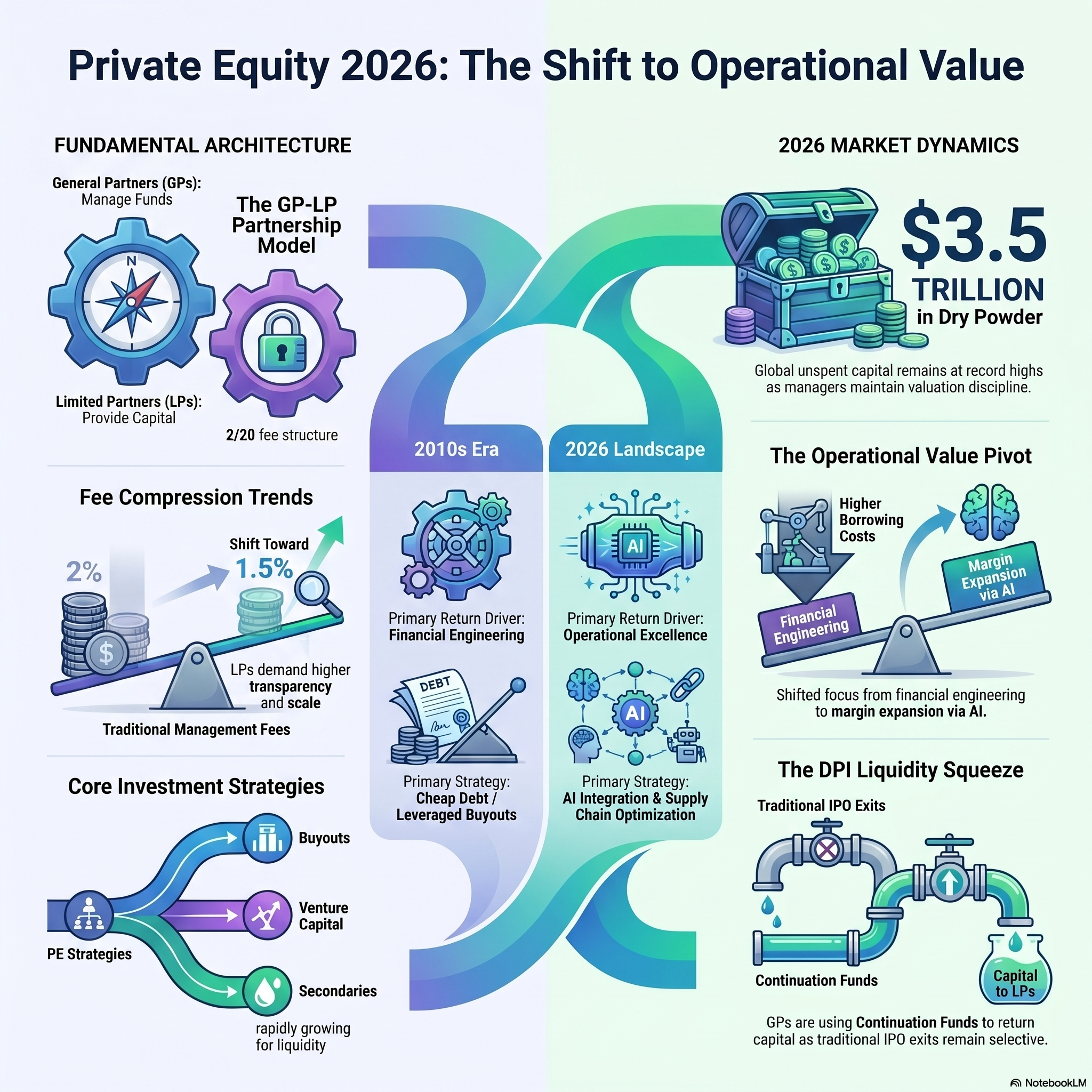
Private Equity Report (As of 2026)
1. Fundamental Architecture
Comprehensive Definition of Private Equity
Private Equity (PE) is an alternative investment class consisting of capital that is not listed on a public exchange. PE consists of funds and investors that directly invest in private companies, or that engage in buyouts of public companies, resulting in the delisting of public equity (take-private transactions). Illiquid by nature, PE seeks to generate market-beating returns (alpha) over a long time horizon through active ownership, strategic restructuring, and operational improvements.
Core Mechanics: GPs, LPs, and Fee Structures
PE funds operate on a partnership model between General Partners (GPs), who manage the fund and make investment decisions, and Limited Partners (LPs), such as pension funds, sovereign wealth funds, and endowments, who provide the capital.
* The 2/20 Rule: Historically, GPs charge a 2% annual management fee on committed capital (AUM) to cover operations, and a 20% performance fee (Carried Interest) on profits generated above a predefined hurdle rate (typically 8%). Recently, intense LP scrutiny and scale economics have compressed management fees closer to 1.5% for mega-funds.
Main Investment Strategies
* Buyouts: The flagship PE strategy. It involves acquiring a controlling stake in mature companies, often using significant debt—hence Leveraged Buyouts (LBOs).
* Growth Equity: Taking minority stakes in scaling companies that have proven business models and are looking for capital to expand operations or enter new markets.
* Venture Capital (VC): Investing in early-stage, high-growth-potential startups. It carries high risk but offers exponential return potential.
* Distressed / Special Situations: Purchasing the debt or equity of financially troubled companies at a steep discount, with the goal of restructuring the balance sheet and turning the company around.
* Secondaries: The buying and selling of pre-existing LP commitments to PE funds. This has grown rapidly as LPs seek liquidity before a fund's typical 10-year lifespan ends.
2. Current Market Landscape & Trends (2025-2026)
*(Note: Final verified 2026 data points are subject to institutional reporting lags. The following relies on the latest observable trajectories and late-2025 data from Preqin, PitchBook, and Bain & Company.)*
Fundraising, Dry Powder, and Deal Volumes
* Dry Powder: According to industry analysis by Bain and Preqin, global PE dry powder remains near record highs, surpassing $3.5 trillion. This reflects a disciplined approach by GPs who have ample capital but are cautious regarding asset valuations.
* Fundraising Polarization: Capital consolidation continues. Established mega-managers (e.g., Blackstone, Apollo, KKR) easily close multi-billion-dollar vehicles, while first-time fund managers face one of the most challenging fundraising environments in a decade.
Exit Environment and Solutions
* The DPI Squeeze: LPs are placing immense pressure on GPs to return capital (focusing on DPI: Distributions to Paid-In capital). However, traditional exits via IPOs remain selective and constrained, even after the stabilization of interest rates in 2024-2025.
* Alternative Liquidity: To engineer exits, GPs are heavily relying on Continuation Funds (transferring prize assets into new vehicles to hold them longer) and Sponsor-to-Sponsor transactions (selling portfolio companies to other PE firms).
Macroeconomic Impact (Interest Rates & Inflation)
* The "Higher for Longer" Era: The zero-interest-rate environment of the 2010s is definitively over. Higher borrowing costs mean that the traditional playbook of generating returns through financial engineering (debt paydown and multiple expansion) is severely restricted.
* Operational Value Creation: Consequently, GPs must rely on genuine operational improvements—such as margin expansion, supply chain optimization, and technological upgrades—to drive returns.
3. Emerging Themes & Regulatory Shifts
Retailization (Democratization of Private Markets)
* The industry is shifting its focus toward High Net Worth Individuals (HNWIs) and mass-affluent investors. Vehicles such as European Long-Term Investment Funds (ELTIFs), Business Development Companies (BDCs), and registered interval funds in the US are unlocking massive pools of private wealth for PE firms.
ESG Integration and AI in Portfolio Management
* AI Adoption: Generative AI and machine learning have moved past the hype phase. GPs now utilize AI for advanced deal sourcing, automated due diligence, and most importantly, driving efficiency within portfolio companies' operations.
* ESG Evolution: While the US market has seen some political backlash against ESG mandates, European regulations (like SFDR) maintain strict compliance. Globally, top-tier GPs treat ESG not just as a compliance check, but as a risk-mitigation tool that directly impacts asset valuations at exit.
Key Regulatory Changes
* The regulatory environment is tightening. While the US SEC faced legal pushback over its sweeping private fund adviser rules in 2024/2025, antitrust scrutiny remains incredibly strict globally. Agencies like the FTC are specifically targeting PE roll-up strategies (serial acquisitions) and scrutinizing PE involvement in sensitive sectors like healthcare.
(1) This article is not intended to recommend any specific stock, and individuals are solely responsible for their own investment decisions.
(2) This article was written with the assistance of AI.728x90'손 가는 대로 > 금융자산운용' 카테고리의 다른 글
Private Fund vs ETF (0) 2026.05.19 신용 시장 동향 (0) 2026.05.18 ISM 제조업 구매관리자지수 (PMI) (0) 2026.04.30 JEPI (JPMorgan Equity Premium Income ETF) (0) 2026.04.29 개인소비지출(PCE) 물가지수 (0) 2026.04.29