-
2026년 하반기 한국 태양광 시장 전망손 가는 대로/금융자산운용 2026. 6. 25. 07:57728x90
2026년 하반기 국내 태양광 시장의 주요 흐름과 핵심 변수를 브리핑해 드리겠습니다. 현재 국내 시장은 단순한 '양적 회복'의 단계를 지나, 제도적 안착과 대기업 중심의 수요 견인으로 인해 '구조적 체질 전환'을 맞이하고 있습니다.
2026년 하반기 한국 태양광 전망.docx2.85MB
2026년 하반기 한국 태양광 시장 전망
1. '회복'을 넘어선 '제도적 전환'의 본격화
2026년 하반기는 제11차 전력수급기본계획의 구체적인 로드맵과 신재생에너지 공급의무화(RPS) 제도의 의무 비율 상향 조정이 시장에 본격적으로 투영되는 시기입니다.
* 경매 제도의 고도화: 과거 소규모 현물 시장 중심에서 탈피하여, '효율성'과 '중앙 집중화'를 신호로 하는 대형 경쟁 입찰 중심의 장기 계약 시장으로 빠르게 재편되고 있습니다.
* 이격거리 규제 완화: 지자체별로 파편화되어 성장을 가로막던 이격거리 규제(도로나 주거지로부터 일정 거리 이상 떨어져야 하는 규제)에 대해 정부 차원의 표준 가이드라인이 정착되면서, 그동안 묶여 있던 대기 수요가 하반기부터 순차적으로 해소될 전망입니다.
2. 기업 RE100 및 PPA(전력구매계약) 시장의 폭발적 성장
하반기 시장을 실질적으로 주도하는 가장 큰 손은 수출 중심의 대기업들입니다. 반도체, 배터리 등 글로벌 공급망의 RE100(재생에너지 100% 사용) 압박이 거세짐에 따라 기업들의 장기 PPA 수요가 급증하고 있습니다.
* 국내 대기업 계열사들의 RE100 이행을 위한 대규모 태양광 프로젝트 수주 및 지분 투자가 하반기에 집중되어 있습니다.
* 이에 따라, 발전 사업자 입장에서는 SMP(계통한계가격)나 REC(공급인증서)의 단기 변동성에 노출되는 현물 시장보다, 대기업과의 장기 고정가격 계약(PPA)을 선호하는 경향이 뚜렷해질 것입니다.
3. 계통 제약과 '태양광+ESS' 연계형 모델의 부상
호남 및 제주 등 일부 지역의 전력망 포화로 인한 출력제어(Curtailment, 발전량을 강제로 줄이는 조치) 리스크는 올해 하반기에도 가장 큰 리스크 요인입니다.
* ESS(에너지저장장치)의 반등: 이를 극복하기 위해 정부는 출력제어 정산금 제도를 정착시키는 동시에, 태양광과 연계된 ESS 설치를 강력하게 유도하고 있습니다. 화재 이슈로 침체되었던 국내 ESS 시장이 올해 하반기를 기점으로 본격적인 반등을 보일 것입니다.
* AI 기반 스마트 O&M: 발전 효율을 실시간으로 관리하고 전력 공급을 예측하는 AI 및 데이터 기반의 O&M(유지보수) 서비스가 하반기 시장의 새로운 고부가가치 비즈니스로 자리 잡고 있습니다.
4. 공급망 리스크와 국산 생태계의 과제
글로벌 폴리실리콘 과잉 공급 여파로 중국산 TOPCon 등 고효율 모듈의 가격이 지속적으로 낮아지면서, 개발사들의 LCOE(균등화발전비용) 부담은 줄어들었습니다.
* 그러나 이는 국내 셀·인버터 제조사들에게는 여전히 거센 단가 압박으로 작용하고 있습니다.
* 하반기 정부의 국내 공급망 강화 보완책이 어떻게 작동하느냐에 따라 국산 기자재의 점유율 방어 여부가 결정될 것입니다.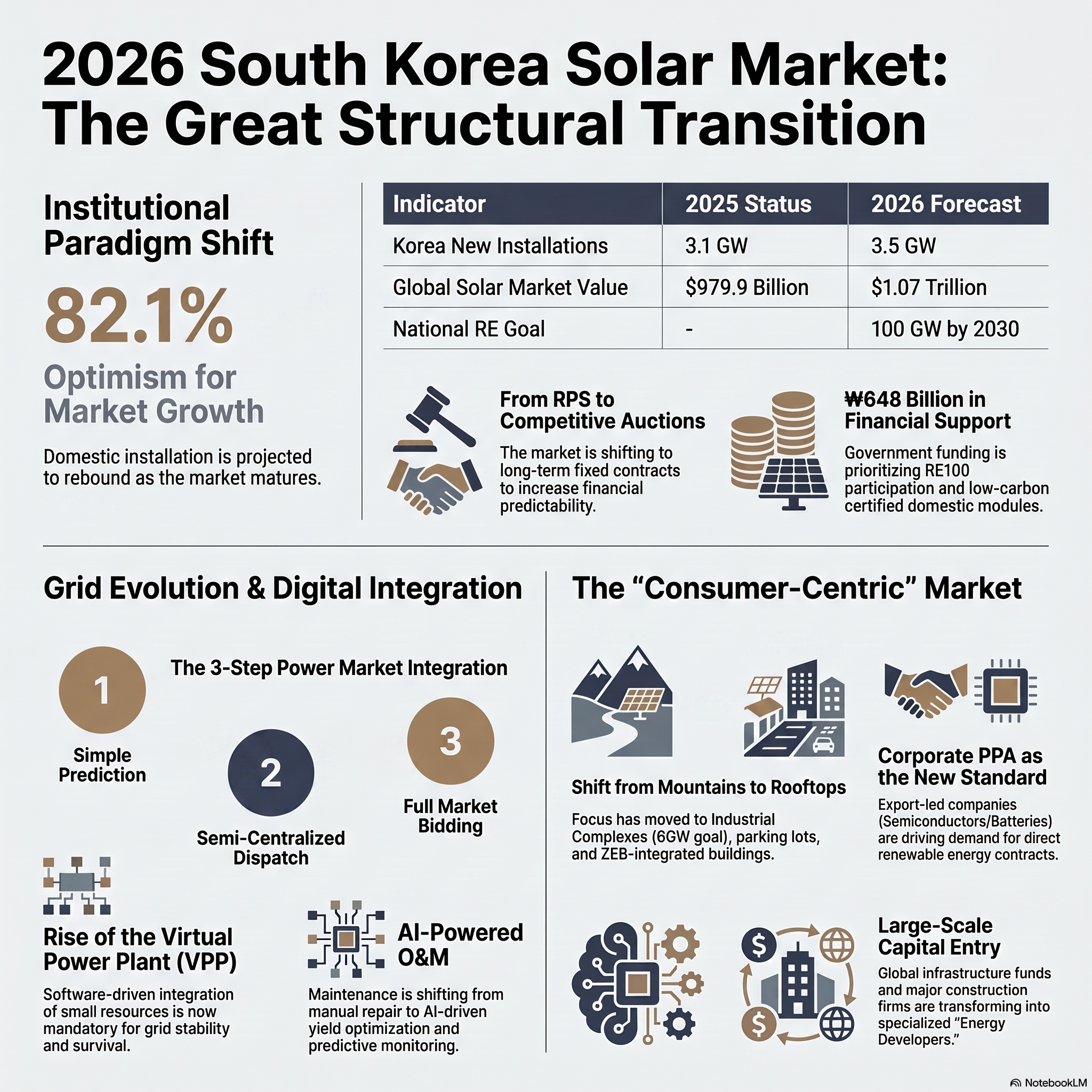
Outlook for the South Korean Solar Market in H2 2026
Moving into the second half of 2026, the South Korean solar energy market is shifting from volume-driven recovery to a highly structured, institutional transition.
1. Transitioning into an Institutionalized Market
The market in H2 2026 is heavily shaped by the execution of the 11th Basic Plan for Electricity Supply and Demand and stiffer Renewable Portfolio Standard (RPS) mandates.
* Shift to Competitive Tenders: The era of relying on small-scale spot market sales is rapidly waning. The market is consolidating around utility-scale, long-term competitive bidding systems that prioritize system efficiency and grid compliance.
* Regulatory Relief on Setback Distances: The federal standardization of "solar-distancing" (setback) regulations—which previously suffered from erratic local government ordinances—is clearing project pipelines that were stuck in permitting bottlenecks.
2. Corporate RE100 and PPA Boom as Primary Drivers
The most influential catalyst this half is corporate urgency from exporting sectors like semiconductors and EV batteries. Sourcing renewable energy has officially crossed over from a corporate social responsibility (CSR) goal to a strict condition for supply chain survival.
* Large-scale private Power Purchase Agreements (PPAs) are accelerating as conglomerates lock in long-term contracts to meet strict global RE100 deadlines.
* Consequently, developers are increasingly bypassing the volatile spot market—where System Marginal Prices (SMP) and Renewable Energy Certificates (REC) are stabilizing lower—in favor of predictable, corporate-backed fixed-price off-take agreements.
3. Grid Constraints Igniting the ESS and Smart O&M Sectors
Grid curtailment risks—particularly in high-concentration zones like the Jeolla and Jeju provinces—remain the steepest technical hurdle for the latter half of the year.
* The Renaissance of ESS: To mitigate output controls, the market is aggressively deploying co-located Energy Storage Systems (ESS). Driven by regulatory incentives and updated safety standards, the domestic battery storage segment is seeing a massive resurgence after years of stagnation.
* AI-Driven O&M: Operational focus is turning toward maximizing yield via data. AI-powered Operations and Maintenance (O&M) platforms that predict generation and manage real-time grid integration are becoming standard industry requirements.
4. Supply Chain Dynamics: LCOE Reduction vs. Domestic Protection
The prolonged global oversupply of polysilicon keeps the pricing of imported high-efficiency modules (such as TOPCon) highly competitive.
* While this aggressively lowers the Levelized Cost of Electricity (LCOE) for project developers, it exerts severe margin compression on domestic South Korean cell and inverter manufacturers.
* The competitiveness of the remaining domestic manufacturing ecosystem for the rest of 2026 depends heavily on upcoming government policy implementations aimed at securing energy-supply chain security.728x90'손 가는 대로 > 금융자산운용' 카테고리의 다른 글
염해 농지 태양광 발전 (0) 2026.06.25 스트링 인버터(String Inverter)와 센트럴 인버터(Central Inverter) (0) 2026.06.25 폴로에너브릿지 주식회사 (Polo Enerbridge Co., Ltd.) (0) 2026.06.24 국내 태양광 투자 분석 및 시장 현황 (0) 2026.06.23 장주기 에너지 저장 장치 (LDES, Long-Duration Energy Storage) (0) 2026.06.18