-
아마테라스 오미카미 (天照大御神)손 가는 대로/그냥 2026. 7. 25. 22:32728x90
아마테라스 오미카미 (天照大御神)
일본 신화에서 가장 중요하고 널리 알려진 신, 아마테라스 오미카미(天照大御神)에 대해 자세히 설명해 드리겠습니다. 아마테라스는 태양과 우주를 관장하는 여신으로, 일본 고유의 신앙인 신토(神道)에서 최고신으로 여겨집니다.
🇯🇵 아마테라스: 태양과 우주의 여신
1. 탄생의 배경
아마테라스의 탄생은 창조신인 '이자나기'와 관련이 있습니다. 이자나기가 죽음의 세계(황천)에서 도망쳐 나와 자신의 몸을 씻으며 부정을 떨쳐내는 의식을 치를 때 태어났습니다.
탄생 과정: 이자나기가 왼쪽 눈을 씻을 때 아마테라스가 태어났습니다.
형제들: 오른쪽 눈을 씻을 때는 달의 신 '츠쿠요미'가, 코를 씻을 때는 바다와 폭풍의 신 '스사노오'가 태어났습니다. 이자나기는 아마테라스에게 신들이 사는 세계인 '타카마가하라(高天原)'를 다스리라고 명합니다.
2. 천상의 바위굴(아마노이와토, 天の岩戸) 신화
아마테라스와 관련된 가장 유명한 일화는 그녀가 바위 동굴에 숨어버린 사건입니다.
사건의 발단: 동생인 스사노오가 타카마가하라로 올라와 논밭을 망치고 신성한 베틀방에 가죽을 벗긴 말을 던지는 등 심한 난동을 부립니다.
태양의 상실: 이에 큰 충격과 슬픔을 느낀 아마테라스는 '아마노이와토'라는 바위 동굴로 들어가 버립니다. 태양의 신이 숨어버리자 세상은 빛을 잃고 짙은 어둠에 휩싸이며 온갖 재앙이 발생합니다.
해결책: 당황한 여덟 백만의 신들이 동굴 앞에 모여 계책을 짭니다. 그들은 거울(야타노카가미)과 곡옥(야사카니노마가타마)을 나무에 걸어두고, 연예의 여신인 '아메노우즈메'가 춤을 추게 합니다. 신들의 큰 웃음소리에 호기심을 느낀 아마테라스가 밖을 살짝 내다볼 때, 거울에 비친 자신의 눈부신 모습을 새로운 태양신으로 착각합니다. 그 틈을 타 힘이 센 신이 그녀를 밖으로 끌어내어 세상은 다시 빛을 되찾게 됩니다.
3. 황실과의 연결고리 및 삼종신기
일본의 역사와 신화는 밀접하게 연결되어 있으며, 아마테라스는 일본 천황가의 직계 조상으로 묘사됩니다.
천손강림(天孫降臨): 아마테라스는 자신의 손자인 '니니기'를 지상 세계(일본)로 내려보내 세상을 다스리게 합니다.
삼종신기(三種の神器): 이때 아마테라스는 니니기에게 세 가지 신성한 보물을 하사합니다. 앞서 동굴 신화에 등장했던 거울(지혜)과 곡옥(자비), 그리고 스사노오가 괴물 야마타노오로치를 물리치고 얻은 검(용기)입니다. 이 세 가지 보물은 오늘날까지도 일본 천황의 정통성을 상징합니다.
4. 다양한 문화권 자료를 통한 시각
일본어 문헌 (고사기, 일본서기): 이 두 역사서는 아마테라스를 일본의 절대적인 국가 수호신이자 황조신(황실의 조상신)으로 확립하는 데 핵심적인 역할을 합니다.
영어권 인류학/신화학 자료: 서양 학자들은 보통 태양신이 남성(예: 그리스의 아폴론, 이집트의 라)인 경우가 많은데 반해, 아마테라스가 '여성 최고 태양신'이라는 점에 큰 흥미를 가집니다. 이는 고대 일본의 모계 사회적 특성이나 무녀(샤먼)의 권력이 반영된 것으로 해석하기도 합니다.
중국어 문헌 (천조대신, 天照大神): 중국의 신화학 연구에서는 아마테라스를 중국의 태양 여신인 '희화(羲和)'와 비교하기도 합니다. 다만, 희화가 태양들의 어머니로서의 역할에 그치는 반면, 아마테라스(천조대신)는 그 자체로 통치자이자 우주적 질서를 의미한다는 점에서 차이를 보인다고 분석합니다.
한국의 시각: 한국 학계에서는 한반도의 난생 신화나 태양 숭배 사상(예: 연오랑과 세오녀)과 일본의 태양신 신앙이 고대에 어떻게 교류하고 영향을 주고받았는지를 비교 신화학적 관점에서 흥미롭게 연구하고 있습니다.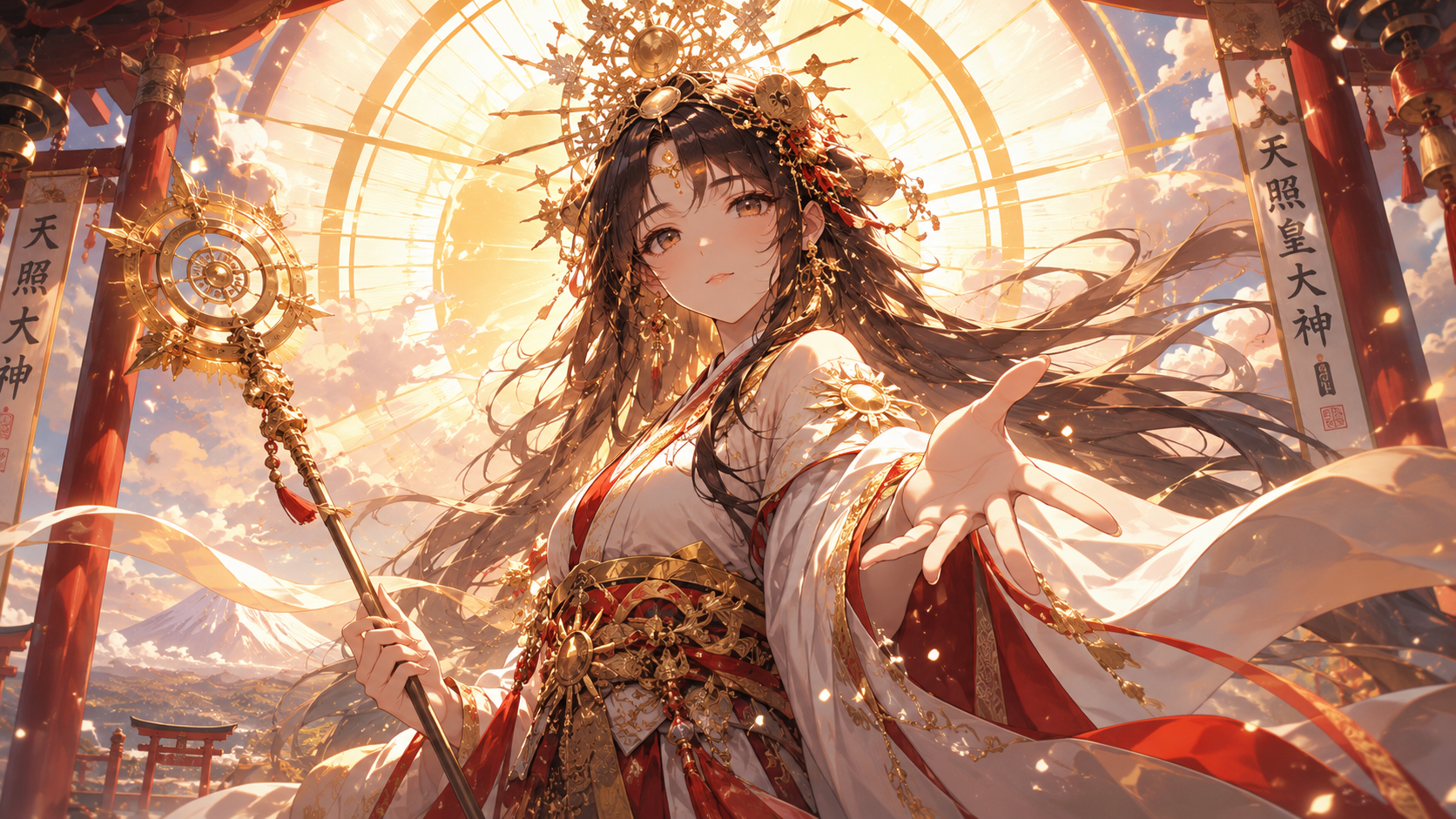
Amaterasu: Goddess of the Sun and Universe
I will now explain Amaterasu-ōmikami, the most important and beloved deity in Japanese mythology, in detail. She is the goddess of the sun and the universe, and stands as the supreme deity in the Shinto religion.
1. The Birth of the Goddess
The birth of Amaterasu is closely tied to the creator god, Izanagi. She was born when Izanagi was performing a purification ritual (misogi) to cleanse himself after escaping from Yomi, the underworld.
The Process: Amaterasu was born when Izanagi washed his left eye.
Her Siblings: Tsukuyomi (the moon god) was born from his right eye, and Susanoo (the god of sea and storms) was born from his nose. Izanagi then entrusted Amaterasu to rule over Takamagahara, the High Plain of Heaven.
2. The Cave of Heaven (Amano-Iwato) Myth
The most famous legend surrounding Amaterasu is the story of her hiding in a rocky cave.
The Incident: Her brother Susanoo went on a destructive rampage in Heaven, destroying rice fields and throwing a flayed horse into her sacred weaving hall.
The Loss of the Sun: Devastated and furious, Amaterasu locked herself inside a rock cave called "Amano-Iwato." Without the sun goddess, the world was plunged into total darkness, and evil spirits and disasters ran rampant.
The Solution: The eight million gods gathered outside the cave in panic. They hung a sacred mirror (Yata no Kagami) and a jewel (Yasakani no Magatama) on a tree, and had Ame-no-Uzume, the goddess of revelry, perform a comedic, lively dance. Hearing the gods roaring with laughter, Amaterasu peeked out of curiosity. She saw her own radiant reflection in the mirror, mistaking it for a new, magnificent sun god. As she stepped forward, a powerful god pulled her out completely, and light returned to the world.
3. Connection to the Imperial Family & The Three Sacred Treasures
In Japan, mythology and history are deeply intertwined. Amaterasu is depicted as the direct ancestor of the Japanese Imperial family.
Descent to Earth: Amaterasu sent her grandson, Ninigi, down to earth (Japan) to pacify and rule it.
The Three Sacred Treasures (Imperial Regalia): She bestowed upon him three divine items: the Mirror (wisdom) and the Jewel (benevolence) from the cave myth, along with a Sword (valor) that Susanoo had retrieved from a slain eight-headed dragon. These three treasures symbolize the legitimacy of the Japanese Emperor to this day.
4. Cross-Cultural Perspectives
Japanese Texts (Kojiki & Nihon Shoki): These foundational texts established Amaterasu not just as a deity, but as the supreme national guardian and the ancestral root of the Emperor.
English/Western Anthropological Views: Western scholars are particularly fascinated by Amaterasu because she is a female supreme solar deity. In many other mythologies, sun gods are male (e.g., Apollo, Ra). This is often interpreted as a reflection of ancient Japan's matriarchal tendencies or the strong influence of female shamans.
Chinese Perspectives (Tianzhao Dashen, 天照大神): Chinese mythological studies sometimes compare her to Xihe, the Chinese sun goddess. However, they note a distinct difference: while Xihe is primarily the mother of the ten suns, Amaterasu is the sovereign ruler and the embodiment of cosmic order itself.
Korean Perspectives: Korean scholars often study Amaterasu through the lens of comparative mythology, exploring how ancient sun-worship traditions and solar myths on the Korean peninsula (like the tale of Yeonorang and Seonyeo) might have historically interacted with and influenced early Japanese Shinto beliefs.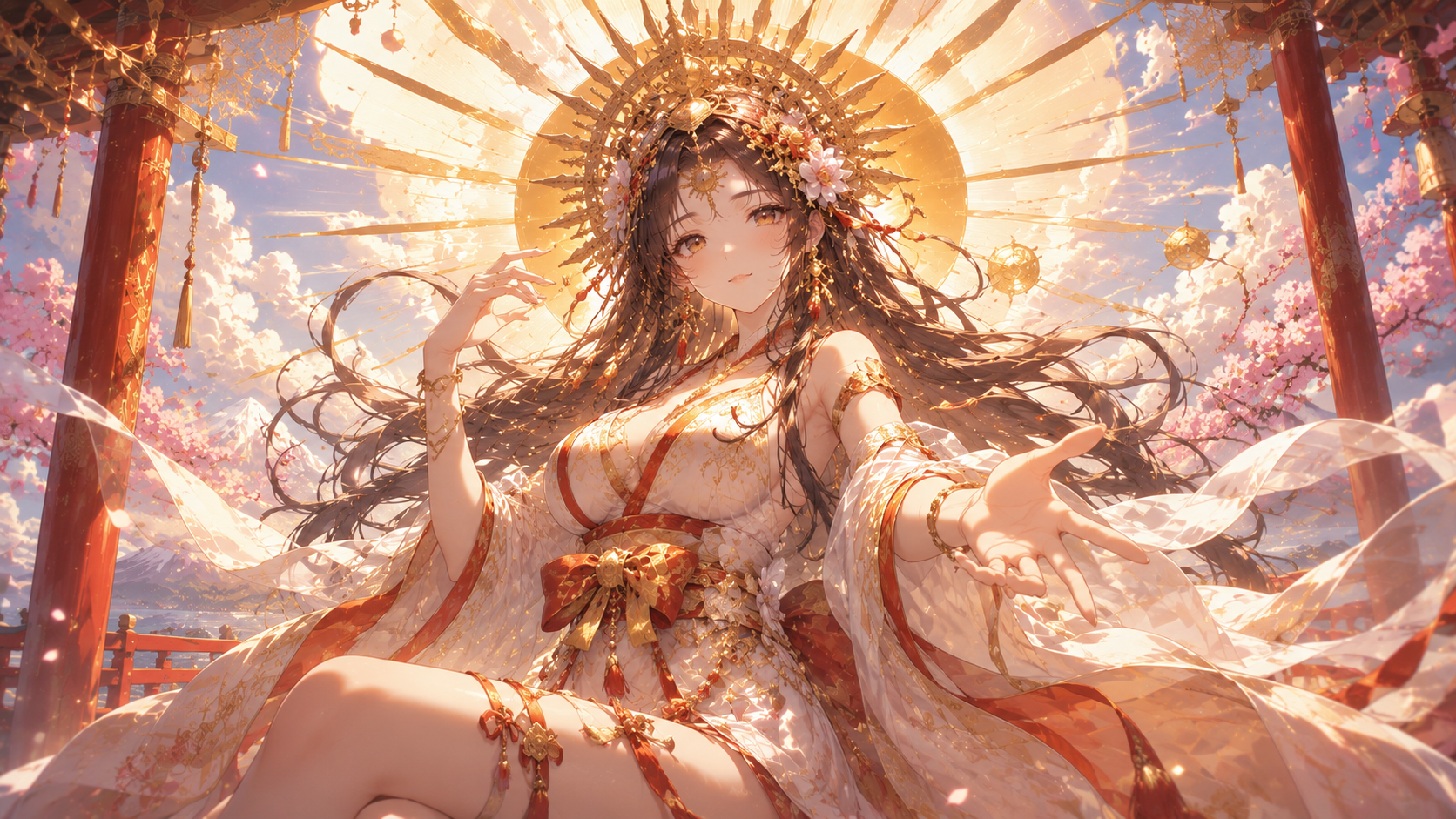 728x90
'손 가는 대로 > 그냥' 카테고리의 다른 글
한국의 택시 호출 앱 (0) 2026.07.27 압사라 (Apsaras) (0) 2026.07.26 이쉬첼 (Ixchel) (0) 2026.07.25 토르 (Thor) (0) 2026.07.25 구글 비즈 (Google Vids) (0) 2026.07.24