-
미국의 소비자물가지수 (Consumer Price Index, CPI)손 가는 대로/금융자산운용 2026. 4. 27. 20:04728x90
미국의 소비자물가지수(Consumer Price Index, CPI)
지표의 의미
소비자물가지수(CPI)는 미국 노동부 산하 노동통계국(BLS)이 매월 발표하는 지표로, 도시 소비자가 일상생활을 영위하기 위해 구매하는 상품과 서비스(식료품, 주거비, 의류, 교통, 의료 등) 가격의 변동을 측정합니다. 쉽게 말해, 일반 가계의 장바구니 물가와 생활비가 시간이 지남에 따라 얼마나 변했는지를 보여주는 가장 직관적인 인플레이션 측정 도구입니다. 식품과 에너지를 포함한 '헤드라인 CPI'와, 가격 변동성이 큰 식품 및 에너지를 제외하여 장기적인 물가 추세를 보여주는 '근원(Core) CPI'로 나뉩니다.
발표 주기 및 시점
CPI는 매월 1회 정기적으로 발표됩니다. 보통 해당 월의 중순(10일~15일 사이)에 지난달의 데이터가 공개되며, 발표 시간은 미국 동부 시간(ET) 기준 오전 8시 30분입니다. 한국 시간으로는 서머타임 적용 시 오후 9시 30분, 해제 시 오후 10시 30분에 해당하므로, 이 시간에는 시장 변동성이 매우 커질 수 있음을 유의해야 합니다.
주목받는 이유
최근 글로벌 경제에서 CPI가 극도로 주목받는 이유는 미국 연방준비제도(Fed)의 통화정책(기준금리 결정)에 직접적인 영향을 미치기 때문입니다. 예를 들어, 2026년 초반 미국의 전년 동월 대비 CPI는 2.4%대까지 안정되는 모습을 보이다가 3월에 3.3%로 반등하는 등 물가 경로의 불확실성이 커졌습니다. 이러한 물가의 '끈적임(Stickiness)'은 연준의 금리 인하 시점을 지연시키고 횟수를 축소하게 만들어, 주식 시장, 채권 금리, 그리고 달러 환율 등 전 세계 금융 시장에 막대한 파급력을 행사합니다.
함께 고려해야 할 지표
CPI를 분석할 때는 다음 지표들을 교차 검증해야 경제의 전체적인 그림을 그릴 수 있습니다.
1. 개인소비지출(PCE) 물가지수: 연준이 공식적인 인플레이션 목표(2%) 기준으로 삼는 가장 선호하는 지표입니다. 소비자의 대체 구매 행동을 반영하여 CPI보다 더 넓은 범위를 다룹니다.
2. 비농업부문 고용지수(NFP) 및 임금 상승률: 물가 상승의 근본 원인인 노동 시장의 과열 여부를 파악할 수 있습니다.
3. 생산자물가지수(PPI): 기업 간 도매물가를 측정하며, 향후 시차를 두고 소비자물가(CPI)로 전가되기 때문에 선행지표 역할을 합니다.지표 정식 명칭 측정 대상 발표 기관 활용 CPI 소비자물가지수 소비자가 구매하는 상품·서비스 가격 변동 미국 노동통계국 (BLS) 대표적인 소비자 물가 지표, 언론·정책에서 자주 인용 PPI 생산자물가지수 국내 생산자가 받는 상품·서비스 판매가격 변동 미국 노동통계국 (BLS) 도매·생산 단계의 인플레이션 압력 파악 지표 PCE 개인소비지출 물가지수 가계가 소비하는 상품·서비스 가격 변동 미국 경제분석국 (BEA) 연준(Fed)이 통화정책에서 선호하는 인플레이션 지표 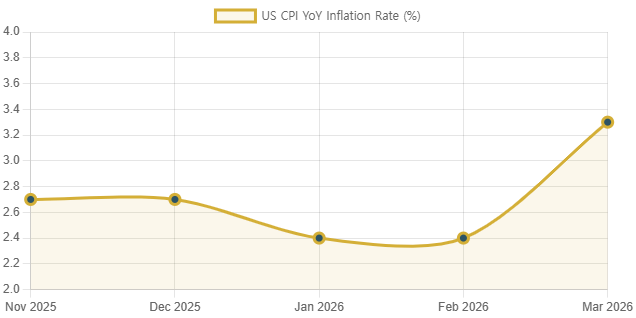
Consumer Price Index (CPI)
What the Indicator Means
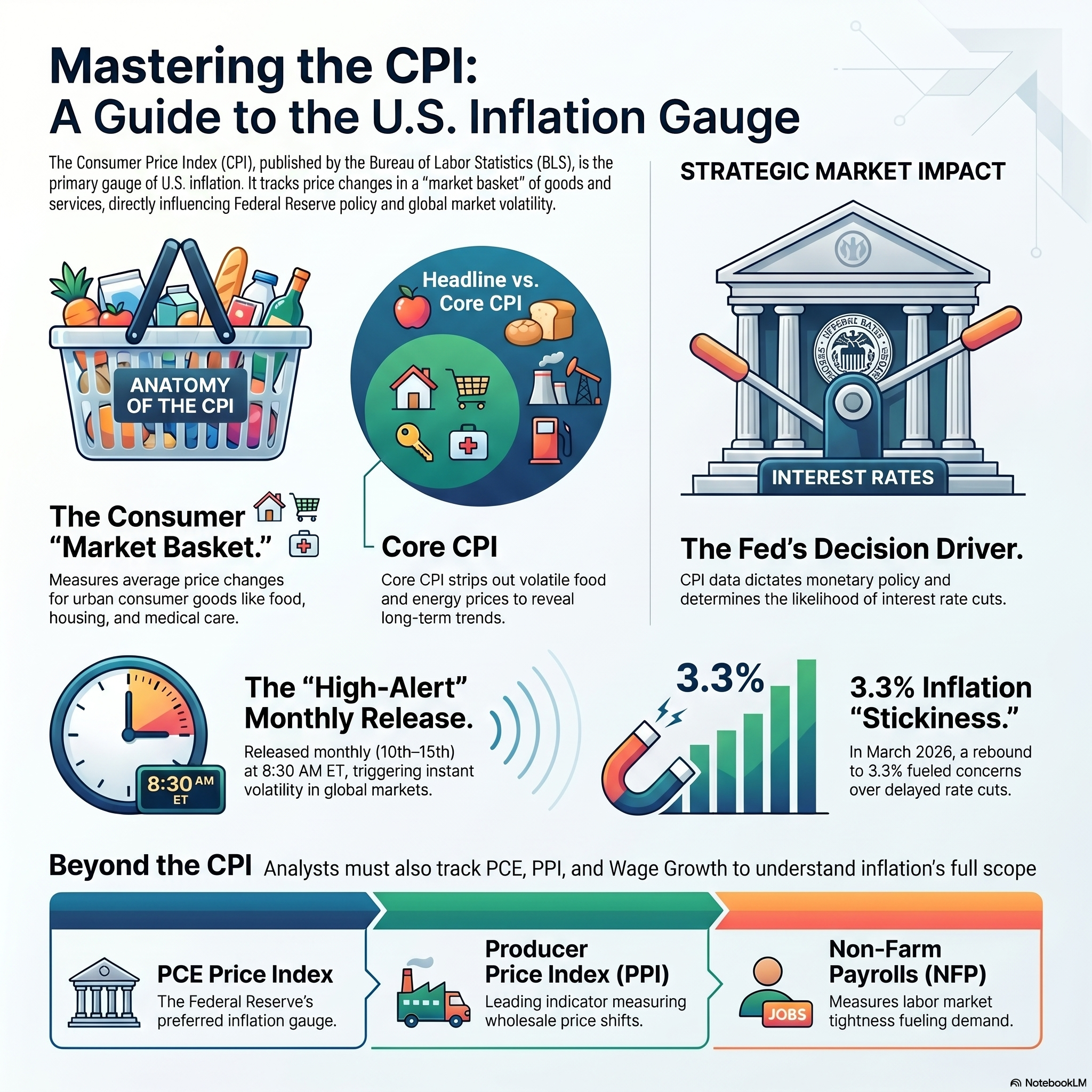
The Consumer Price Index (CPI), published monthly by the U.S. Bureau of Labor Statistics (BLS), measures the average change over time in the prices paid by urban consumers for a market basket of consumer goods and services (e.g., food, housing, apparel, transportation, and medical care). Simply put, it is the most direct gauge of inflation, reflecting shifts in the cost of living. It is typically divided into "Headline CPI," which includes all items, and "Core CPI," which strips out highly volatile food and energy prices to reveal underlying long-term inflation trends.
Release Frequency & Timing
The CPI is released once a month, typically between the 10th and 15th of each month, reporting data for the previous month. The announcement occurs at 8:30 AM Eastern Time (ET). For global investors, this is a "high-alert" window as it often triggers significant volatility across forex, bond, and equity markets immediately upon release.
Why It Is Receiving Attention
The CPI currently commands massive attention globally because it directly dictates the monetary policy (interest rate decisions) of the U.S. Federal Reserve. For instance, in early 2026, the year-over-year U.S. CPI had cooled to the 2.4% range but suddenly rebounded to 3.3% in March. This "stickiness" in inflation fuels concerns that the Fed may delay or reduce the number of interest rate cuts. Such shifts in expectations instantly create ripples across global financial markets, impacting equities, bond yields, and the value of the U.S. dollar.
Indicators to Consider Alongside CPI
To obtain a comprehensive view of the economy, the CPI should be analyzed in tandem with the following indicators:
1. Personal Consumption Expenditures (PCE) Price Index: The Fed’s preferred inflation gauge for its 2% target. It captures a broader range of expenses and accounts for consumers substituting cheaper goods when prices rise.
2. Non-Farm Payrolls (NFP) and Wage Growth: Crucial for understanding if labor market tightness is fueling demand-driven inflation.
3. Producer Price Index (PPI): Measures wholesale prices at the factory gate. Because these costs are eventually passed on to consumers, the PPI serves as a reliable leading indicator for future CPI trends.Indicator Full Name Measured Aspect Publisher Usage CPI Consumer Price Index Changes in prices paid by consumers for goods and services Bureau of Labor Statistics (BLS) Main measure of consumer inflation, widely cited in media and policy PPI Producer Price Index Changes in prices received by domestic producers for their output Bureau of Labor Statistics (BLS) Indicator of inflationary pressures at the wholesale/production level PCE Personal Consumption Expenditures Price Index Changes in prices of goods and services consumed by households Bureau of Economic Analysis (BEA) Preferred inflation gauge of the Federal Reserve for monetary policy 728x90'손 가는 대로 > 금융자산운용' 카테고리의 다른 글
미국의 비농업부문 고용지수 (Non-Farm Payrolls, NFP) (0) 2026.04.28 Global News Update: April 28, 2026 (0) 2026.04.28 Electronic Bill of Lading (eBL / 전자 선하증권) (0) 2026.04.27 SMH (VanEck Semiconductor ETF) (0) 2026.04.27 Supply Chain Control Tower (공급망 컨트롤 타워) (0) 2026.04.24