-
미국의 비농업부문 고용지수 (Non-Farm Payrolls, NFP)손 가는 대로/금융자산운용 2026. 4. 28. 20:57728x90
미국의 비농업부문 고용지수 (Non-Farm Payrolls, NFP)
지표의 의미
비농업부문 고용지수(NFP)는 미국 노동통계국(BLS)이 매월 발표하는 고용 보고서의 핵심 항목입니다. 농축산업 종사자, 정부 파견 가사도우미, 비영리단체 직원 등을 제외한 미국 내 모든 민간 및 공공 부문의 전월 대비 일자리 증감 수를 측정합니다. 미국의 국내총생산(GDP)의 약 70%가 소비에서 나오는 만큼, 사람들의 지갑을 채워주는 '일자리'의 증감은 경제의 기초 체력을 보여주는 가장 직관적인 온도계 역할을 합니다.
발표 주기 및 시점
NFP를 포함한 미국 고용 보고서는 매월 첫째 주 금요일에 발표됩니다. 발표 시간은 미국 동부 시간(ET) 기준 오전 8시 30분(한국 시간 기준 오후 9시 30분 또는 10시 30분)입니다. 글로벌 금융 시장에서 가장 변동성이 극대화되는 '슈퍼 위크'의 하이라이트를 장식하는 지표입니다.
주목받는 이유
최근 NFP가 극도로 주목받는 이유는 연준의 '이중 책무(물가 안정과 최대 고용)' 중 하나이기 때문입니다. 고용이 너무 뜨거우면(일자리가 급증하면) 사람들의 소득이 늘어 물가 상승(인플레이션)을 부추길 수 있습니다. 반대로 고용이 차갑게 식으면 경기 침체(리세션)의 신호로 해석됩니다. 최근 2025년 말부터 2026년 초에 이르기까지 고용 시장이 예상외의 회복력을 보이면서, 연준이 기준금리를 섣불리 내리지 못하는 핵심 근거로 작용하고 있습니다.향후 전망 (Future Outlook)
고용 시장은 점진적인 정상화 과정에 있습니다. 극심한 구인난은 해소되고 있지만, 여전히 역사적인 평균치에 비하면 견조한 수준입니다. 향후 NFP 지표가 월 10만~15만 명 증가 수준으로 완만하게 둔화된다면 경제가 연착륙(Soft Landing)하는 이상적인 시나리오가 펼쳐지겠지만, 이 수치가 급격히 무너지거나 반대로 과열될 경우 주식 및 채권 시장은 다시 한번 금리 경로를 두고 격렬하게 요동칠 것입니다.함께 고려해야 할 지표
NFP는 절대 단독으로 해석해서는 안 되며, 다음 지표들과 퍼즐을 맞춰야 합니다.
실업률 (Unemployment Rate): 고용 시장의 전반적인 냉각 여부를 보여줍니다.
평균 시간당 임금 (Average Hourly Earnings): 임금이 오르면 기업이 제품 가격을 올리게 되어 인플레이션을 자극하므로, 물가 전망에 매우 중요합니다.
JOLTs 구인구직보고서 & 신규 실업수당 청구건수: NFP 발표 전 고용 시장의 선행 지표 역할을 합니다.지표 정식 명칭 측정 대상 발표 기관 활용 NFP 비농업부문 고용지표 (Non-Farm Payrolls) 농업 제외 산업 부문에서 새로 창출된 일자리 수 미국 노동통계국 (BLS) 미국 고용시장 전반을 보여주는 핵심 지표 Unemployment Rate 실업률 경제활동인구 중 일자리를 찾고 있는 사람의 비율 미국 노동통계국 (BLS) 경기 상황과 노동시장 건강 상태를 평가 Average Hourly Earnings 평균 시간당 임금 근로자의 평균 임금 수준 미국 노동통계국 (BLS) 임금 상승률과 인플레이션 압력 파악 JOLTs Job Openings 구인공고 (Job Openings and Labor Turnover Survey) 미국 내 기업의 구인공고 수 미국 노동통계국 (BLS) 노동시장 수요와 인력 부족 여부 파악 Initial Jobless Claims 신규 실업수당 청구건수 일주일 동안 새로 접수된 실업수당 신청 건수 미국 노동부 (DOL) 단기적인 고용시장 변화를 반영하는 선행 지표 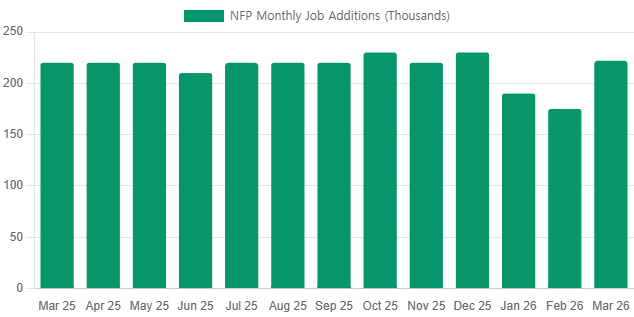
What is Non-Farm Payrolls (NFP)
What the Indicator Means
Non-Farm Payrolls (NFP) is the premier metric within the monthly employment report published by the U.S. Bureau of Labor Statistics (BLS). It measures the month-over-month change in the number of paid workers in the U.S. excluding farm employees, private household employees, and non-profit organization workers. Since consumer spending accounts for roughly 70% of U.S. GDP, job creation is the most direct thermometer of the economy's underlying health and purchasing power.
Release Frequency & Timing
The U.S. Employment Report, highlighted by the NFP, is released monthly, typically on the first Friday of the month. The data is published at 8:30 AM Eastern Time (ET). This exact moment is renowned for triggering massive spikes in volatility across global forex, bond, and stock markets.
Why It Is Receiving Attention
The NFP is currently under a magnifying glass because it represents one-half of the Federal Reserve's "dual mandate" (maximum employment and stable prices). If job growth is too hot, increased consumer income could reignite inflation, forcing the Fed to keep interest rates higher for longer. Conversely, a rapid cooling in job creation signals an impending recession. The unexpected resilience of the labor market through late 2025 and early 2026 has been the primary rationale behind the Fed's cautious approach to rate cuts.
Future Outlook
The labor market is currently undergoing a gradual normalization. The severe labor shortages of the post-pandemic era are fading, yet the market remains robust by historical standards. If NFP gradually cools to a sustainable pace of adding roughly 100K–150K jobs per month, it paves the way for an ideal "soft landing." However, any severe downside shock or unexpected overheating will immediately force investors to aggressively reprice the Fed's future rate path.
Indicators to Consider Alongside NFP
To accurately read the labor market, NFP must be analyzed alongside:
Unemployment Rate: Provides the broader macroeconomic picture of labor utilization.
Average Hourly Earnings: Crucial for the inflation outlook. Rapid wage growth can lead to a wage-price spiral.
JOLTs Job Openings & Initial Jobless Claims: Serve as leading indicators that set market expectations before the official NFP release.Indicator Full Name Measured Aspect Publisher Usage NFP Non-Farm Payrolls Number of jobs created in non-farm sectors Bureau of Labor Statistics (BLS) Key indicator of overall U.S. employment trends Unemployment Rate Unemployment Rate Percentage of labor force actively seeking work Bureau of Labor Statistics (BLS) Measures economic conditions and labor market health Average Hourly Earnings Average Hourly Earnings Average wage level of workers Bureau of Labor Statistics (BLS) Tracks wage growth and inflationary pressures JOLTs Job Openings Job Openings and Labor Turnover Survey Number of job openings across U.S. businesses Bureau of Labor Statistics (BLS) Gauges labor demand and workforce shortages Initial Jobless Claims Initial Jobless Claims Weekly count of new unemployment insurance applications Department of Labor (DOL) Leading indicator of short-term labor market changes 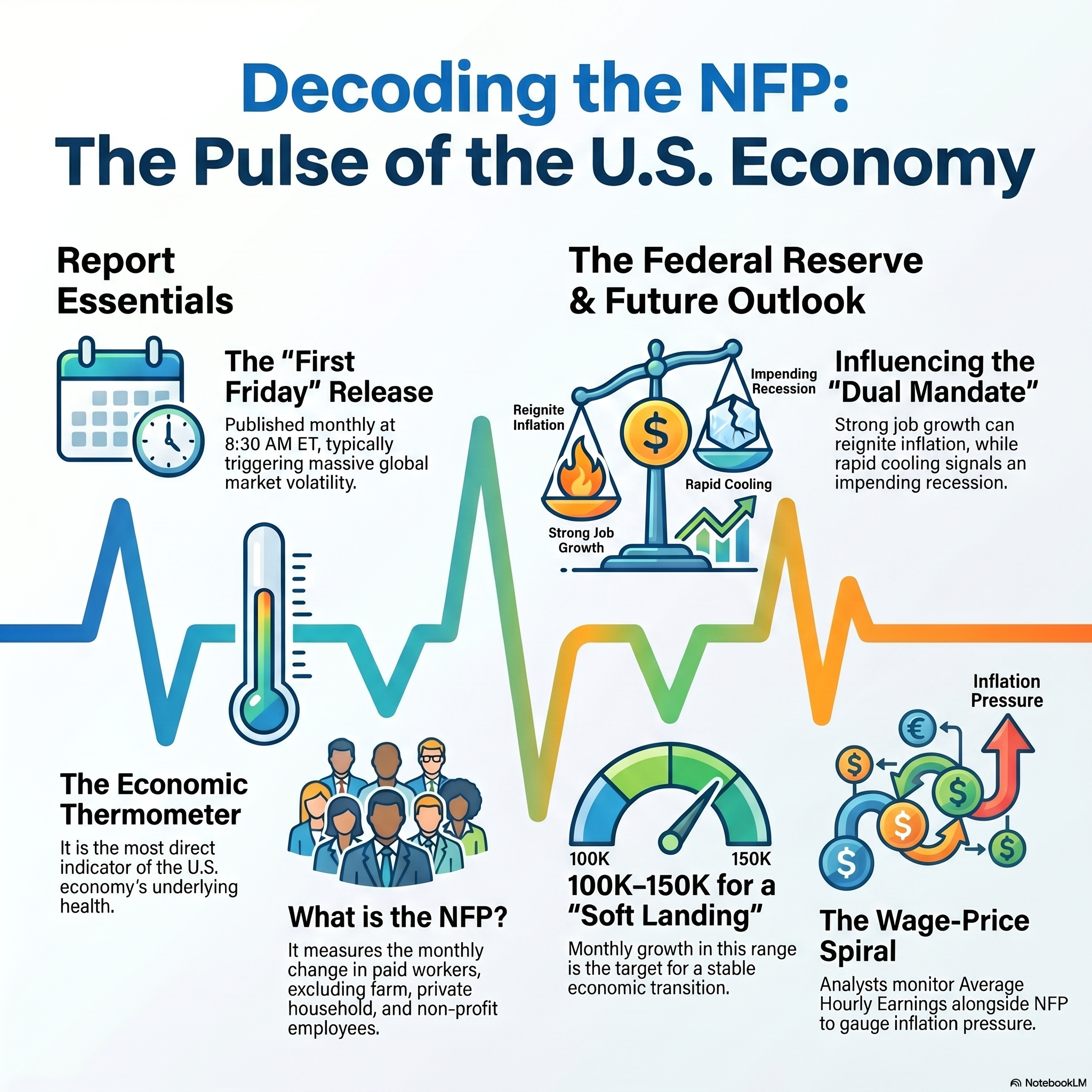 728x90
'손 가는 대로 > 금융자산운용' 카테고리의 다른 글
GLD (SPDR Gold Shares) (0) 2026.04.29 IBIT (iShares Bitcoin Trust) (0) 2026.04.28 Global News Update: April 28, 2026 (0) 2026.04.28 미국의 소비자물가지수 (Consumer Price Index, CPI) (0) 2026.04.27 Electronic Bill of Lading (eBL / 전자 선하증권) (0) 2026.04.27