-
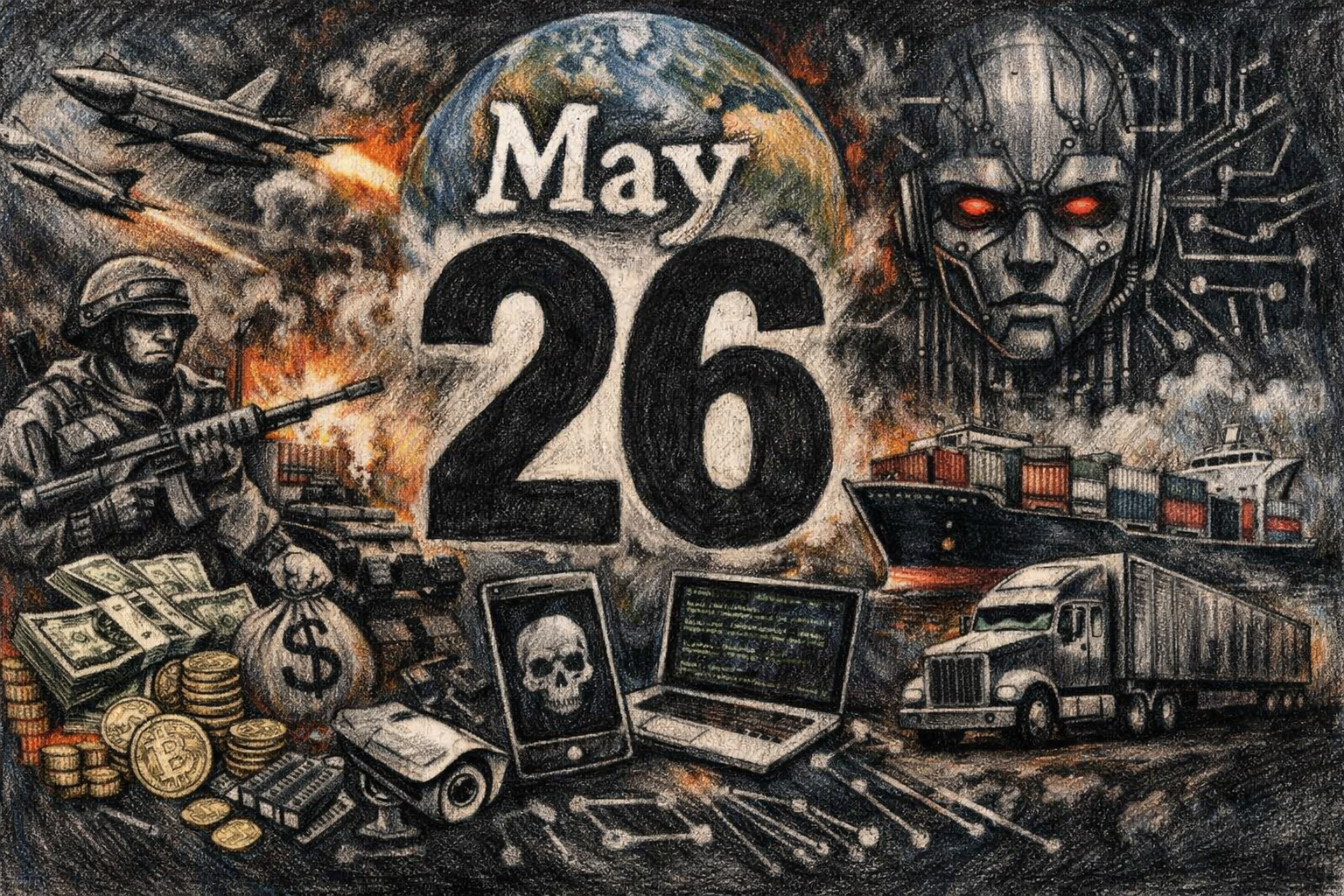
Global News Update: May 26, 2026손 가는 대로/그냥 2026. 5. 26. 06:24728x90
Good morning. It is Tuesday, May 26, 2026.
This is your deep-dive daily briefing. I am your anchor, delivering a comprehensive analysis of the pivotal events that have defined the last twenty-four hours.
We begin our broadcast on the world stage, where the high-stakes diplomatic maneuvering between Washington and Tehran has taken a more calculated and cautious turn. Following initial statements regarding a swift resolution via Pakistani mediation, both United States President Donald Trump and the Iranian leadership have actively tempered expectations of an immediate breakthrough. In a public statement from Tehran, Iran's Foreign Ministry confirmed that while notable progress has been achieved regarding a potential framework to end the West Asia war, a final comprehensive agreement remains distant. This sentiment was mirrored by President Trump, who stated that he is in no hurry to sign a deal unless it delivers a meaningful and permanent resolution. The central sticking point remains a sharp division in the scope of the talks; Washington, supported by Israeli intelligence insights, is demanding the verifiable dismantling of Iran's underground nuclear facilities and the total removal of enriched uranium as a condition for a final peace treaty, while Tehran insists the current negotiations must remain strictly focused on halting hostilities and ending the naval blockade.
Transitioning from the diplomatic tightrope in the Middle East to the legislative chambers of the global economy, major industrialized nations are aggressively rewriting their fiscal blueprints to shield domestic markets from prolonged energy shocks. In Tokyo, Prime Minister Takaichi Sanae announced that the Japanese government is finalized to draw up a massive supplementary budget exceeding 3 trillion yen, equivalent to roughly 19 billion dollars, for fiscal 2026. This emergency fiscal package is designed specifically to cushion Japanese households and industries from the inflationary pipeline generated by three months of maritime disruptions in the Persian Gulf. This defensive economic policy aligns with broader international interventions, as seen in Singapore, where the Ministry of Trade and Industry maintained its annual growth forecast at 2% to 4% due to resilient first-quarter electronics demand, while explicitly warning that the ongoing conflict continues to cloud the mid-term global macroeconomic outlook.
This environment of tempered diplomatic expectations and persistent energy-driven inflation is driving a profound reassessment of financial stability risks across international capital markets. World oil prices experienced a sharp bout of volatility, tumbling initially on optimism over a rapid agreement before stabilizing as both sides downplayed the immediacy of a deal. This persistent instability has prompted the International Monetary Fund to issue a stark warning during its Article IV mission concluding statement for Ireland, urging European economies to maintain a highly vigilant stance regarding non-bank financial sectors and systemic data gaps. Financial authorities are advising governments to prioritize targeted assistance for vulnerable populations over broad-based tax cuts or price controls, as the compounding effects of elevated maritime freight indices and regional defense expenditures continue to stress global credit markets and keep sovereign bond yields locked at elevated levels.
Turning our attention to the technology sector, the focus has shifted toward fundamental architectural innovations as the industry attempts to sustain the artificial intelligence revolution amidst deepening hardware and power constraints. At the 2026 IEEE International Symposium on Circuits and Systems in Shanghai, Huawei delivered a landmark keynote introducing the Tau Scaling Law, a new semiconductor design principle that proposes replacing traditional geometric scaling with time scaling to steadily improve transistor density and compress signal propagation delay. The company confirmed that its upcoming Kirin chips, scheduled for release this autumn, will be the first to adopt this architecture, redefining interconnect protocols via a unified bus system to achieve native memory semantics for massive computing superpods. This structural shift in hardware design occurs alongside software-level consolidation showcased at Google I/O 2026, where the unveiling of Gemini Omni and agentic background search tools signaled an industry-wide push to minimize digital friction and reduce data center compute overhead.
Finally, we look at the logistics and supply chain networks that serve as the vital arteries of global commerce, which are now absorbing the structural changes of a prolonged maritime impasse. Despite the marginal movement of select vessels, shipping lines continue to operate under high-risk navigational guidance, keeping the Cape of Good Hope detour as the primary baseline for Asia-to-Europe trade lanes. This extended routing has compressed global container fleet capacity to near-zero idle levels, locking in elevated transport costs. To mitigate these structural pressures, advanced economies are deepening regional trade ties, exemplified by Canada's Ministry of Immigration announcing an immediate transition to streamlined electronic travel authorizations for eligible business travelers and citizens from Indonesia and Malaysia, an operational shift designed to diversify strategic partnerships and secure resilient, alternative import-export corridors across the Indo-Pacific.
In summary, the global landscape is defined by a tempering of expectations for an imminent U.S.-Iran peace deal as Washington demands nuclear concessions, occurring as Japan readies a 3 trillion yen emergency energy subsidy budget. The IMF warns of financial stability risks amidst oil market volatility, while Huawei introduces the Tau Scaling Law to bypass traditional semiconductor limits, and the logistics sector relies on strategic Indo-Pacific trade corridors to navigate permanent maritime disruptions.
Based on the current trajectory, I predict that the deliberate cooling of rhetoric by both President Trump and Tehran indicates that the structural premium on global energy and logistics will remain a fixed reality through the summer. By linking the reopening of the Strait of Hormuz to the permanent dismantling of Iran's nuclear infrastructure, the United States has transformed a maritime dispute into a fundamental geopolitical showdown. Consequently, crude oil prices are unlikely to experience a sustained drop anytime soon, which means Japan's 3 trillion yen supplementary budget will serve as a baseline model for other advanced economies facing fiscal strain. Shippers and technology firms must accept that the high-cost logistics environment and the push for localized, high-efficiency hardware like the Tau architecture are no longer temporary workarounds, but the permanent cost of doing business in a fractured global order.
This content was created with the help of AI.https://tv.naver.com/v/100191404
세상 속에서
May 26, 2026
tv.naver.com
안녕히 주무셨습니까. 2026년 5월 26일 화요일입니다. 지난 24시간 동안 전 세계에서 발생한 주요 소식들을 심층적으로 전해드리는 일일 글로벌 브리핑입니다. 저는 오늘 진행을 맡은 앵커입니다.
먼저 국제 소식입니다. 워싱턴과 테헤란 간의 고위급 외교적 교섭이 보다 신중하고 계산된 국면으로 접어들었습니다. 파키스탄의 중재를 통한 신속한 합의 도출 가능성이 제기된 이후, 도널드 트럼프 미국 대통령과 이란 지도부 모두 즉각적인 타결에 대한 낙관론을 공식적으로 경계하고 나섰습니다. 테헤란에서 발표된 성명에 따르면, 이란 외무부는 서아시아 전쟁 종식을 위한 잠정적인 프레임워크 구축에 상당한 진전이 있었음을 인정하면서도 최종적인 포괄적 합의까지는 아직 갈 길이 멀다고 밝혔습니다. 도널드 트럼프 대통령 역시 소셜 미디어를 통해 강력하고 실질적인 결과가 보장되지 않는다면 서둘러 서명할 이유가 없다며 신중한 입장을 재확인했습니다. 현재 협상의 가장 큰 걸림돌은 의제의 범위를 둘러싼 양국의 극명한 시각 차이입니다. 미국은 이스라엘 측의 정보 분석을 바탕으로 최종 평화 협정의 조건으로 이란 내 지하 핵 시설의 검증 가능한 폐기와 농축 우라늄의 전량 반출을 요구하고 있는 반면, 이란 측은 이번 회담이 군사적 적대 행위 중단과 해상 봉쇄 해제에만 철저히 국한되어야 한다고 맞서고 있습니다.
외교적 긴장 국면에서 더 넓은 세계 경제 분야로 넘어가면, 중동 분쟁의 장기화에 따른 구조적 타격으로 인해 주요 선진국들이 자국 시장을 보호하기 위한 긴급 재정 수립에 속도를 내고 있습니다. 일본 도쿄에서 다카이치 사나에 총리는 페르시아만의 물류 마비 사태가 초래한 광범위한 물가 상승 압력으로부터 자국 가정과 산업계를 보호하기 위해 2026 회계연도 기준 3조 엔, 우리 돈 약 19억 달러를 상회하는 대규모 추경예산안 편성을 확정했다고 발표했습니다. 이러한 방어적인 재정 정책은 다른 주요 아시아 경제국들의 움직임과도 맥을 같이합니다. 싱가포르 통화청은 올해 자국의 경제 성장률 전망치를 2%에서 4% 수준으로 유지하면서, 인공지능 수요에 힘입은 1분기 제조업 견조함에도 불구하고 중동 분쟁의 장기화가 글로벌 거시경제 전망에 짙은 먹구름을 드리우고 있다고 공식 경고했습니다.
이러한 신중한 외교적 기류와 에너지발 인플레이션 압력은 국제 자본 시장 전반에 걸쳐 금융 안정성 위험을 재평가하는 요인으로 작용하고 있습니다. 국제 유가는 신속한 평화 협정 타결에 대한 기대감으로 일시적으로 급락했으나, 양측이 조기 타결 가능성을 일제히 부인함에 따라 다시 불확실성이 커지며 변동성을 확대했습니다. 이러한 금융 시장의 불안정성 속에서 국제통화기금(IMF)은 아일랜드에 대한 연례협의 성명서를 통해 유럽 경제국들을 향해 비은행 금융 부문의 잠재적 리스크와 시스템적 데이터 공백에 대해 최고 수준의 경계 태세를 유지해야 한다고 촉구했습니다. 금융 당국은 해상 운임 지수 상승과 국방비 증액 부담이 글로벌 신용 시장을 지속적으로 압박하고 있는 만큼, 정부가 보편적인 감세나 가격 통제 대신 취약 계층을 겨냥한 선별적 지원에 재정력을 집중해야 한다고 권고하고 있습니다.
기술 부문에서는 심화되는 하드웨어 및 전력 공급의 제약을 극복하기 위해, 인공지능 혁명을 뒷받침할 반도체 아키텍처의 근본적인 혁신에 초점이 맞춰지고 있습니다. 상하이에서 열린 2026 IEEE 국제 회로 및 시스템 심포지엄(ISCAS) 기조연설에서 화웨이는 기존의 기하학적 미세 공정 한계를 대체하여 시간 개념의 스케일링을 통해 트랜지스터 밀도를 높이고 신호 전달 지연을 극적으로 단축하는 타우(τ) 스케일링 법칙을 발표했습니다. 화웨이는 올해 가을 출시 예정인 차세대 기린(Kirin) 칩셋에 이 독자적인 로직폴딩 아키텍처를 세계 최초로 적용할 것이며, 유니파이드 버스(UnifiedBus) 시스템을 통해 대규모 연산 수적 고집적 단지인 슈퍼팟의 메모리 주소 지정 체계를 혁신함으로써 시스템 통신 지연을 획기적으로 줄이겠다고 선언했습니다. 이러한 하드웨어 차원의 대전환은 구글 I/O 2026에서 공개된 제미나이 옴니 및 자율형 배경 검색 에이전트 등 데이터 센터의 연산 부하를 줄이고 디지털 마찰을 최소화하려는 소프트웨어 업계의 대대적인 효율화 움직임과 궤를 같이합니다.
마지막으로 글로벌 상거래의 동맥인 물류 및 공급망 네트워크 소식입니다. 중동 해상 요충지의 교착 상태가 장기화됨에 따라 전 세계 물류망은 구조적 조정을 상수로 받아들이고 있습니다. 일부 유조선의 제한적인 해협 통과 조치에도 불구하고 해운 업계는 여전히 최고 수준의 안보 경보를 유지하고 있으며, 이에 따라 아프리카 희망봉 우회 항로는 이제 아시아와 유럽을 잇는 정기 노선의 확고한 기본값으로 고착화되었습니다. 운송 기간 연장에 따른 선복량 부족 현상은 글로벌 컨테이너 선단의 유휴 비율을 0.7%라는 극단적인 수준까지 떨어뜨리며 고비용 구조를 고착화시켰습니다. 이러한 구조적 압박을 타개하기 위해 선진국들은 지역 블록 내 무역 다변화에 속도를 내고 있으며, 캐나다 정부가 인도네시아와 말레이시아의 비즈니스 여행객 및 직무 능력을 갖춘 시민들을 대상으로 전자여행허가(eTA) 제도를 전격 도입하여 인도-태평양 지역과의 인적 교류를 확대하고 공급망 회복력을 강화하겠다고 발표한 것이 대표적인 사례입니다.
요약하자면, 현재 글로벌 지형은 미국의 핵 폐기 요구로 인해 중동 평화 협상의 조기 타결 기대감이 조정되는 가운데 일본이 3조 엔 규모의 긴급 에너지 추경예산 편성에 착수한 상황으로 정의됩니다. 금융 시장은 유가 변동성 속에서 금융 안정성 리스크 관리에 집중하고 있으며, 기술 부문에서는 화웨이가 반도체 한계를 극복할 타우 스케일링 법칙을 제시한 가운데 물류 업계는 인도-태평양 핵심국과의 전략적 무역 통로 다변화를 통해 장기 해상 마비 사태에 대응하고 있습니다.
현재의 지표들을 바탕으로 볼 때, 트럼프 대통령과 테헤란 당국이 일제히 신중한 기조로 선회한 것은 글로벌 에너지 및 물류 시장의 지정학적 리스크 비용이 이번 여름 시즌 내내 지속될 것임을 시사합니다. 미국이 호르무즈 해협의 재개방 조건을 이란의 핵 인프라 영구 폐기와 연계함으로써, 이번 사태는 단순한 해상 분쟁을 넘어 근본적인 지정학적 패권 대결로 확산되었습니다. 결과적으로 국제 유가의 단기적 안정을 기대하기는 어려워졌으며, 이에 따라 일본이 수립한 3조 엔 규모의 추경예산은 재정적 압박을 겪고 있는 다른 선진국들의 표준적인 방어 모델이 될 가능성이 높습니다. 화주들과 기술 기업들은 현재의 고비용 물류 환경과 타우 아키텍처 같은 고효율 하드웨어로의 전환이 일시적인 우회책이 아니라, 분절된 글로벌 질서 속에서 기업이 생존하기 위해 치러야 할 영구적인 비용임을 받아들여야 할 것입니다.
이 콘텐츠는 AI의 도움을 받아 작성되었습니다.https://www.youtube.com/playlist?list=PLT29kw_Abnh1dEdLdoCEiSoA2NA0YXjQC
News
News
www.youtube.com
https://tv.naver.com/v/100191773?playlistNo=1022595
세상 속에서
May 26, 2026
tv.naver.com
 728x90
'손 가는 대로 > 그냥' 카테고리의 다른 글
Global News Update: May 27, 2026 (0) 2026.05.27 오늘의 별자리 운세 (2026년 5월 26일) (0) 2026.05.26 차원의 구분과 시간이동 (0) 2026.05.25 오늘의 별자리 운세 (2026년 5월 22일) (0) 2026.05.22 오늘의 별자리 운세 (2026년 5월 21일) (0) 2026.05.21