-
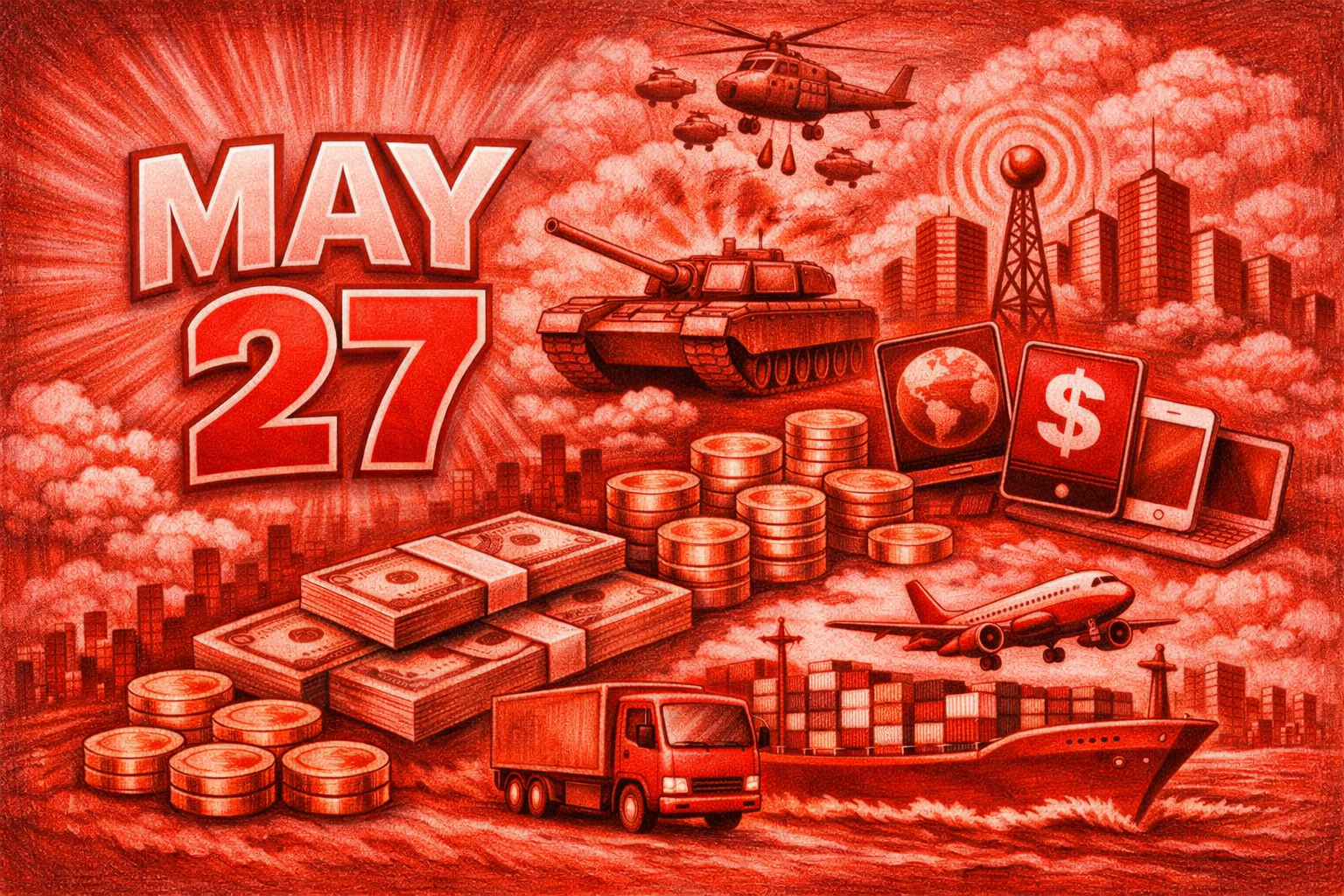
Global News Update: May 27, 2026손 가는 대로/그냥 2026. 5. 27. 05:53728x90
Global News Update: May 27, 2026
Good morning. It is Wednesday, May 27, 2026. This is your deep-dive daily briefing. I am your anchor, delivering a comprehensive analysis of the pivotal events that have defined the last twenty-four hours.
We begin our broadcast on the world stage, where the strategic landscape of the Middle East has encountered a sharp and volatile friction that threatens a fragile multi-week ceasefire. Overnight, the United States Central Command confirmed that American naval forces conducted a series of defensive precision strikes in southern Iran. According to military spokesmen, the operation targeted specific land-based missile launch positions and maritime assets that were actively attempting to deploy sea mines near international shipping lanes. This kinetic engagement occurred just as top Iranian negotiators arrived in Doha for high-stakes peace talks, signaling maximum leverage maneuvers by both Washington and Tehran. The diplomatic environment has been further complicated by statements from Israeli Prime Minister Benjamin Netanyahu, who vowed to crush regional proxy forces in Lebanon, and social media posts from U.S. President Donald Trump, who reiterated demands that Iran hand over its entire inventory of enriched uranium to international witnesses for complete destruction as a baseline condition for any final peace treaty.
Transitioning from the theater of military conflict to the legislative chambers of the global economy, the world's major democracies are forging unprecedented economic alliances to insulate their domestic markets from state-level resource weaponization. In New Delhi, the foreign ministers of the Quad nations—representing Japan, Australia, India, and the United States—formally concluded a landmark summit focused on securing international industrial baselines. According to a joint declaration released late Tuesday, the four democracies have agreed to mobilize up to 20 billion dollars in combined public and private sector capital to establish resilient supply chains for stable energy and critical mineral materials. This massive strategic initiative will fund cross-border mining, processing, and recycling networks across the alliance, aiming to break the global reliance on centralized mineral monopolies and secure the rare earth elements essential for advanced electronic component manufacturing.
This aggressive governmental push for critical raw materials occurs alongside a complex re-evaluation of household financial health across the world's largest consumer market. Data released on Tuesday by The Conference Board revealed that the United States Consumer Confidence Index edged downward in May, slipping to 93.1 as the persistent inflationary impacts of the multi-month Middle East conflict continue to stress household budgets. While the equity markets have staged a dramatic rally on tech sector momentum and hopes for an ultimate diplomatic resolution, nearly 50% of surveyed consumers state they expect interest rates to remain higher over the next twelve months. This defensive consumer appraisal has driven the domestic labor market and current business condition indicators moderately lower, forcing retail networks and consumer credit providers to adjust to an era of protracted fiscal caution as households flag elevated energy and transport costs as persistent threats to their financial well-being.
Turning our attention to the technology sector, the macroeconomic headwinds generated by these global price pressures are accelerating a fundamental transformation in how multinational corporations manage sovereign data assets and multi-jurisdictional compliance. As advanced digital economies expand cloud computing adoption and enterprise artificial intelligence deployment, technology transactions are increasingly evolving into core instruments of national security and regional market access. In a pioneering regulatory shift, Saudi Arabia is moving to enact its landmark Global AI Hub Law, which officially operationalizes the concept of data embassies. This framework allows foreign entities to host sovereign data centers on Saudi territory under the complete legal framework of their home jurisdiction rather than domestic Saudi law. This structural transformation in cross-border contracting represents a permanent departure from traditional public utilities, allowing technology providers to decouple their digital assets from foreign regulatory intervention and preserve operational continuity in an era of deepening geopolitical fragmentation.
Finally, we look at the logistics and global capital networks that serve as the vital arteries of international commerce, which are now absorbing the permanent structural adjustments of a capacity-constrained global trading system. On Wall Street, major equity benchmarks ticked closer to record highs on Tuesday, largely supported by a historic 18% surge in semiconductor memory providers like Micron Technology, which has tripled in value this year due to the insatiable hardware demand generated by the artificial intelligence data center supercycle. However, this capital market optimism contrasts sharply with the physical realities facing global shipping networks. Despite short-term fluctuations in crude oil prices, maritime carriers continue to operate under maximum deployment, with the long-term Cape of Good Hope detour remaining the default baseline for Asia-to-Europe trade lanes. Logistics professionals report that elevated maritime freight indices and prolonged transit times have permanently altered corporate inventory models, forcing global enterprises to permanently abandon the low-cost, just-in-time logistics frameworks of the previous decade in favor of high-cost regional resilience.
In summary, the global landscape is defined by defensive United States military strikes in southern Iran occurring just as negotiators convene in Doha, while the Quad nations mobilize 20 billion dollars to secure critical mineral supply chains. U.S. consumer confidence has edged downward due to persistent energy-driven inflation, while Saudi Arabia pioneers the data embassy model for international AI hosting, and the global logistics sector relies on record semiconductor investments to sustain a high-cost, capacity-constrained maritime network.
Based on the current data, I predict that the defensive military strikes executed by the United States in southern Iran indicate that the geopolitical risk premium on global energy and logistics will remain firmly locked in place throughout the summer of 2026. By executing kinetic operations while negotiators are on the ground in Doha, Washington has signaled that it will not tolerate a passive-aggressive closure of the Strait of Hormuz via sea mines. This military assertiveness, combined with the Quad's 20 billion dollar mineral initiative, proves that the world's major economies are no longer waiting for a peaceful return to the old globalized order. Consequently, input costs will remain structurally elevated, making it mathematically improbable for the Federal Reserve to implement an interest rate cut anytime soon, and forcing corporate leaders to permanently treat high-cost logistics and regional data sovereign infrastructure as the basic baseline for international commerce.
This content was created with the help of AI.https://tv.naver.com/v/100258124
안녕히 주무셨습니까. 2026년 5월 27일 수요일입니다. 지난 24시간 동안 전 세계에서 발생한 주요 소식들을 심층적으로 전해드리는 일일 글로벌 브리핑입니다. 저는 오늘 진행을 맡은 앵커입니다.
먼저 국제 소식입니다. 중동 분쟁을 둘러싼 지정학적 지형이 취약했던 수주간의 휴전 상태를 위협하는 급격하고도 격렬한 군사적 마찰 국면에 접어들었습니다. 지난밤 미 중부사령부는 미국 해군 부대가 이란 남부 지역을 대상으로 고강도 방어적 정밀 타격을 감행했다고 공식 확인했습니다. 군 당국의 발표에 따르면, 이번 작전은 국제 상업 항로 인근에 해상 기뢰를 부설하려던 이란 측의 해상 자산과 지상 미사일 발사 기지를 정밀 타격하여 무력화하는 데 목적이 있었습니다. 이번 군사 행동은 이란의 핵심 협상 대표단이 전쟁 종식을 위한 고위급 평화 회담을 위해 카타르 도하에 도착한 시점과 정확히 맞물려 진행되었으며, 이는 워싱턴과 테헤란이 협상 테이블에서 극대화된 압박 전술을 구사하고 있음을 보여줍니다. 이와 함께 이스라엘의 베냐민 네타냐후 총리가 레바논 내 친이란 무장 세력을 완전히 궤멸하겠다고 공언하고, 도널드 트럼프 미국 대통령이 소셜 미디어를 통해 평화 협정의 선결 조건으로 이란 내 모든 농축 우라늄을 국제 참관인단에 인도해 전량 폐기할 것을 강경하게 요구함에 따라 외교적 조율은 더욱 복잡한 난제에 직면해 있습니다.
군사적 긴장 국면에서 더 넓은 세계 경제 분야로 넘어가면, 전 세계 주요 민주주의 국가들이 국가 차원의 자원 무기화 공세로부터 자국 시장을 보호하기 위해 전례 없는 규모의 경제 동맹 체결에 속도를 내고 있습니다. 인도 뉴델리에서 열린 쿼드(Quad) 외교장관 회의에서 미국, 일본, 호주, 인도의 4개국 대표단은 글로벌 산업 공급망의 안정성을 확보하기 위한 역사적인 공동 선언문을 발표했습니다. 화요일 늦게 발표된 성명에 따르면, 쿼드 동맹국들은 광산 개발, 제련, 정련 및 재활용 네트워크를 아우르는 안정적인 에너지와 핵심 광물 공급망을 구축하기 위해 정부와 민간 부문을 통틀어 최대 200억 달러 규모의 신규 자본을 공동 동원하기로 합의했습니다. 이러한 대규모 전략적 이니셔티브는 특정 국가의 자원 독점 체제를 타개하고 차세대 전자 부품 및 인공지능 인프라 제조에 필수적인 희토류 자원을 안정적으로 확보하는 강력한 보루가 될 전망입니다.
이러한 정부 차원의 핵심 원자재 확보 공세는 세계 최대 소비 시장인 미국 서민 경제의 재정적 부담과 맞물려 복잡한 양상을 보이고 있습니다. 콘퍼런스보드가 화요일 발표한 5월 미국 소비자신뢰지수는 수개월간 지속된 중동 분쟁의 인플레이션 여파가 가정 경제를 지속적으로 압박하면서 전월의 수정치보다 소폭 하락한 93.1을 기록했습니다. 인공지능 산업의 강력한 성장 모멘텀과 중동 평화 협상 타결에 대한 기대감으로 뉴욕 증시가 사상 최고치에 근접하는 랠리를 이어가고 있음에도 불구하고, 설문조사에 참여한 소비자의 약 50%는 향후 12개월 동안 고금리 기조가 유지될 것으로 내다봤습니다. 이러한 서민 경제의 방어적인 심리는 국내 고용 시장 지표와 기업 경기 체감 지수를 완만하게 하락시키는 요인으로 작용하고 있으며, 유통 업계와 금융 기관들은 고유가와 물류비 상승을 실질적인 위협으로 인식하기 시작한 서민 가계의 지속적인 소비 위축 기조에 대비하고 있습니다.
기술 부문에서는 거시경제적 하방 압력 속에서 글로벌 대기업들이 자국의 데이터 주권을 수호하고 국가별 규제 프레임워크에 대응하기 위해 신규 기술 계약 방식을 근본적으로 재편하고 있습니다. 다국적 기업들이 클라우드 컴퓨팅 도입과 기업형 인공지능 배치를 공격적으로 확대함에 따라, 기술 거래는 단순한 인프라 확충을 넘어 국가 안보와 지역 시장 진입권을 규정하는 핵심 지정학적 전략 자산으로 진화하고 있습니다. 이러한 규제 지형 변화에 대응하여 사우디아라비아는 자국 영토 내에 구축된 데이터 센터에 한해 외국 기업들이 사우디 국내법이 아닌 자국의 법률 체계를 적용받아 데이터를 독립적으로 관리할 수 있도록 보장하는 글로벌 AI 허브법 및 데이터 대사관(Data Embassy) 제도의 법제화를 전격 추진하고 있습니다. 이러한 아키텍처의 대전환은 다국적 기술 기업들이 해외 정부의 법적 간섭으로부터 디지털 자산을 완전히 격리하고, 파편화되는 글로벌 질서 속에서 비즈니스 연속성을 보장하기 위해 도입하는 영구적인 생존 전략으로 분석됩니다.
마지막으로 글로벌 상거래의 동맥인 물류 및 공급망 네트워크 소식입니다. 글로벌 물류망과 자본 시장은 선복량 부족과 고비용 구조가 고착화된 새로운 무역 환경을 상수로 받아들이고 있습니다. 뉴욕 증시에서 주요 지수들은 마이크론 테크놀로지가 인공지능 데이터 센터의 폭발적인 메모리 반도체 수요에 힘입어 올해 들어 주가가 세 배 폭증하고 화요일 하루 만에 18% 이상 급등하는 전례 없는 하드웨어 붐에 힘입어 사상 최고치에 다가섰습니다. 그러나 이러한 자본 시장의 낙관론은 전 세계 실물 해상 물류망이 직면한 엄중한 현실과 극명한 대조를 이룹니다. 국제 유가의 단기적 등락과 관계없이 해운 업계는 여전히 가용한 모든 선단을 풀가동하고 있으며, 아프리카 희망봉 우회 항로는 이미 아시아와 유럽을 잇는 정기 노선의 확고한 기본값으로 고착화되었습니다. 물류 전문가들은 extended transit times와 해상 운임 상승의 장기화가 기업들의 재고 모델을 근본적으로 변화시켰으며, 전 세계 기업들이 지난 10년간 유지해 온 저비용 적기 생산(Just-in-Time) 방식을 폐기하고 고비용의 지역별 공급망 회복력 확보 전략을 영구 수용하고 있다고 보고하고 있습니다.
현재 글로벌 지형은 도하에서 평화 회담이 개최되는 동시에 미국이 이란 남부에 방어적 군사 공습을 단행하는 긴박한 상황 속에서 쿼드 동맹국들이 핵심 광물 공급망 확보를 위해 200억 달러를 조달하기로 합의한 상황으로 정의됩니다. 미국의 소비자 신뢰 지수는 지속되는 에너지 인플레이션의 영향으로 하락한 반면, 사우디아라비아는 인공지능 유치를 위한 데이터 대사관 제도를 선도하고 있으며, 글로벌 물류 업계는 반도체 부문의 유례없는 투자에 힘입어 고비용 구조의 선복량 부족 현상에 대응하고 있습니다.
현재의 지표들을 바탕으로 볼 때, 미국이 도하 협상 개시 직전에 이란 남부에 단행한 군사 공습은 글로벌 에너지 및 물류 시장에 내재된 지정학적 리스크 비용이 2026년 여름 시즌 내내 지속될 것임을 시사하는 결정적인 대목으로 판단됩니다. 협상단이 현지에 체류 중인 상황에서 군사 작전을 전격 감행함으로써, 워싱턴 당국은 이란이 기뢰 부설 등을 통해 호르무즈 해협을 비대칭적으로 폐쇄하려는 시도를 결코 묵과하지 않겠다는 강력한 메시지를 전달했습니다. 이러한 미국의 군사적 억제력과 쿼드 동맹의 200억 달러 규모 자원 공조는 주요 선진국들이 과거 글로벌 질서의 온전한 회복을 더 이상 무작정 기다리지 않고 있음을 보여줍니다.
결과적으로 원자재 및 물류 비용의 하방 경직성은 더욱 공고해질 것이며, 이는 연방준비제도가 단기간 내에 기준금리 인하로 선회할 가능성을 수학적으로 차단하는 한편 전 세계 기업들로 하여금 고비용 물류 구조와 지역별 데이터 주권 인프라 구축을 무역의 새로운 표준으로 받아들이도록 강제할 것입니다.
이 콘텐츠는 AI의 도움을 받아 작성되었습니다.
https://www.youtube.com/playlist?list=PLT29kw_Abnh1dEdLdoCEiSoA2NA0YXjQCNews
News
www.youtube.com
https://tv.naver.com/v/100258669?playlistNo=1022595
세상 속에서
May 27, 2026
tv.naver.com






 728x90
'손 가는 대로 > 그냥' 카테고리의 다른 글
Global News Update: May 28, 2026 (0) 2026.05.28 오늘의 별자리 운세 (2026년 5월 27일) (0) 2026.05.27 오늘의 별자리 운세 (2026년 5월 26일) (0) 2026.05.26 Global News Update: May 26, 2026 (0) 2026.05.26 차원의 구분과 시간이동 (0) 2026.05.25