-
Global News Update: May 28, 2026손 가는 대로/그냥 2026. 5. 28. 05:53728x90
Global News Update: May 28, 2026
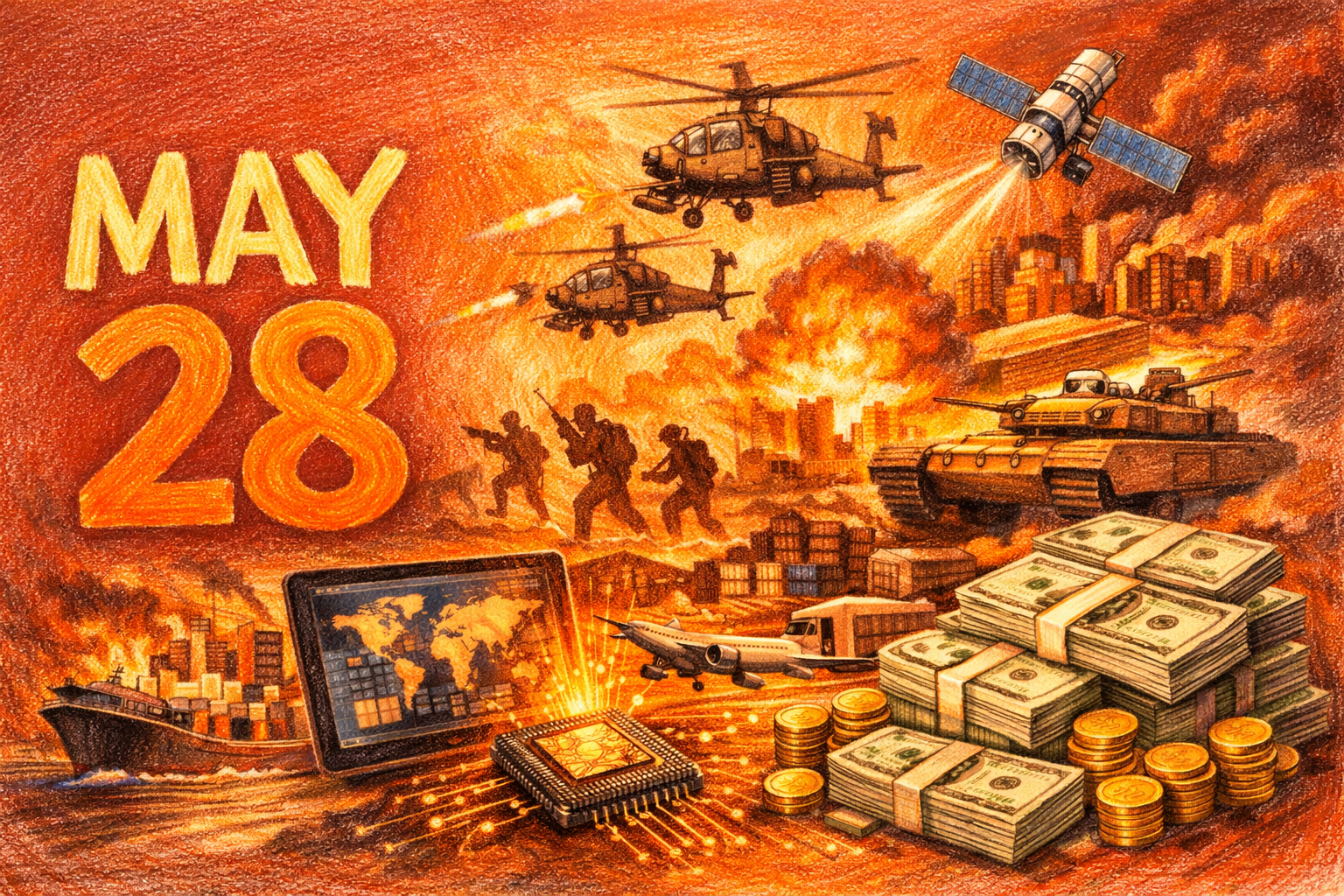
Good morning. It is Thursday, May 28, 2026. This is your deep-dive daily briefing. I am your anchor, delivering a comprehensive analysis of the pivotal events that have defined the last twenty-four hours.
We begin our broadcast on the world stage, where the strategic and military posturing surrounding the Middle East conflict has taken a highly calculated turn. While back-channel diplomatic efforts continue to fluctuate, a major Western power is aggressively accelerating its defense capabilities to monitor and deter expanding threat vectors. In Ottawa, the Government of Canada announced it has officially selected Saab of Sweden as the preferred supplier for its Airborne Early Warning and Control capability. Under this initiative, led by the nation's Defence Investment Agency, the Royal Canadian Air Force intends to deploy advanced GlobalEye surveillance platforms built on Canadian-manufactured Bombardier Global 6500 aircraft. This multi-billion-dollar strategic development is designed to significantly improve operational reach and situational awareness across remote theaters, including the Arctic, reinforcing North American security architecture at a moment when regional flashpoints are threatening to permanently disrupt traditional international borders.
Transitioning from continental security alignments to the broader global economy, the structural reality of the maritime crisis in the Persian Gulf is forcing international policymakers to confront an unprecedented supply deficit. In a landmark address delivered at the Bank of Japan Institute for Monetary and Economic Studies Conference in Tokyo, Dallas Federal Reserve President Lorie Logan revealed that the ongoing closure of the Strait of Hormuz has reduced global oil supplies by nearly 13 million barrels per day, representing more than 10% of total world capacity. Logan warned that while domestic inventory drawdowns and increased exports from the United States have temporarily insulated markets, these buffers are inherently finite. With energy executives reporting virtually no scope to expand oil production outside the Persian Gulf in the near term, the international community faces a stark economic ultimatum: if commercial shipping through the chokepoint does not rapidly return to pre-war baselines, global energy consumption will be forced to contract layout out a severe stagflationary drag for major industrial economies.
This sobering macroeconomic backdrop is triggering a powerful split across international capital markets, where energy anxieties are colliding with an insatiable appetite for advanced digital infrastructure. On Wall Street, major equity benchmarks rallied to historic highs on Wednesday, propelled by a blistering surge in semiconductor hardware providers. The market optimism was fueled by a dramatic 5% collapse in world oil prices following reports that secret diplomatic channels may yield a reopening of the Strait of Hormuz within a month, providing a temporary sigh of relief for global credit markets. This peace speculation triggered an unprecedented rally in the memory chip market, with computing giants like Micron Technology gaining up to 9% ahead of the opening bell as financial institutions aggressively raised corporate price targets. This capital concentration highlights a deeper structural reality in 2026, where the relentless expansion of artificial intelligence data centers is driving massive export growth and equity valuation booms across East Asia, establishing the tech hardware supply chain as a primary buffer against broader geopolitical instability.
Turning our attention to the technology sector itself, the societal and operational impact of this rapid digital expansion is generating a complex human deficit within the global workforce. According to the inaugural Human Connection Workplace Index released on Wednesday by enterprise AI platform Workday, the aggressive deployment of artificial intelligence tools is successfully reducing worker burnout and boosting productivity, with 86% of global employees reporting efficiency gains. However, this automation supercycle is simultaneously accelerating an acute corporate isolation crisis. The comprehensive study reveals that 14% of the global workforce has taken time off over the past year due to severe workplace loneliness, a phenomenon that is twelve times more pronounced among Generation Z professionals compared to older generations. As younger workers report that interacting with automated systems feels more socially frictionless than communicating with human colleagues, technology leaders are being forced to treat human connection as core infrastructure, dedicating significant capital to prosocial software and microgrants to prevent a total fragmentation of workplace culture.
Finally, we look at the logistics and supply chain networks that serve as the vital arteries of global commerce, which are now seeking long-term venture capital solutions to institutionalize resilience against state-level trade weaponization. In a major corporate development, TMV Logistics officially launched a 200 million dollar Maritime and Logistics Fund, backed by prominent anchor institutional investors including the American Bureau of Shipping and Prologis Ventures. This specialized vehicle is designed to systematically fund commercial software and hardware innovations across five core technological pillars, specifically targeting industrial-grade vehicle autonomy, verticalized warehouse robotics, and operational AI for real-time freight orchestration. By aggressively redirecting capital toward dual-use maritime technologies and next-generation alternative fuels, the global logistics industry is finalizing its transition away from the fragile, low-cost frameworks of the previous decade, acknowledging that navigating a permanently disrupted trading map requires a sophisticated baseline of digital self-sufficiency.
In summary, the global landscape is defined by Canada selecting Saab for an advanced airborne surveillance initiative while the Federal Reserve warns that the Strait of Hormuz closure has erased 10% of global oil supply. Financial markets have surged to record highs on chip strength and speculation of a one-month reopening window, occurring just as global technology research flags a severe human connection deficit from rapid AI adoption, and the logistics sector launches a 200 million dollar fund to secure autonomous maritime infrastructure.
Based on the current data, I predict that the 5% drop in oil prices and the concurrent stock market rally witnessed over the last twenty-four hours will prove to be a short-lived reaction to diplomatic speculation. While the market has aggressively priced in optimism surrounding a potential one-month reopening of the Strait of Hormuz, the underlying reality highlighted by the Federal Reserve remains mathematically uncompromising: global energy inventories are depleting rapidly, and there is zero spare capacity outside the Persian Gulf to replace a prolonged 13 million barrel per day deficit. Consequently, if a binding memorandum of understanding is not signed within the next fortnight, reality will catch up to capital markets, triggering a sharp resurgence in crude volatility. This structural friction ensures that the Federal Reserve will maintain a highly restrictive policy stance, utilizing hot core inflation numbers to justify keeping interest rates higher for longer through the remainder of 2026.
This content was created with the help of AI.https://tv.naver.com/v/100323116
세상 속에서
May 28, 2026
tv.naver.com
안녕히 주무셨습니까. 2026년 5월 27일 수요일입니다. 지난 24시간 동안 전 세계에서 발생한 주요 소식들을 심층적으로 전해드리는 일일 글로벌 브리핑입니다. 저는 오늘 진행을 맡은 앵커입니다.
먼저 국제 소식입니다. 중동 분쟁을 둘러싼 지정학적 및 군사적 대치 국면이 매우 계산된 방향으로 전개되고 있습니다. 막후 외교적 노력이 끊임없이 요동치는 가운데, 주요 서방 강국은 새로운 위협 요소를 감시하고 억제하기 위해 자국의 방위 역량을 공격적으로 강화하고 나섰습니다. 캐나다 정부는 자국 국방투자청의 주도로 추진되는 공중조기경보통제(AEWC) 사업의 우선협상대상자로 스웨덴의 팹(Saab)사를 공식 선정했다고 발표했습니다. 이번 사업을 통해 캐나다 왕립공군은 캐나다 봄바디어사가 제조한 글로벌 6500 항공기를 기반으로 구축된 첨단 글로벌아이(GlobalEye) 감시 플랫폼을 도입할 예정입니다. 수십억 달러 규모의 이번 전략적 인프라 확충은 북극권을 포함한 원격 전장의 상황 판단 능력과 작전 반경을 획기적으로 개선하여, 지역적 갈등이 기존의 국제 국경선을 영구적으로 위협하는 시점에 북미 안보 체제를 견고히 다지는 계기가 될 전망입니다.
안보 협력 소식에서 더 넓은 세계 경제 분야로 넘어가면, 페르시아만의 해상 마비 사태가 초래한 구조적 현실로 인해 국제 통화 당국이 전례 없는 공급 부족 사태 직면하고 있습니다. 일본 도쿄에서 열린 일본은행 금융경제연구소 콘퍼런스 기조연설에서 로리 로건 미국 달라스 연방준비은행 총재는 호르무즈 해협의 지속적인 폐쇄로 인해 전 세계 원유 공급량이 하루 평균 약 1,300만 배럴 감소했으며, 이는 전 세계 총 생산량의 10%를 상회하는 규모라고 밝혔습니다. 로건 총재는 미국의 원유 수출 증대와 비축유 방출이 단기적인 방어벽 역할을 하고 있으나 이러한 완충 재고는 본질적으로 유한할 수밖에 없다고 강력히 경고했습니다. 특히 민간 에너지 기업들이 단기간 내에 페르시아만 이외의 지역에서 원유 생산량을 늘릴 여지가 전혀 없다고 보고함에 따라, 국제사회는 해협을 통한 상업적 운항이 신속히 정상화되지 않을 경우 전 세계 에너지 소비가 강제로 위축되어 주요 제조국 경제에 심각한 스태그플레이션 리스크가 고착화될 것이라는 냉엄한 현실에 직면해 있습니다.
이러한 엄중한 거시경제적 배경은 국제 자본 시장 전반에 걸쳐 자원 공급 부족에 대한 불안감과 첨단 디지털 인프라를 향한 폭발적인 투자 수요가 충돌하는 거대한 격차를 만들어내고 있습니다. 뉴욕 증시에서 주요 지수들은 수요일 하드웨어 반도체 기업들의 압도적인 강세에 힘입어 사상 최고치를 경신했습니다. 이러한 자본 시장의 낙관론은 물밑 외교 채널을 통해 호르무즈 해협이 한 달 이내에 재개방될 수 있다는 낙관적인 전망이 확산되면서 국제 유가가 하루 만에 5% 급락하여 글로벌 신용 시장에 단기적인 안도감을 제공했기 때문입니다. 이러한 평화 협상 기대감은 메모리 반도체 시장의 전례 없는 폭등으로 이어졌고, 마이크론 테크놀로지 등 컴퓨팅 거물들은 금융 기관들이 목표 주가를 공격적으로 상향 조정함에 따라 개장 전 거래에서 9% 이상 급등했습니다. 이러한 자본 집중 현상은 2026년 현재 인공지능 데이터 센터의 폭발적인 확장이 동아시아 전역의 수출 성장과 증시 랠리를 견인하며 지정학적 위기 속에서 기술 하드웨어 공급망이 실물 경제를 지탱하는 핵심 버팀목 역할을 하고 있음을 보여줍니다.
기술 부문 자체로 시선을 돌려보면, 이러한 급격한 디지털 확장세가 글로벌 노동 환경 내에서 심각한 인간적 유대감 결핍이라는 부작용을 낳고 있습니다. 인사 및 재무 클라우드 기업인 워크데이(Workday)가 수요일 발표한 2026 인간 커넥션 직장 지수 보고서에 따르면, 기업형 인공지능 도구의 공격적인 도입이 근로자들의 업무 번역 스트레스를 줄이고 생산성을 높여 전 세계 직원의 86%가 효율성 개선을 체감하고 있는 것으로 나타났습니다. 그러나 이러한 자동화의 급격한 진전은 동시에 직장 내 고립감이라는 심각한 부작용을 유발하고 있습니다. 심층 조사 결과 전 세계 노동 인구의 14%가 지난 한 해 동안 직장 내 극심한 외로움으로 인해 휴가를 낸 경험이 있으며, 특히 제트(Z) 세대 젊은 직장인들의 경우 이전 세대보다 고립감을 느끼는 비율이 12배 이상 높게 나타났습니다. 젊은 근로자들이 사람과의 소통보다 자동화 시스템과의 상호작용을 사회적으로 마찰이 적고 편안하게 느끼기 시작함에 따라, 기술 기업 리더들은 직장 문화의 완전한 붕괴를 막기 위해 인간적 유대감 회복을 핵심 경영 인프라로 다루며 대대적인 사회적 연결 소프트웨어 개발과 마중물 자금 투입에 나서고 있습니다.
마지막으로 글로벌 상거래의 동맥인 물류 및 공급망 네트워크 소식입니다. 글로벌 물류 업계는 국가 차원의 자원 무기화 공세와 지정학적 위기로부터 자사 공급망을 보호하기 위해 장기적인 벤처 캐피털 자금을 동원하는 영구적인 구조적 대전환에 착수했습니다. 뉴욕에서 티엠브이(TMV) 로지스틱스는 미국선급협회(ABS)와 프롤로지스 벤처스 등 글로벌 물류 및 해운 규제 기관들을 핵심 앵커 투자자로 확보하여 2억 달러 규모의 해양 및 물류 기술 전문 펀드를 공식 출범했습니다. 이번에 조성된 대규모 자금은 산업용 차량 자율주행, 물류창고 전용 수직 계열화 로봇 공학, 그리고 실시간 화물 운송 오케스트레이션을 위한 운영 인공지능 등 5대 핵심 기술 부문에 집중 투자될 예정입니다. 이처럼 해상 이중 용도 기술과 차세대 대체 연료 확보에 자본을 공격적으로 투입하는 것은 글로벌 물류 업계가 지난 10년간 유지해 온 취약한 저비용 적기 생산 방식을 완전히 탈피하고, 파편화되는 무역 환경 속에서 생존하기 위한 기술적 자급자족 체제를 구축하기 시작했음을 의미합니다.
요약하자면, 현재 글로벌 지형은 캐나다가 북미 안보 강화를 위해 팹사의 첨단 공중 감시 시스템 도입에 착수한 가운데 연방준비은행이 호르무즈 해협 폐쇄로 세계 원유 공급의 10%가 유실되었다고 경고하는 위기 상황으로 정의됩니다. 금융 시장은 반도체 강세와 해협 재개방 기대감으로 사상 최고치를 경신한 반면, 기술 부문에서는 급격한 AI 도입에 따른 직장 내 고립감 수치가 공식 발표되었고, 물류 업계는 자율 해상 인프라 구축을 위한 2억 달러 규모의 전용 펀드를 출범했습니다.
현재의 지표들을 바탕으로 볼 때, 지난 24시간 동안 발생한 유가 5% 급락과 주식 시장의 폭등세는 외교적 기대감에 따른 단기적인 과잉 반응에 그칠 것으로 예측됩니다. 시장이 호르무즈 해협의 한 달 내 재개방 가능성에 공격적으로 낙관론을 투영하고 있으나, 연방준비은행이 제시한 데이터의 본질은 수학적으로 타협이 불가능한 엄중한 현실을 가리키고 있습니다. 글로벌 에너지 비축분은 빠른 속도로 고갈되고 있으며, 페르시아만 이외의 지역에는 하루 1,300만 배럴에 달하는 거대한 공급 공백을 대체할 수 있는 여유 생산 능력이 전혀 존재하지 않기 때문입니다. 결과적으로 향후 보름 이내에 구체적이고 법적인 구속력을 갖춘 평화 양해각서가 체결되지 않는다면, 실물 수급의 한계가 자본 시장을 강타하여 국제 유가의 급격한 반등을 유발할 것입니다. 이러한 공급망의 하방 경직성은 연방준비제도가 단기간 내에 통화 완화 정책으로 선회할 가능성을 차단하고, 2026년 남은 기간 동안 고금리 기조를 완고하게 유지하는 결정적인 배경이 될 것입니다.
이 콘텐츠는 AI의 도움을 받아 작성되었습니다.https://www.youtube.com/playlist?list=PLT29kw_Abnh1dEdLdoCEiSoA2NA0YXjQC
News
News
www.youtube.com
https://tv.naver.com/v/100323279?playlistNo=1022595
세상 속에서
May 28, 2026
tv.naver.com










 728x90
'손 가는 대로 > 그냥' 카테고리의 다른 글
Global News Update: May 29, 2026 (0) 2026.05.29 오늘의 운세 (2026년 5월 28일) (0) 2026.05.28 오늘의 별자리 운세 (2026년 5월 27일) (0) 2026.05.27 Global News Update: May 27, 2026 (0) 2026.05.27 오늘의 별자리 운세 (2026년 5월 26일) (0) 2026.05.26