-
4-3) 단순 제조를 넘어 종합 에너지 솔루션으로 진화하는 빅테크 기업들손 가는 대로/태양광 2026. 7. 21. 08:40728x90
4장. 소액으로 시작하는 주식 및 펀드 투자
3) 단순 제조를 넘어 종합 에너지 솔루션으로 진화하는 빅테크 기업들
통상적으로 '태양광 투자'라고 하면 태양광 패널(모듈)을 찍어내는 제조 기업이나 인버터를 만드는 하드웨어 회사를 떠올리기 쉽습니다. 하지만 최근 태양광 산업의 가장 큰 화두는 '제조'를 넘어선 '종합 에너지 솔루션'으로의 진화입니다. 단순히 전기를 만드는 판을 파는 것을 넘어, 생산된 전기를 저장하고, 남는 전기를 이웃이나 전력망에 팔며, AI를 활용해 에너지 효율을 극대화하는 소프트웨어와 플랫폼 사업으로 영역이 확장되고 있습니다.
이러한 변화를 주도하는 대표적인 빅테크 및 에너지 선도 기업들과 투자 시 고려해야 할 핵심 포인트들을 자세히 살펴보겠습니다.
1. 왜 '종합 에너지 솔루션'으로 진화하는가?
과거 태양광 산업은 "누가 더 크고 저렴하게 패널을 찍어내는가"의 싸움이었습니다. 하지만 중국발 공급 과잉으로 하드웨어 마진이 급감하면서, 기업들은 새로운 수익 창출구를 찾아야 했습니다.
* 수익성의 차이 (하드웨어 vs 소프트웨어): 태양광 패널 제조의 영업이익률이 한 자릿수(혹은 적자)에서 고전할 때, 에너지를 관리하는 소프트웨어와 플랫폼 비즈니스는 구독료를 받으며 훨씬 안정적이고 높은 이익률(SaaS 모델)을 가져다줍니다.
* AI 데이터센터의 폭발적 전력 수요: 마이크로소프트, 구글, 아마존 등 빅테크 기업들이 AI 데이터센터를 늘리면서 '24시간 무탄소 전원(CFE)'을 요구하고 있습니다. 날씨에 따라 발전량이 널뛰는 태양광의 단점을 극복하기 위해 대규모 에너지 저장 장치(ESS)와 전력을 분배하는 스마트 그리드 소프트웨어가 필수적이 되었습니다.
* 가상발전소(VPP, Virtual Power Plant)의 등장: 수많은 가정과 공장에 설치된 소규모 태양광 패널과 배터리를 클라우드 기반 소프트웨어로 묶어, 마치 하나의 거대한 발전소처럼 통제하고 전력을 거래하는 VPP 시장이 본격적으로 열리고 있습니다.
---
2. 솔루션으로 진화하는 대표 기업들
○ 테슬라 (Tesla) : 자동차 회사를 넘어 글로벌 전력 중개상으로
많은 분이 테슬라를 전기차(EV) 회사로만 알고 계시지만, 일론 머스크의 궁극적인 목표는 테슬라를 '글로벌 분산형 에너지 기업'으로 만드는 것입니다.
* 주요 사업 모델: 테슬라는 가정용 태양광 지붕(Solar Roof)과 가정용 배터리(Powerwall), 그리고 대규모 발전소용 ESS인 '메가팩(Megapack)'을 판매합니다.
* 핵심 강점 (Autobidder): 테슬라 에너지 사업의 진가는 '오토비더(Autobidder)'라는 AI 기반 전력 거래 소프트웨어에 있습니다. 고객의 배터리에 저장된 전기를 전력 가격이 비쌀 때 전력망에 자동으로 팔아 수익을 내줍니다. 이미 캘리포니아와 텍사스에서 테슬라 파워월 사용자들을 하나로 묶어 거대한 가상발전소(VPP)를 성공적으로 운영하고 있습니다.
○ 엔페이즈 에너지 (Enphase Energy) : 가정용 에너지 플랫폼의 애플
마이크로인버터(태양광 패널 뒷면에 붙는 소형 전력 변환기)의 세계 1위 기업인 엔페이즈는 자신들의 장비를 플랫폼으로 진화시켰습니다.
* 주요 사업 모델: 태양광 발전 현황, 배터리 충전 상태, 전기차(EV) 충전 스케줄 등을 스마트폰 앱 하나로 모두 제어할 수 있는 '홈 에너지 매니지먼트 시스템(HEMS)'을 제공합니다.
* 핵심 강점: 엔페이즈의 시스템을 한 번 설치한 소비자는 20년 이상 해당 생태계(앱)에 묶이게 되는 강력한 '락인(Lock-in) 효과'를 가집니다. 마치 애플의 아이폰을 쓰면 애플워치, 에어팟을 자연스럽게 사게 되는 것처럼, 태양광을 설치한 고객이 나중에 엔페이즈 배터리와 EV 충전기까지 추가 구매하도록 유도합니다.
○ 넥스트에라 에너지 (NextEra Energy) : 친환경 발전과 솔루션의 결합
미국 최대의 신재생 에너지 발전사이자 유틸리티 기업입니다. 단순 발전소를 넘어 빅테크 기업들의 입맛에 맞는 솔루션을 제공합니다.
* 주요 사업 모델: 태양광과 풍력 발전소를 직접 건설하고 운영하면서, 기업들에게 '서비스로서의 에너지(EaaS, Energy as a Service)'를 제공합니다.
* 핵심 강점: 데이터센터 전력을 100% 친환경으로 충당하려는 빅테크(구글, MS 등)에게 "태양광 발전 + ESS + 실시간 전력 최적화 소프트웨어"를 턴키(통짜)로 제공할 수 있는 압도적인 규모와 자금력을 갖추고 있습니다.
○ 한화솔루션 (큐셀 부문) : 모듈 제조사에서 토털 솔루션 프로바이더로
국내 기업 중에서는 한화솔루션(한화큐셀)의 행보가 가장 눈에 띕니다. 패널만 팔던 회사에서 탈피하기 위해 뼈를 깎는 체질 개선 중입니다.
* 주요 사업 모델: 모듈 판매를 넘어 태양광 발전소를 직접 기획, 건설, 매각하는 사업(EPC) 비중을 크게 늘리고 있습니다.
* 핵심 강점: 미국 샌프란시스코의 에너지 소프트웨어 기업 '젤리(Geli)'를 인수하면서 전력 관리 시스템(EMS) 기술을 확보했습니다. 현재 미국과 유럽 일부 지역에서 소비자와 전력망을 연결하여 수익을 나누는 초기 형태의 전력 중개 사업(VPP)을 적극적으로 추진하고 있습니다.
---
3. 솔루션 기업 투자 시 체크포인트
이러한 종합 솔루션 기업의 주식이나 펀드에 소액 투자를 하실 때는 다음 세 가지를 반드시 고려해야 합니다.
1) 소프트웨어(구독) 매출 비중을 확인하세요.
기업의 전체 매출에서 1회성 하드웨어 판매가 아닌, 다달이 들어오는 소프트웨어 및 플랫폼 수익(Recurring Revenue) 비중이 얼마나 빠르게 늘고 있는지 확인해야 합니다. 이 비중이 높을수록 시장에서 훨씬 더 높은 가치(Valuation)를 인정받습니다.
2) 배터리(ESS) 결합 역량이 있는가?
솔루션의 핵심은 '저장'입니다. 태양광 패널만 다루고 에너지 저장 장치에 대한 솔루션이 부실한 기업은 전력 중개 시장이나 VPP 시장에서 도태될 수밖에 없습니다.
3) 각국 정부의 전력망 규제(그리드 이슈).
아무리 훌륭한 소프트웨어가 있어도, 국가의 낡은 송배전망이 새로운 에너지를 받아들이지 못하면 무용지물입니다. 기업이 진출한 국가(특히 미국, 유럽)의 전력망 현대화 정책과 인허가 속도가 기업의 성장 속도를 결정짓는 가장 큰 외부 변수입니다.
---
Big Tech and Giants Evolving into Comprehensive Energy Solutions
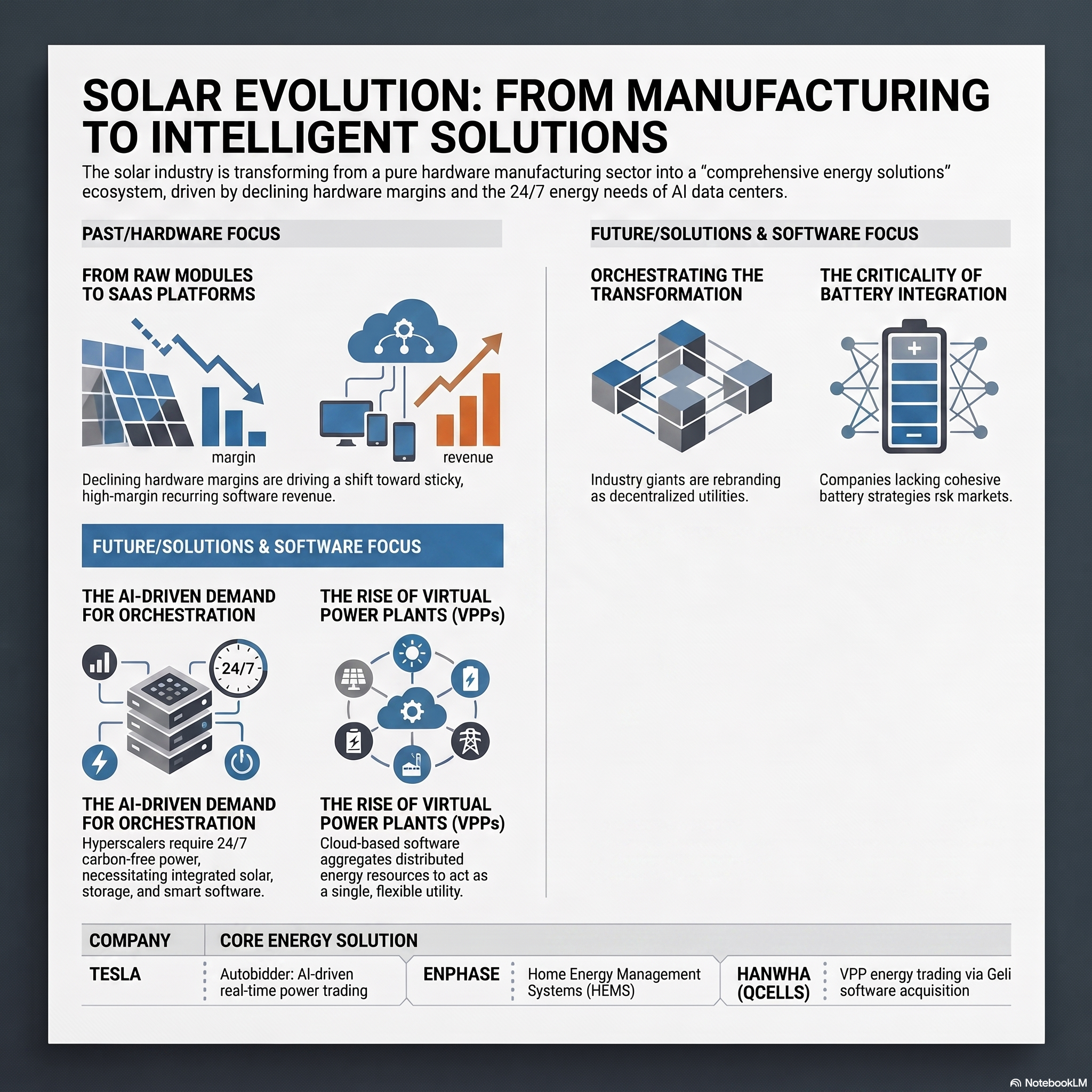
Traditionally, "solar investing" conjured images of factories mass-producing silicon panels or metal inverters. However, the true frontier of the renewable sector has drastically shifted. The industry is rapidly evolving from pure hardware manufacturing into Comprehensive Energy Solutions. Companies are no longer just selling the panels that generate electrons; they are providing the software, storage systems, and AI-driven platforms to manage, trade, and optimize those electrons on the grid.
Let’s dive into the critical drivers behind this evolution and analyze the key corporate players orchestrating this shift.
1. The Strategic Shift to Energy-as-a-Service (EaaS)
The transition from a manufacturing mindset to a software-driven ecosystem is driven by three macro factors:
* The Hardware Commoditization Trap: Mass production, particularly driven by Chinese overcapacity, has crashed the margins on raw solar modules. In contrast, software and energy management platforms offer sticky, recurring Software-as-a-Service (SaaS) revenues with significantly higher profit margins. Investors pay a massive premium for predictable software revenue compared to cyclical hardware sales.
* The AI Data Center Appetite: Hyperscalers like Microsoft, Amazon, and Google are currently driving an unprecedented surge in power demand due to AI data centers. Because these companies require 24/7 carbon-free energy (CFE), intermittent solar alone is insufficient. They require integrated solutions combining solar, massive battery storage, and smart orchestration software to ensure uninterrupted green power.
* The Rise of Virtual Power Plants (VPPs): A VPP uses cloud-based software to aggregate thousands of distributed energy resources (DERs)—like residential solar panels, home batteries, and EV chargers—acting as a single, flexible power plant that can buy and sell energy to the macro grid to balance supply and demand.
2. Key Players Orchestrating the Transformation
○ Tesla (Tesla Energy): The Grid Orchestrator
While retail investors focus on Tesla's EVs, Elon Musk envisions Tesla as a decentralized global utility.
* The Strategy: Beyond selling the physical Solar Roof and Powerwall, Tesla's crown jewel is Autobidder. This real-time trading and control platform uses machine learning to autonomously monetize battery assets.
* Why it Matters: Tesla is already operating massive VPPs in California and Texas, pooling thousands of residential Powerwalls to dispatch power to the grid during peak pricing hours, earning money for both the consumer and Tesla.
○ Enphase Energy: The Apple of Home Energy
The pioneer of microinverters has successfully pivoted into a comprehensive Home Energy Management System (HEMS) provider.
* The Strategy: Enphase offers a unified, app-based ecosystem that controls solar generation, battery storage, EV charging, and even load management for HVAC systems.
* Why it Matters: The ecosystem creates immense consumer lock-in. Once a homeowner installs the Enphase brain, the friction to switch providers for a future battery or EV charger is too high. This expands Enphase’s revenue per home significantly while building a platform ready for VPP integration.
○ NextEra Energy: The Utility-Scale Solution Provider
As the world's largest generator of renewable energy from the wind and sun, NextEra goes far beyond building traditional solar farms.
* The Strategy: Through its NextEra Energy Resources (NEER) subsidiary, it provides bespoke Energy-as-a-Service (EaaS) contracts to massive corporate clients and hyperscalers.
* Why it Matters: NextEra blends its massive renewable physical assets with proprietary AI grid-management software (like NextEra 360) to guarantee stable, firm, green power to data centers—a capability pure-play hardware manufacturers simply cannot match.
○ Hanwha Solutions (Qcells): From Module Maker to Power Developer
Hanwha Qcells is aggressively shedding its identity as just a solar panel manufacturer to survive the margin squeeze.
* The Strategy: Qcells is expanding heavily into EPC (Engineering, Procurement, and Construction) and solar project development. Furthermore, by acquiring the San Francisco-based energy software company Geli, they acquired the brain to manage energy storage.
* Why it Matters: They are actively launching VPP and retail energy businesses in the US and Europe. By pairing their dominant US market share in residential hardware with Geli's software, they aim to capture recurring energy trading revenues.
3. Investor Checklist: Evaluating Energy Solution Providers
When evaluating stocks or funds in this sector, apply this specific lens:
1) Revenue Mix (Hardware vs. Software): Scrutinize earnings reports to see the trajectory of their recurring software or services revenue. Hardware generates cash, but software generates high valuation multiples.
2) Storage and Integration Capability: Without an Energy Storage System (ESS) integration, solar energy is dumb. Companies that lack a cohesive battery strategy will be locked out of the lucrative VPP and grid-balancing markets.
3) Grid Interconnection and Regulatory Moats: The greatest bottleneck for these companies is not technology, but aging grid infrastructure and slow interconnection queues. Prioritize companies operating in regions with favorable regulatory environments (e.g., FERC Order 2222 in the US, which mandates grid operators to allow VPPs to compete in wholesale markets).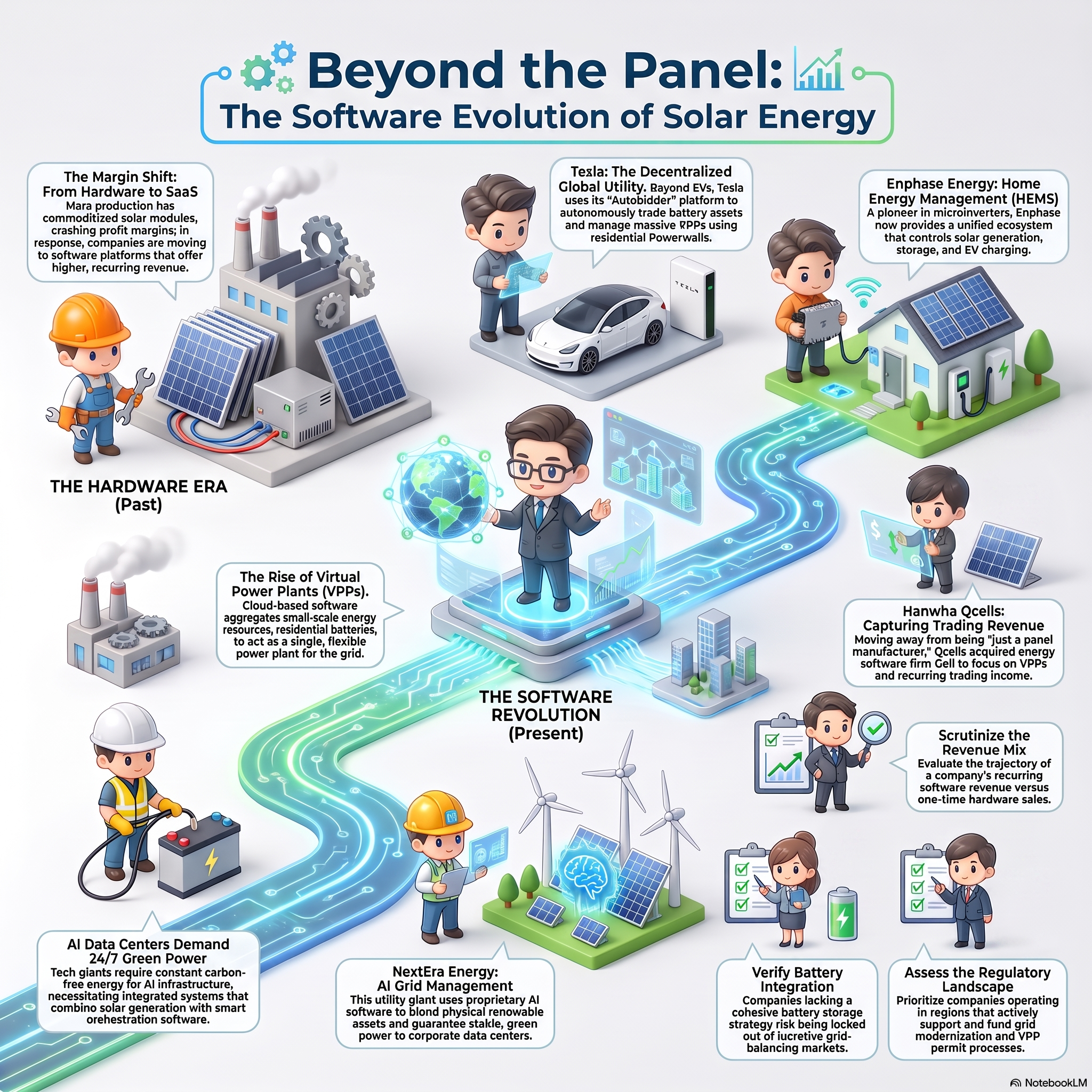 728x90
'손 가는 대로 > 태양광' 카테고리의 다른 글
5-1) 커피 한 잔 값으로 시작하는 태양광 크라우드 펀딩 (0) 2026.07.22 4-4) 리스크를 줄이는 태양광 ETF 및 친환경 펀드 투자법 (0) 2026.07.21 4-2) 분야별 국내외 1등 기업은 어디일까? (핵심 제조사 및 장비 업체 분석) (0) 2026.07.20 4-1) 태양광 밸류체인 해부: 폴리실리콘부터 잉곳, 웨이퍼, 셀, 모듈까지 (0) 2026.07.20 3-4) 유휴 자산(부동산)의 가치 상승 (0) 2026.07.16