-
5-1) 커피 한 잔 값으로 시작하는 태양광 크라우드 펀딩손 가는 대로/태양광 2026. 7. 22. 08:25728x90
5장. 플랫폼을 활용한 조각 투자
1) 커피 한 잔 값으로 시작하는 태양광 크라우드 펀딩
---
태양광 발전 사업이라고 하면 흔히 넓은 임야나 거대한 공장 지붕, 그리고 수억 원에서 수십억 원에 달하는 막대한 초기 자본을 떠올리시죠? 과거에는 실제로 그랬습니다. 자본력이 있는 기업이나 일부 부유한 개인투자자들의 전유물이었죠.
하지만 금융 기술(Fintech)과 플랫폼 비즈니스가 결합하면서 태양광 투자의 패러다임이 완전히 바뀌었습니다. 이제는 누구나 스마트폰 앱을 통해, 마치 커피 한 잔 값을 결제하듯 소액으로 태양광 발전소의 주인이 될 수 있는 시대가 열렸습니다. 이것이 바로 '태양광 조각 투자'이자 '크라우드 펀딩(Crowdfunding)'입니다.
1. 태양광 크라우드 펀딩, 조각 투자의 원리
'조각 투자(Fractional Investment)'란 말 그대로 거대한 자산을 여러 개의 작은 조각으로 나누어 다수의 투자자가 공동으로 소유하는 방식입니다. 태양광 크라우드 펀딩은 이 방식을 신재생에너지 발전소에 적용한 것입니다.
작동 원리는 이렇습니다.
1) 사업 발굴 및 평가: 전문 플랫폼 기업(예: 한국의 모햇, 루트에너지, 미국의 Sustvest 등)이 사업성이 우수한 태양광 발전소 부지(공장 지붕, 유휴 부지 등)를 발굴하고 엄격한 심사를 거칩니다.
2) 펀딩 오픈: 발전소를 짓거나 운영하는 데 필요한 자금을 쪼개어 플랫폼에 올립니다.
3) 투자 참여: 개인 투자자들은 최소 1만 원에서 10만 원 정도의 소액으로 원하는 만큼의 펀드 조각을 구매합니다.
4) 수익 배분: 발전소가 완공되어 한국전력(KEPCO)이나 기업(RE100 참여 기업 등)에 전기를 팔아 수익이 발생하면, 투자자들은 자신이 투자한 지분만큼 매월 또는 매분기 배당금 형태로 수익을 돌려받습니다.
2. 왜 태양광 크라우드 펀딩에 열광할까요? (투자 매력도)
투자자들이 주식이나 부동산 대신 태양광 조각 투자에 주목하는 이유는 명확합니다.
* 안정적이고 예측 가능한 수익 (연 7~11%): 주식은 하루아침에 30%가 폭락할 수 있지만, 태양광은 해가 뜨는 한 매일 전기를 생산합니다. 특히 생산된 전기는 국가 전력망이나 대기업과 보통 15~20년의 장기 고정 가격 계약(PPA, 전력구매계약)을 맺고 판매됩니다. 따라서 주식 시장의 등락과 무관하게(Low Correlation) 연평균 7%에서 많게는 11% 수준의 안정적인 현금 흐름(Cash Flow)을 기대할 수 있습니다.
* 낮은 진입 장벽 (소액 투자): 수억 원의 빚을 낼 필요 없이 10만 원만 있어도 '나만의 발전소' 지분을 가질 수 있습니다. 커피 몇 잔 아낀 돈으로 환경도 살리고 수익도 얻는 셈이죠.
* 직관적인 실물 자산: 복잡한 파생상품이나 눈에 보이지 않는 가상화폐가 아닙니다. 내가 투자한 돈으로 특정 지역(예: 경기도 포천의 변전소 지붕, 제주도의 염전 등)에 실물 발전소가 세워지고, 맑은 날씨에는 수익이 더 잘 나오는 것을 앱을 통해 직관적으로 확인할 수 있습니다.
* 기후 위기 대응에 동참 (임팩트 투자): 내 돈이 화석 연료 대신 친환경 재생에너지를 생산하는 데 직접적으로 쓰인다는 점에서, 경제적 수익과 사회적 가치를 동시에 추구하는 '임팩트 투자(Impact Investment)'의 성격을 띱니다.
3. 대표적인 크라우드 펀딩 플랫폼과 사례
국내외에는 이미 성공적으로 태양광 조각 투자를 이끄는 플랫폼들이 활약하고 있습니다.
○ 루트에너지 (Root Energy) - 대한민국
* 특징: 국내 최초로 커뮤니티(주민 참여형) 펀딩 모델을 도입한 선구적인 기업입니다.
* 사례: 한국전력공사 경기북부본부와 협력하여 '신포천변전소' 내 남는 땅에 태양광 발전소를 짓기 위해 1억 7천만 원 규모의 펀딩을 진행했습니다. 일반 투자자에게는 연 6.5~7%의 이자를 주지만, 발전소가 지어지는 포천 지역 주민들에게는 0.5%의 우대 금리를 추가로 주어 지역 사회의 반대를 찬성으로 바꾸는 훌륭한 상생 모델을 만들었습니다.
○ 모햇 (Mohat) - 대한민국 (에이치에너지 운영)
* 특징: 공장이나 창고의 텅 빈 지붕을 활용하는 '지붕 태양광' 펀딩에 특화되어 있습니다.
* 사례: 개인이 조합원으로 참여하여 지붕 태양광 발전소의 주인이 되는 '모햇 발전소' 상품을 운영합니다. 지붕 태양광은 토지 보상비가 없고 민원이 적어 수익률이 높은데, 이를 바탕으로 연 9~11%라는 매력적인 수익률을 제공하며 큰 인기를 끌고 있습니다.
○ 서스트베스트 (Sustvest) - 미국/인도
* 특징: 상업용 및 유틸리티 규모의 태양광 프로젝트를 소액 단위로 쪼개어(Fractional Solar) 판매하는 글로벌 플랫폼입니다.
* 사례: 투자자들에게 발전소의 정확한 위치, PPA(전력구매계약) 조건, 예상 발전량을 투명하게 공개합니다. 투자자들은 주식 시장의 변동성에 영향받지 않고, 실제 전력 판매에서 나오는 수익을 매달 달러(USD)로 배당받습니다.
4. 조각 투자, 이것만은 꼭 주의하세요! (리스크 관리)
아무리 좋아 보여도 투자는 투자입니다. 다음 사항들을 반드시 체크해야 합니다.
1) 유동성(환금성)의 한계: 주식은 원할 때 바로 팔 수 있지만, 태양광 조각 투자는 보통 1년에서 3년, 길게는 5년 이상의 '보호 예수 기간(Lock-in period)'이 있습니다. 중간에 돈을 빼기 어렵기 때문에 반드시 당장 쓰지 않아도 되는 여윳돈으로 투자해야 합니다.
2) 플랫폼의 신뢰도: 발전소가 20년간 수익을 내더라도, 중간에서 돈을 관리하는 플랫폼 회사가 파산하면 투자금을 잃을 수 있습니다. 플랫폼이 금융위원회 등 정부 기관의 인가를 받은 합법적인 업체인지, 투자자 보호 장치(예: 플랫폼 파산 시에도 발전소 수익은 신탁 회사를 통해 보호받는 구조 등)가 마련되어 있는지 1순위로 확인해야 합니다.
3) 분산 투자 필수: 아무리 심사를 잘해도 특정 지역에 비가 계속 오거나 기계 고장이 나면 수익이 줄어듭니다. 1천만 원을 하나의 발전소에 넣기보다는, 100만 원씩 10개의 각기 다른 발전소(지붕형, 수상형 등 지역 분산)에 쪼개어 투자하여 리스크를 최소화해야 합니다.
---
○ English Version: A Cup of Coffee's Worth: Starting with Solar Crowdfunding
When people think of "solar energy investment," they often envision vast solar farms spread across acres of land, requiring millions of dollars in upfront capital. Historically, this was true—solar project ownership was an exclusive playground for massive corporations or ultra-high-net-worth individuals.
However, the intersection of Fintech and renewable energy has completely democratized this sector. Today, anyone with a smartphone can become a fractional owner of a solar power plant for the price of a few cups of coffee. This is the era of Fractional Solar Investment and Renewable Energy Crowdfunding.
1. How Fractional Solar Crowdfunding Works
Fractional investment means breaking down a large, illiquid asset into smaller, affordable units (or shares) that multiple investors can co-own. Solar crowdfunding applies this exact model to energy-generating infrastructure.
The mechanism operates in four distinct steps:
1) Project Origination & Due Diligence: Specialized platform companies (e.g., Root Energy or Mohat in Korea, Sustvest for US/India) identify highly viable solar project sites—like idle factory rooftops or empty utility land. They conduct rigorous financial and engineering due diligence.
2) Crowdfunding Campaign: The total capital required to construct or operate the plant is divided into fractional shares and listed on the platform.
3) Micro-Investing: Individual investors browse the projects and purchase shares for as little as $10 to $100.
4) Revenue Distribution: Once the solar plant is operational, it sells the electricity generated to the national grid or large corporations under long-term, fixed-price contracts known as Power Purchase Agreements (PPAs). The revenue from these sales is then distributed to the fractional owners—monthly or quarterly—in proportion to their initial investment.
2. Why Are Investors Flocking to Fractional Solar?
Retail investors are increasingly pivoting from volatile stock markets to fractional solar for several compelling reasons:
* Stable and Predictable Yields (7-11% APY): While stock prices can crash 30% on an earnings miss, solar panels generate power consistently every day the sun shines. Because the electricity is sold under 15-to-20-year fixed-price PPAs, fractional solar offers a highly predictable, bond-like cash flow, typically yielding between 7% and 11% annually, with very low correlation to the stock market.
* Radically Low Barriers to Entry: You don't need to take out a massive loan to put panels on your own roof. With just $50, you can own a slice of a commercial-scale solar farm.
* Tangible, Real-World Assets: Unlike complex derivatives or volatile cryptocurrencies, this is a real asset producing real energy. Investors can log into their apps and intuitively track how sunny weather at the specific project site (e.g., a warehouse roof in Texas or a substation in Korea) directly correlates to their monthly dividend.
* Impact Investing: It offers a double bottom line. Investors achieve strong economic returns while their capital directly finances the deployment of clean energy, displacing fossil fuels and actively combating climate change.
3. Leading Platforms and Real-World Examples
Several innovative platforms are successfully proving this model globally:
○ Root Energy (South Korea)
* The Model: A pioneer in community-driven crowdfunding models.
* The Case Study: They partnered with the Korea Electric Power Corporation (KEPCO) to raise funding for a solar plant on the idle land of a regional substation. To overcome the typical "Not In My Backyard (NIMBY)" opposition from local residents, Root Energy offered the general public a 6.5-7% yield, but offered an *additional 0.5% premium rate* specifically for local residents. This brilliantly transformed community opposition into active, profitable participation.
○ Mohat (South Korea)
* The Model: Specializes in "Rooftop Solar" crowdfunding, utilizing the empty roofs of factories and warehouses.
* The Case Study: Because rooftop solar avoids expensive land acquisition costs and environmental permitting hurdles, it generates higher margins. Mohat structures these as cooperative models, allowing individuals to become cooperative members who own the rooftop plants, often delivering attractive yields of 9-11% to the micro-investors.
○ Sustvest (US/India focus)
* The Model: A platform allowing users to buy fractional shares of commercial and utility-scale solar projects.
* The Case Study: They prioritize total transparency, providing investors with the exact site location, specific PPA terms, and expected generation metrics. Investors receive their share of the energy sales as monthly USD cash distributions, completely insulated from the wild price swings of public stock exchanges.
4. Risk Management: What You Must Watch Out For
Despite the attractiveness, fractional solar is not without risks. Investors must rigorously evaluate three factors:
1) Illiquidity (The Lock-in Period): Unlike stocks that you can sell with a click, fractional solar investments usually require a lock-in period ranging from 1 to 5 years. There is often no secondary market to sell your shares quickly. Therefore, you must only invest capital that you do not need in the short term.
2) Platform Counterparty Risk: Even if the solar plant operates perfectly for 20 years, if the crowdfunding platform managing the payouts goes bankrupt, your investment is at risk. Always verify that the platform is legally registered with financial regulators and utilizes robust investor protection mechanisms (e.g., ensuring the solar assets and revenues are held in a separate, bankruptcy-remote trust).
3) The Necessity of Diversification: Never put all your capital into a single solar project. A localized grid outage, prolonged bad weather, or an equipment failure at one site can slash your returns. The golden rule is to spread your capital across 10 or 20 different projects across various geographic locations to insulate your portfolio from localized disruptions.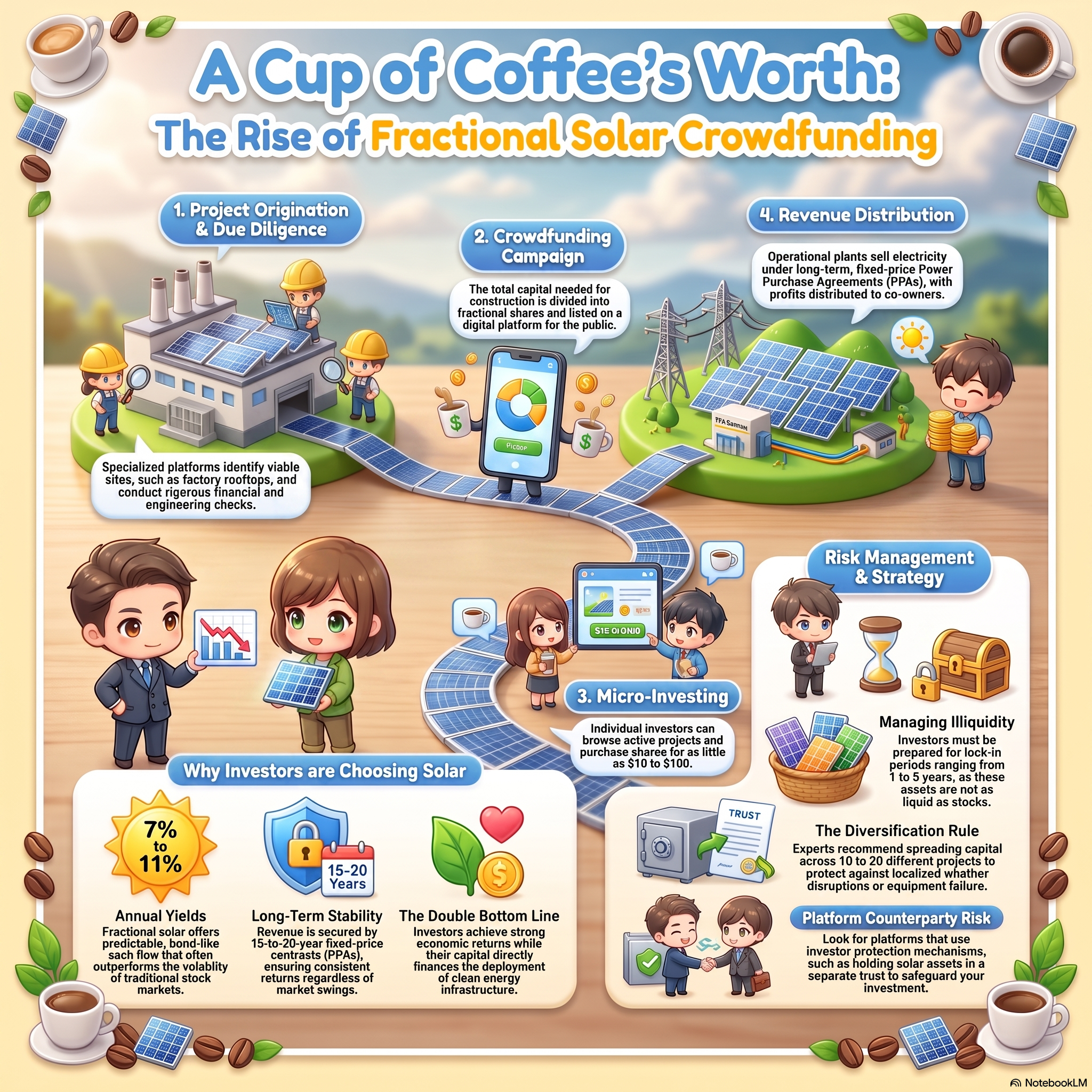 728x90
'손 가는 대로 > 태양광' 카테고리의 다른 글
5-3) 출구 전략(Exit)과 유동성: 20년 장기 투자, 중간에 돈이 필요하다면? (0) 2026.07.23 5-2) 투자 구조의 이해: 내 돈은 어떻게 발전소가 될까? (SPC 구조와 투자 원리) (0) 2026.07.22 4-4) 리스크를 줄이는 태양광 ETF 및 친환경 펀드 투자법 (0) 2026.07.21 4-3) 단순 제조를 넘어 종합 에너지 솔루션으로 진화하는 빅테크 기업들 (0) 2026.07.21 4-2) 분야별 국내외 1등 기업은 어디일까? (핵심 제조사 및 장비 업체 분석) (0) 2026.07.20