-
6-4) 도심 속 틈새시장: 벽면형(BIPV)과 자투리 공간 주차장 태양광손 가는 대로/금융자산운용 2026. 7. 30. 08:06728x90
6장 내 이름으로 된 발전소 갖기: 어디에 어떻게 지을까?
4) 도심 속 틈새시장: 벽면형(BIPV)과 자투리 공간 주차장 태양광
태양광 투자 A to Z의 6장 "내 이름으로 된 발전소 갖기: 어디에 어떻게 지을까?" 중 네 번째 주제인 "4) 도심 속 틈새시장: 벽면형(BIPV)과 자투리 공간 주차장 태양광"입니다.
---
지금까지 넓은 임야나 거대한 공장 지붕을 활용하는 전통적인 태양광 투자 방식을 살펴보았습니다. 하지만 도심지나 인구 밀집 지역에서는 부지 확보 자체가 불가능에 가깝고 땅값도 매우 비쌉니다. 이로 인해 똑똑한 투자자들과 부동산 개발업자들은 도심 속에서 버려지고 있는 '자투리 공간'과 '건물의 외벽'으로 눈을 돌리기 시작했습니다.
바로 건물일체형 태양광(BIPV)과 주차장 태양광입니다. 이 두 가지 방식은 단순한 전력 생산을 넘어 건축물의 가치 상승과 전기차(EV) 인프라와의 결합이라는 강력한 시너지를 내고 있습니다. 각각의 투자 매력도와 주의해야 할 리스크를 상세히 분석해 보겠습니다.
1. 건물일체형 태양광(BIPV): 건축 자재가 된 태양광 패널
건물일체형 태양광(Building-Integrated Photovoltaics, BIPV)은 건축물의 외벽, 창호, 지붕재 등을 아예 태양광 패널로 대체하여 시공하는 방식입니다. 일반 패널을 옥상에 '얹는' 방식(BAPV)과는 근본적으로 다릅니다.
* 투자 강점 (건물 가치 상승과 제로에너지건축물 의무화): BIPV의 가장 큰 매력은 별도의 토지가 필요 없다는 점입니다. 또한, 2026년 현재 대한민국을 비롯한 전 세계 주요 국가에서 '제로에너지건축물(ZEB)' 인증이 민간 건축물로 확대 및 의무화되고 있습니다. 건물을 새로 짓거나 리모델링할 때 일정 비율 이상의 에너지를 자체 생산해야 하는데, 도심에서는 BIPV가 사실상 유일한 해답입니다. 최근에는 검은색 패널뿐만 아니라 파란색, 회색 등 다양한 색상과 투명도를 가진 BIPV가 상용화되어 건축물의 심미성을 크게 높여주며, 이는 곧 부동산 자산 가치의 상승으로 직결됩니다.
* 투자 시 주의사항 (높은 초기 비용과 발전 효율의 한계): 일반 태양광 패널은 태양빛을 가장 잘 받는 최적의 각도(보통 30도 내외)로 눕혀서 설치합니다. 하지만 BIPV는 건물 외벽에 수직(90도)으로 세워져 설치되는 경우가 많아 일사량을 온전히 흡수하지 못합니다. 따라서 동일한 용량을 설치하더라도 일반 지붕형에 비해 발전 효율이 20~30퍼센트가량 떨어질 수 있습니다. 또한 맞춤형으로 제작되고 건축 공정에 통합되어야 하므로 초기 설치비용(CAPEX)이 일반 태양광 대비 2배 이상 높으며, 고장 시 유지보수나 패널 교체가 매우 까다롭습니다.
* 구체적 예시: 서울 강남에 신축되는 대형 오피스 빌딩에 투자하는 펀드가 있다고 가정해 보겠습니다. 이 건물은 남쪽과 서쪽 유리 외벽 전체를 반투명 BIPV로 마감했습니다. 초기 건축비는 증가했지만, 건물 자체의 단열 효과가 개선되어 냉난방비가 절감되고 생산된 전기로 건물의 기저 전력을 충당합니다. 더불어 제로에너지건축물 최고 등급을 획득하여 용적률 및 취득세 완화 혜택을 받아 결과적으로 건물의 전체 수익률을 극대화하는 데 성공했습니다.
2. 주차장 태양광: 전기차(EV) 시대의 황금알
주차장 태양광은 대형 마트, 공공기관, 휴게소, 산업단지 등의 야외 주차장 위에 철골 구조물을 세우고 그 지붕을 태양광 패널로 덮는 방식입니다.
* 투자 강점 (유휴 부지의 수익화와 전기차 시너지): 주차장 태양광은 1석 3조의 효과를 냅니다. 첫째, 버려지던 허공을 발전소로 만들어 수익을 창출합니다. 둘째, 여름철 뙤약볕이나 겨울철 폭설로부터 차량을 보호하는 가림막 역할을 하여 주차장 이용객의 만족도를 크게 높입니다. 셋째, 전기차 충전 인프라와의 완벽한 결합입니다. 지붕에서 생산한 전기를 즉시 아래에 있는 전기차 충전기로 보내 판매함으로써 전력 송배전 손실을 없애고 수익을 극대화할 수 있습니다. 이미 프랑스나 독일 등에서는 일정 규모 이상의 주차장에 태양광 설치를 법으로 의무화하고 있습니다.
* 투자 시 주의사항 (높은 구조물 공사비와 안전 리스크): 주차장은 차량이 이동하는 공간이므로 기둥과 기둥 사이의 간격(경간)을 매우 넓게 설계해야 합니다. 눈이나 태풍의 하중을 버티면서도 넓은 간격을 유지하려면 일반 토지형 태양광보다 훨씬 굵고 튼튼한 특수 철골을 사용해야 하며, 이는 구조물 공사비용의 가파른 상승으로 이어집니다. 또한, 주차를 하던 대형 트럭이나 탑차가 구조물 기둥을 들이받을 위험이 상존하므로, 이에 대비한 물리적 방호벽 설치와 강력한 보험 가입이 필수적입니다.
* 구체적 예시: 경기도 외곽의 대형 아울렛 지상 주차장에 1MW급 태양광 발전소를 짓는 민간 투자 모델입니다. 주차장 부지 소유주에게 임대료를 지불하고 캐노피 형태의 발전소를 세웁니다. 생산된 전기는 신재생에너지 공급인증서(REC) 가중치 1.5배의 높은 단가로 전력망에 판매할 뿐만 아니라, 주차장 하부에 급속 전기차 충전기 20대를 설치하여 충전 사업 수익까지 동시에 창출합니다. 부지 매입비가 없고 주민 민원이 발생하지 않아 인허가 기간이 매우 짧다는 것이 이 투자의 핵심 성공 요인이었습니다.
3. 요약: 도심 틈새시장의 투자 전략
BIPV(건물일체형 태양광)는 단순한 전력 판매 수익보다는 신축 건물이나 대수선 리모델링 시 제로에너지 규제 대응과 부동산 자산 가치(친환경 프리미엄)를 높이려는 부동산 개발 투자자(디벨로퍼)에게 적합한 솔루션입니다.
반면 주차장 태양광은 넓은 야외 주차장을 보유한 부지 소유주나, 전기차 충전 사업(마이크로그리드)과의 연계를 통해 도심 인근에서 빠르고 안정적인 현금 흐름을 창출하고자 하는 인프라 투자자에게 가장 매력적이고 확실한 틈새시장입니다.
---
Urban Niche Markets: Building-Integrated Photovoltaics (BIPV) and Solar Carports
When investors think of direct solar ownership, massive ground-mounted utility farms or sprawling industrial rooftops usually come to mind. However, as urbanization intensifies and land in metropolitan areas becomes exorbitantly expensive and strictly zoned, capital is aggressively flowing into the "dead spaces" of our cities.
In 2026, two urban niche applications have transitioned from experimental concepts to highly lucrative mainstream investments: Building-Integrated Photovoltaics (BIPV) and Solar Carports. Both approaches bypass traditional land acquisition and offer unique synergies with modern urban infrastructure. Let us dissect the investment profiles of these two fast-growing sectors.
1. Building-Integrated Photovoltaics (BIPV): Turning Facades into Power Plants
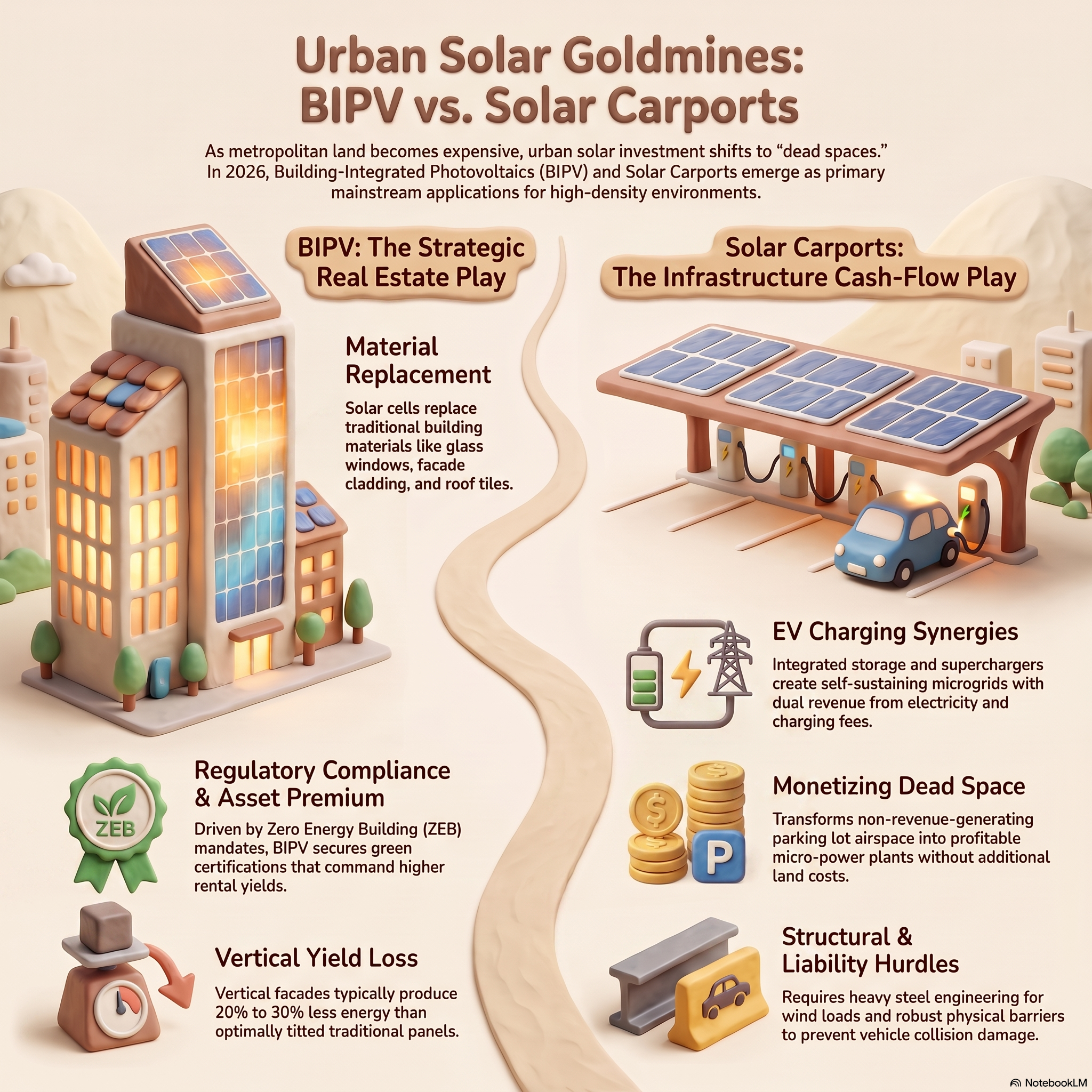
Unlike Building-Applied Photovoltaics (BAPV), where standard solar panels are bolted onto an existing roof, Building-Integrated Photovoltaics (BIPV) completely replaces conventional building materials—such as glass windows, facade cladding, or roof tiles—with active, power-generating solar materials.
* The Investment Strength (Regulatory Tailwinds and Asset Premium): BIPV is driven heavily by policy mandates. Across the European Union (through the Energy Performance of Buildings Directive) and advanced Asian markets, stringent Zero Energy Building (ZEB) mandates are now in full effect for new commercial and residential developments. Urban high-rises lack sufficient roof space to meet these energy generation mandates, making BIPV on vertical facades the only viable compliance strategy. Furthermore, the technology has matured; BIPV panels now come in various colors and transparency levels. For real estate investors, integrating BIPV not only ensures regulatory compliance but also secures high-tier green building certifications (like LEED Platinum or BREEAM), which commands a significant premium in rental yields and total asset valuation.
* The Hurdles (High CapEx and Vertical Yield Loss): BIPV carries a hefty initial Capital Expenditure (CapEx). It requires custom manufacturing and complex integration with the building’s structural and electrical architecture during the design phase. More importantly, from a pure energy generation standpoint, vertical facades catch less direct sunlight than panels tilted at optimal angles. Therefore, the specific yield (energy produced per installed kilowatt) can be 20 to 30 percent lower than traditional arrays. Maintenance is also a challenge; replacing a faulty BIPV window on the 30th floor requires specialized architectural glazers, not just solar technicians.
* Practical Example: A real estate investment trust (REIT) is developing a new 40-story corporate headquarters in Frankfurt. By replacing traditional glass cladding with semi-transparent BIPV windows on the south and west facades, the building generates enough power to offset 30 percent of its HVAC energy consumption. While the upfront facade cost was double that of standard glass, the building immediately qualified for massive government green-transition grants, met the 2026 EU ZEB mandates, and attracted a multinational tenant willing to pay premium rent for a zero-carbon footprint headquarters.
2. Solar Carports: The Golden Egg of the EV Era
Solar carports, or solar canopies, are elevated steel structures topped with solar panels, installed over open-air parking lots at shopping malls, stadiums, airports, and corporate campuses.
* The Investment Strength (Monetizing Dead Space and EV Synergy): Carports offer a brilliant multi-use value proposition. They transform non-revenue-generating airspace over parking lots into highly profitable micro-power plants. From a consumer perspective, they provide highly valued shade in the summer and protection from snow in the winter. From an investment perspective, their true superpower in 2026 is their synergy with Electric Vehicle (EV) charging. By integrating the solar canopy with onsite battery storage and EV superchargers, investors create a self-sustaining microgrid. Furthermore, countries like France have recently passed legislation mandating solar canopies over all large commercial parking lots, guaranteeing explosive market expansion.
* The Hurdles (Heavy Steel and Collision Liabilities): Building a solar carport is significantly more expensive than a ground-mounted system. Because vehicles must maneuver underneath, the support columns must be spaced far apart, requiring massive, heavily engineered steel beams capable of withstanding intense wind uplift and snow loads. Additionally, investors face physical liabilities; distracted drivers or delivery trucks can easily collide with the support pillars. Robust physical bollards and comprehensive insurance policies are absolute necessities, which slightly compresses operating margins.
* Practical Example: An infrastructure fund leases the airspace over a mega-mall parking lot in California. They deploy a 2-Megawatt solar canopy integrated with 50 EV fast-charging stations. The fund generates dual revenue streams: they sell the generated electricity back to the local utility at a premium rate during peak hours, and they collect charging fees from EV drivers parking under the canopy. Because there was no land to purchase and zero community pushback (NIMBYism), the project advanced from permitting to operation in a fraction of the time required for a rural solar farm.
3. The Investment Verdict
BIPV is not typically a standalone power plant investment; it is a strategic real estate play. It is suited for property developers and institutional real estate funds looking to maximize long-term asset valuations, achieve green certifications, and comply with strict urban energy codes.
Solar Carports, on the other hand, are exceptional cash-flow generators. They are ideal for infrastructure investors and commercial property owners who wish to bypass grueling environmental permitting, monetize existing concrete footprints, and capture the explosive revenue growth at the intersection of renewable generation and EV charging infrastructure.
 728x90
'손 가는 대로 > 금융자산운용' 카테고리의 다른 글
창신메모리 (CXMT) (0) 2026.07.31 프론티어 항공 (Frontier Airlines) (0) 2026.07.30 전환사채 관련 용어 (0) 2026.07.29 커피 프랜차이즈 기업 (0) 2026.07.29 BYD (비야디) (0) 2026.07.28