-
5-3) 출구 전략(Exit)과 유동성: 20년 장기 투자, 중간에 돈이 필요하다면?손 가는 대로/태양광 2026. 7. 23. 08:39728x90
5장. 플랫폼을 활용한 조각 투자
3) 출구 전략(Exit)과 유동성: 20년 장기 투자, 중간에 돈이 필요하다면?
---
태양광 조각 투자에 참여하시기 전, 발전소의 화려한 수익률이나 친환경이라는 명분보다 더 꼼꼼히 따져보셔야 할 것이 있습니다. 바로 '내 돈이 언제, 어떻게 다시 내 손으로 돌아오는가'에 대한 문제입니다.
태양광 발전 사업은 본질적으로 초기 설치에 거액이 들어가고, 이후 15~20년에 걸쳐 전기를 팔아 원금과 이자를 천천히 회수하는 구조입니다. 즉, 조각 투자를 통해 발전소의 지분을 샀다면, 내 돈 역시 그 기간 동안 발전소에 묶이게(Lock-in) 된다는 뜻입니다. 주식처럼 오늘 샀다가 내일 아침에 바로 팔아 현금화할 수 있는 성질의 자산이 아닙니다.
그렇다면 갑자기 목돈이 필요해질 때, 우리는 어떻게 이 투자에서 빠져나올(Exit) 수 있을까요? 현실적인 출구 전략과 유동성 리스크에 대해 자세히 살펴보겠습니다.
1. 조각 투자의 유동성 한계 (The Illiquidity Risk)
가장 먼저 인지하셔야 할 점은 '낮은 유동성(환금성)'입니다.
주식이나 ETF는 정규 시장(증권거래소)이 열려 있어 버튼 하나로 수초 만에 매수·매도가 체결됩니다. 반면, 태양광 조각 투자는 상장된 주식이 아니기 때문에 거래소에서 자유롭게 사고팔 수 없습니다.
플랫폼마다 다르지만, 보통 태양광 크라우드 펀딩은 짧게는 1년에서 길게는 5년, 또는 전력구매계약(PPA) 기간 전체인 20년에 달하는 '투자 만기(Tenure)'를 갖습니다. 이 만기 이전에는 돈을 임의로 빼는 것(중도 해지)이 원칙적으로 불가능하거나, 가능하더라도 20~30%에 달하는 막대한 위약금(할인율)을 물어야 하는 경우가 대부분입니다.
따라서 태양광 조각 투자는 당장 내년에 써야 할 전세 보증금이나 결혼 자금으로 접근해서는 절대 안 되며, 최소 3년 이상 묻어둘 수 있는 순수한 '여윳돈'으로만 시작하는 것이 철칙입니다.
2. 출구 전략 (Exit Strategy): 내 돈을 회수하는 3가지 방법
비록 유동성은 낮지만, 현금화를 위한 출구 전략이 아예 없는 것은 아닙니다. 크게 세 가지 방식으로 자금을 회수할 수 있습니다.
① 투자 만기 도래에 따른 원금 상환 (가장 일반적인 방식)
가장 기본적이고 안전한 출구 전략입니다. 펀딩 모집 시 약속했던 투자 기간(예: 3년)이 끝나면, 플랫폼을 통해 매달 이자(배당)를 받던 발전소 지분을 정리하고 처음 투자했던 '원금 전액'을 돌려받는 방식입니다. 보통 플랫폼이 약정된 기간이 지나면 다른 기관 투자자에게 해당 발전소를 통째로 넘기거나, 새로운 펀딩을 열어 기존 투자자의 원금을 갚아주는 구조(리파이낸싱)를 취합니다.
② 세컨더리 마켓(Secondary Market)을 통한 지분 양도
주식 시장처럼 활성화되어 있지는 않지만, 일부 선도적인 조각 투자 플랫폼들은 투자자들끼리 지분을 사고팔 수 있는 '장외 거래소(세컨더리 마켓 또는 회원 간 거래 게시판)'를 자체적으로 운영하기 시작했습니다.
* 작동 원리: 급하게 돈이 필요한 투자자 A가 자신의 지분을 플랫폼의 거래 게시판에 올립니다. 이때 빨리 팔기 위해 원래 가치보다 조금 할인된 가격(예: 100만 원어치 지분을 95만 원에 매도)에 내놓기도 합니다. 수익률이 좋은 자산이라면 다른 투자자 B가 이를 사들여 명의를 이전합니다.
* 현실적 한계: 내가 팔고 싶다고 무조건 팔리는 것이 아닙니다. 내 지분을 사줄 '매수자'가 나타나야만 거래가 성사되기 때문에, 매수자가 나타날 때까지 몇 주나 몇 달을 기다려야 할 수도 있습니다.
③ 조기 상환권 (풋옵션, Put Option) 활용
특정 펀딩 상품의 경우, 투자자 보호를 위해 미리 정해진 조건 하에 '조기 상환권'을 부여하기도 합니다.
* 작동 원리: 5년짜리 상품이지만, 2년이 지난 시점부터는 투자자가 원할 경우 플랫폼 회사나 발전소 운영 법인(SPC)이 원금에서 약간의 수수료를 뗀 금액으로 지분을 강제로 되사주도록 계약(풋옵션)을 맺어두는 것입니다.
* 모든 상품에 이 옵션이 있는 것은 아니므로, 투자 설명서를 읽을 때 '중도 환매 규정'이나 '조기 상환권 유무'를 반드시 확인해야 합니다.
3. 유동성 리스크를 극복하는 투자자의 자세
이러한 유동성의 한계를 극복하고 안전하게 투자하려면 어떻게 해야 할까요?
* 분산 투자로 만기 쪼개기: 한 번에 1천만 원을 5년 만기 상품에 몰빵하는 것은 위험합니다. 200만 원은 1년 만기 상품에, 300만 원은 3년 만기 상품에, 500만 원은 5년 만기 상품에 나누어 투자하세요. 이렇게 만기를 분산(Time Diversification)해두면, 주기적으로 현금이 돌아오기 때문에 갑작스러운 자금 필요에 대응하기가 훨씬 수월해집니다.
* 현금 흐름(Cash Flow)의 재투자: 태양광 조각 투자는 보통 매월 이자나 배당이 지급됩니다. 만기까지 원금이 묶이더라도, 매달 들어오는 이자를 현금으로 모아두거나 다른 짧은 만기 상품에 재투자하여 유동성을 지속적으로 확보하는 것이 좋습니다.
결론적으로, 태양광 조각 투자는 주식의 화려한 단기 매매차익을 노리는 것이 아니라, 예적금보다 높은 이자를 매월 꼬박꼬박 받는 '대체 채권'의 개념으로 접근하셔야 합니다. 기다림의 미학을 이해하는 투자자만이 태양광이 주는 안정적인 과실을 온전히 수확할 수 있습니다.
---
Exit Strategies and Liquidity in Fractional Solar: What If You Need Your Money Back?
Before participating in fractional solar crowdfunding, you must look beyond the attractive yields and green energy marketing to address a critical question: "How and when do I get my principal back?"
The fundamental nature of a solar power project is that it requires massive upfront capital expenditure, which is then slowly recovered—along with interest—through electricity sales over a 15-to-20-year lifespan. When you purchase a fractional share of a solar plant, your capital is essentially locked into this long-term physical asset. It is not an ETF or a stock that you can liquidate with a single click.
If you suddenly need cash, how do you exit this investment? Let us deeply explore the realities of exit strategies and liquidity risks in fractional solar.
1. The Illiquidity Risk (The Lock-in Effect)
The first and most crucial concept to grasp is illiquidity.
Unlike publicly traded stocks, fractional solar shares are not listed on major stock exchanges. Depending on the platform, solar crowdfunding products come with a defined investment tenure. This lock-in period typically ranges from 1 to 5 years, or sometimes even spans the entire 20-year duration of the Power Purchase Agreement (PPA).
During this lock-in period, early withdrawal (early redemption) is generally not permitted. Even if a platform allows it under exceptional circumstances, you will likely face a severe penalty, often forced to sell your shares at a steep 20-30% discount to their Net Asset Value (NAV). Therefore, fractional solar should *never* be used as a parking spot for your emergency fund or short-term cash. It must strictly be funded with patient capital—money you will not need for at least 3 to 5 years.
2. The 3 Exit Strategies: How to Recover Your Capital
Despite the inherent illiquidity, capital recovery mechanisms do exist. Here are the three primary exit routes for fractional investors.
① Maturity and Principal Repayment (The Standard Route)
This is the most common and safest exit strategy. When the agreed-upon investment tenure (e.g., 3 years) expires, the platform repays your initial principal in full, concluding your monthly dividend payments. Typically, the platform achieves this by either selling the entire solar asset to a larger institutional infrastructure fund or by issuing a new round of crowdfunding to refinance the debt and pay out the early investors.
② The Secondary Market (Peer-to-Peer Trading)
While not as liquid as Wall Street, leading fractional platforms are increasingly developing internal secondary markets or bulletin boards.
* How it works: If Investor A urgently needs cash before maturity, they can list their fractional shares on the platform's secondary market. To ensure a quick sale, they might offer a slight discount (e.g., selling a $1,000 stake for $950). If Investor B finds the yield attractive, they purchase the shares, providing an exit for Investor A.
* The Reality: Liquidity is a mirage if there are no buyers. Your shares will only sell if there is active demand. Order books on these internal markets are often thin, meaning you might have to wait weeks or months to find a willing buyer.
③ Early Redemption Rights (Put Options)
To protect retail investors, some specific funding structures include built-in early redemption rights.
* How it works: An investment might have a 5-year maturity, but a clause dictates that after 2 years, the investor has the right to force the platform or the Special Purpose Vehicle (SPV) to buy back their shares, usually minus a small, pre-defined administrative fee.
* When reviewing the prospectus or term sheet, you must always look for the "Early Redemption Policy" to understand your legal rights regarding capital withdrawal.
3. Strategic Posture for Investors
How do you safely navigate this illiquidity while building a solar portfolio?
* Time Diversification (Laddering Maturities): Do not dump all your capital into a single 5-year project. Instead, build a "maturity ladder." Invest a portion in a 1-year project, another in a 3-year project, and the rest in a 5-year project. By staggering your maturities, you ensure that portions of your principal are regularly returning to you as liquid cash, allowing you to adapt to unexpected life events.
* Reinvesting Cash Flow: Fractional solar typically pays monthly dividends. Even if your principal is locked up, you are constantly receiving cash. You can pool this monthly cash flow to build up your liquid reserves or reinvest it into shorter-term assets, actively managing your overall liquidity profile.
In conclusion, fractional solar investment should not be treated as a vehicle for quick capital gains. It is an alternative fixed-income asset. Only investors who understand the "art of patience" will successfully harvest the stable, long-term yields that solar energy provides.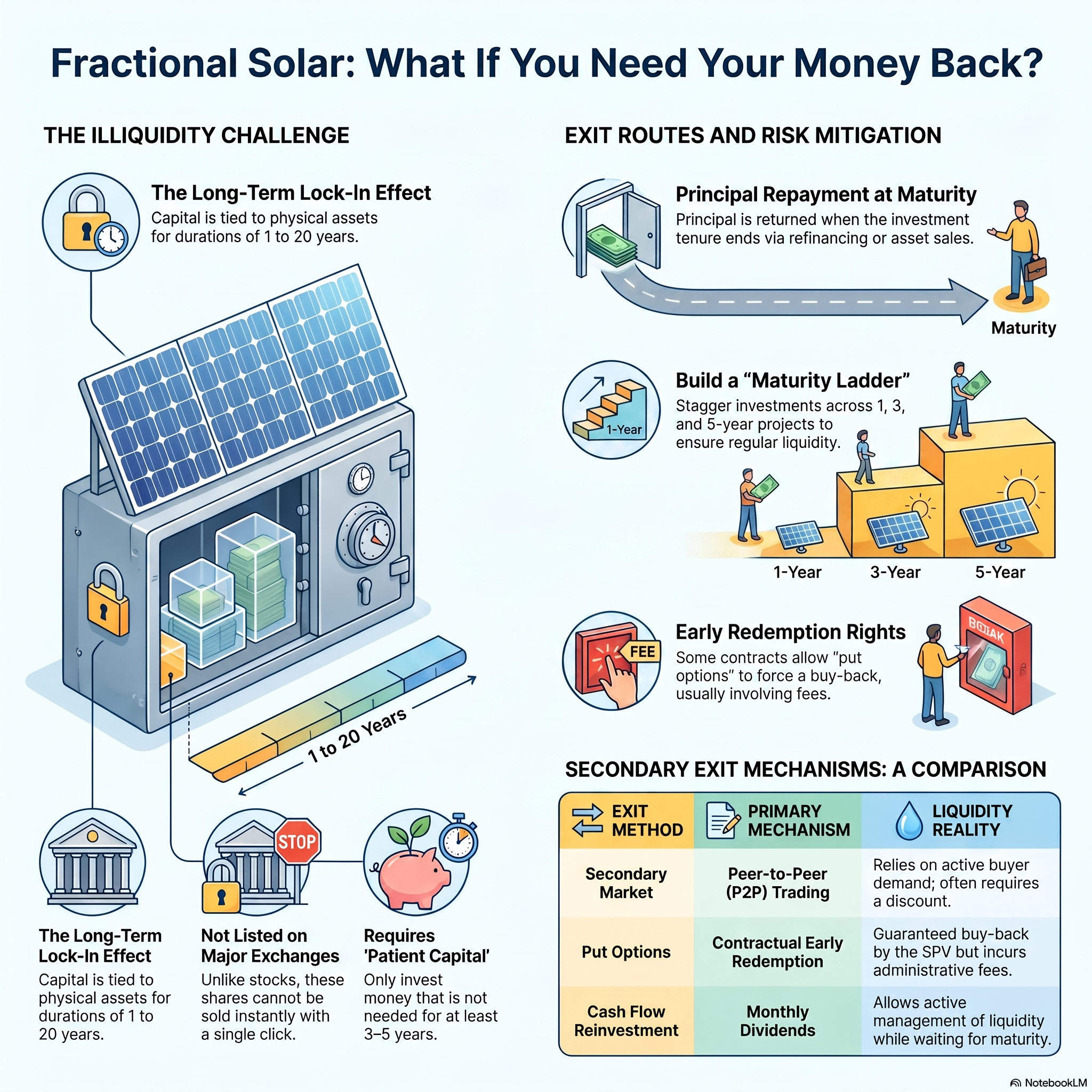 728x90
'손 가는 대로 > 태양광' 카테고리의 다른 글
5-5) 실전 케이스 스터디: 원금 손실을 막는 플랫폼 재무건전성 체크리스트 (0) 2026.07.24 5-4) 수익의 성격과 세금: 조각 투자 수익 절세법과 토큰증권(STO) 트렌드 (0) 2026.07.23 5-2) 투자 구조의 이해: 내 돈은 어떻게 발전소가 될까? (SPC 구조와 투자 원리) (0) 2026.07.22 5-1) 커피 한 잔 값으로 시작하는 태양광 크라우드 펀딩 (0) 2026.07.22 4-4) 리스크를 줄이는 태양광 ETF 및 친환경 펀드 투자법 (0) 2026.07.21