-
5-4) 수익의 성격과 세금: 조각 투자 수익 절세법과 토큰증권(STO) 트렌드손 가는 대로/태양광 2026. 7. 23. 12:49728x90
5장 플랫폼을 활용한 조각 투자
4) 수익의 성격과 세금: 조각 투자 수익 절세법과 토큰증권(STO) 트렌드
---
태양광 조각 투자로 매월 쏠쏠한 수익을 받게 되셨다면 축하드립니다! 하지만 수익이 생기면 항상 따라오는 불청객이 있죠. 바로 '세금'입니다. 투자의 완성은 수익률 창출이지만, 진정한 고수는 '세후 수익률'을 관리합니다. 태양광 조각 투자에서 발생하는 수익은 어떤 세금을 내야 하는지, 그리고 최근 금융시장의 뜨거운 감자인 토큰증권(STO) 제도가 도입되면 세금과 투자 환경이 어떻게 달라지는지 자세히 알아보겠습니다.
1. 조각 투자 수익, 도대체 어떤 세금을 내나요? (현행 세법 기준)
태양광 조각 투자를 통해 받는 수익은 성격에 따라 세금의 종류가 다르게 매겨집니다. 현재 조각 투자 플랫폼(모햇, 루트에너지 등)을 통해 받는 수익은 크게 이자소득과 배당소득, 그리고 사업 구조에 따라 기타소득으로 나뉠 수 있습니다.
* 펀딩 형태(P2P 대출형)의 경우: 이자소득세
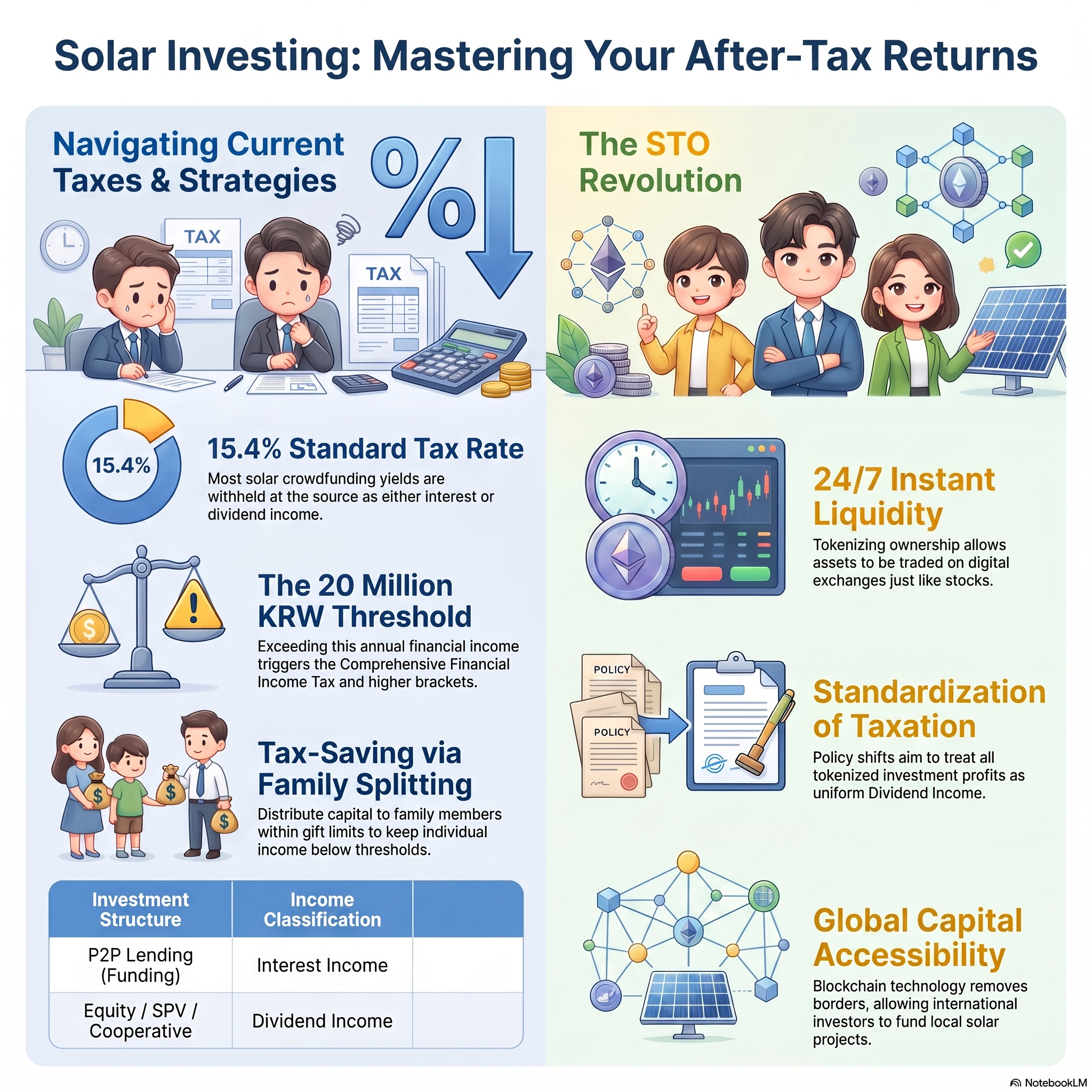
대부분의 초기 태양광 크라우드 펀딩은 투자자가 발전소 건설 자금을 '빌려주고' 그에 대한 이자를 받는 대출(P2P) 형태였습니다. 이 경우 수익은 이자소득으로 분류됩니다. P2P 연계 대출의 이자소득세율은 기존 27.5%에서 현재는 일반 이자소득세와 동일한 15.4%(지방소득세 포함)가 적용됩니다.
* 조합원 참여 및 지분 투자의 경우: 배당소득세
발전소를 소유하는 협동조합의 조합원으로 가입하여 출자금을 내고 발전 수익을 나누어 받거나, 특수목적법인(SPC)의 지분을 보유하여 수익을 받는 경우입니다. 이 수익은 사업의 이익을 분배받는 것이므로 배당소득으로 간주되어 역시 15.4%의 세금이 원천징수(플랫폼에서 미리 세금을 떼고 지급)됩니다.
* 기타소득 적용 사례
일부 혁신금융서비스로 지정된 조각 투자나 투자계약증권 형태의 경우, 명확한 세법 기준이 없어 일시적으로 기타소득세(22%)를 적용받기도 했습니다.
주의할 점 (금융소득종합과세):
만약 태양광 조각 투자 수익을 포함하여 예적금 이자, 주식 배당금 등 1년간 발생한 금융소득(이자+배당)의 합계가 2,000만 원을 초과한다면, 초과분은 다른 소득(근로소득, 사업소득 등)과 합산되어 금융소득종합과세 대상이 됩니다. 누진세율(최대 49.5%)이 적용되어 세금 폭탄을 맞을 수 있으므로 고액 투자자라면 반드시 수익 시기를 분산해야 합니다.
2. 절세의 핵심 꿀팁: ISA 계좌 활용 불가 & 가족 명의 분산
주식 투자를 하시는 분들은 절세 만능 통장인 ISA(개인종합자산관리계좌)를 떠올리실 겁니다. 하지만 아쉽게도 현재 태양광 조각 투자 플랫폼의 상품은 비상장 자산이거나 P2P 상품에 해당하여 증권사의 ISA 계좌나 연금저축계좌에 담을 수 없습니다.
그렇다면 합법적인 절세 방법은 무엇일까요?
* 소득 명의 분산: 가장 기본적이고 강력한 절세법입니다. 본인의 금융소득이 2,000만 원에 육박한다면, 배우자나 성인 자녀의 명의로 플랫폼에 가입하여 투자금을 분산하는 것입니다. (단, 가족 간 증여세 면제 한도 내에서 투자금을 증여한 후 투자해야 합법적입니다.)
* 신재생에너지 인센티브 활용: 정부에서 특정 신재생에너지 프로젝트에 세제 혜택(예: 조합원 배당소득 비과세 등)을 주는 조세특례제한법 항목이 신설되거나 적용되는 펀드인지 투자 설명서를 꼼꼼히 살피는 것도 중요합니다.
3. 게임 체인저의 등장: 토큰증권(STO)과 세금의 미래
태양광 조각 투자의 가장 큰 단점은 한 번 투자하면 중간에 지분을 팔고 현금화하기 어렵다는 '낮은 유동성'이었습니다. 이를 완전히 뒤바꿀 제도가 바로 토큰증권(STO, Security Token Offering)입니다.
STO(토큰증권)란 무엇인가요?
태양광 발전소와 같은 실물 자산이나 그 자산에서 나오는 수익권을 블록체인 기술을 활용해 디지털 형태의 증권(토큰)으로 발행하는 것입니다. 비트코인 같은 가상화폐와 달리, 실체(발전소)가 있고 금융감독원의 엄격한 자본시장법 규제를 받는 합법적인 '증권'이라는 점이 핵심입니다.
STO가 도입되면 태양광 투자는 어떻게 바뀔까요?
1) 24시간 즉시 거래 (유동성 폭발): 조각 투자 지분이 토큰화되어 증권사 앱이나 전문 거래소를 통해 마치 주식이나 비트코인처럼 24시간 실시간으로 사고팔 수 있게 됩니다. 20년 만기 상품에 투자했더라도 급전이 필요하면 언제든 스마트폰으로 토큰을 팔아 즉시 현금화할 수 있습니다. 결제도 T+2일(이틀 뒤 입금)이 아닌 실시간으로 이루어집니다.
2) 세금 체계의 일원화 (금융투자소득세 논의):
정부의 2024년 세법개정안(2025년 적용 예정)에 따르면, 이러한 조각 투자(투자계약증권)에서 발생하는 이익을 배당소득(15.4%)으로 통일하여 과세하는 기준이 마련되었습니다.
더 나아가, 만약 훗날 '금융투자소득세(금투세)'가 도입된다면, 토큰을 사고팔아 남긴 '매매 차익(자본이득)'에 대해서는 일반 주식과 유사하게 취급될 가능성이 큽니다. 투자자 입장에서는 여러 토큰증권과 주식에서 발생한 이익과 손실을 합산(손익통산)하여 세금을 낼 수 있어 유리해질 수 있습니다.
3) 글로벌 자본의 유입: 토큰증권은 국경의 제약이 적습니다. 블록체인 기반이므로 해외 투자자들도 쉽게 한국의 태양광 발전소 토큰을 살 수 있고, 반대로 한국 투자자가 미국의 텍사스 태양광 발전소 토큰(예: 미국 알바레즈 앤 마살(Alvarez & Marsal) 보고서 등에서 다루는 RWA 토큰화)을 쉽게 소유할 수 있는 시대가 열립니다.
요약하자면, 현재 태양광 조각 투자의 수익은 주로 15.4%의 이자 또는 배당소득세를 내야 하며, 금융소득종합과세를 피하기 위한 명의 분산이 핵심 절세 전략입니다. 하지만 조만간 STO 제도가 본격적으로 시행되면, 태양광 발전소 지분은 주식처럼 거래하기 쉬워지고 세금 처리도 금융 당국의 통제 아래 투명하고 일원화될 것입니다.
---
The Nature of Returns and Taxes: Fractional Solar Tax Strategies and the STO Trend
Congratulations if you are earning a steady monthly yield from your fractional solar investments! However, where there is profit, taxes inevitably follow. True investment masters manage their "after-tax returns." Let us deeply explore how fractional solar returns are taxed, the strategies to minimize that burden, and how the massive trend of Security Token Offerings (STOs) is about to revolutionize this landscape.
1. How are Fractional Solar Returns Taxed? (Current Tax Laws)
The returns you generate from solar crowdfunding platforms are categorized differently depending on the legal structure of the investment. Currently, these returns generally fall into two main categories: Interest Income and Dividend Income.
* The Peer-to-Peer (P2P) Lending Structure: Interest Income Tax
Many early solar crowdfunding projects were structured as P2P loans, where you essentially "lent" money for the construction of the plant and received interest. In South Korea, the tax rate for P2P interest income is 15.4% (including local income tax), withheld at the source by the platform.
* The Equity or Cooperative Structure: Dividend Income Tax
If you invest in a Special Purpose Vehicle (SPV) as an equity holder or join a solar cooperative, the returns you receive are a distribution of business profits. Therefore, this is classified as Dividend Income, which is also taxed at 15.4% at the source.
Crucial Warning (Comprehensive Financial Income Tax):
In South Korea, if your total financial income (the sum of all interest and dividends from solar, bank accounts, and stocks) exceeds 20 million KRW annually, the excess amount is combined with your other income (like your salary) and subjected to the Comprehensive Financial Income Tax. This can push you into a much higher progressive tax bracket (up to 49.5%). High-net-worth investors must carefully schedule and diversify their income streams to avoid this "tax bomb."
2. Core Tax-Saving Strategies: Family Income Splitting
Stock investors often use tax-advantaged accounts like the ISA (Individual Savings Account). Unfortunately, fractional solar investments cannot currently be held inside traditional brokerage ISA or retirement accounts because they are non-listed alternative assets or P2P products.
So, what is the legal workaround?
* Income Splitting via Family Members: This is the most powerful tax-saving method. If your financial income is approaching the 20 million KRW threshold, you should split your investment capital by creating platform accounts in the names of your spouse or adult children. (You must legally gift the capital within the tax-free gift allowance limits before investing).
* Monitoring Government Tax Incentives: Always read the prospectus carefully to see if the specific renewable energy project qualifies for any newly introduced tax exemptions under the Restriction of Special Taxation Act.
3. The Game Changer: Security Token Offerings (STOs) and the Future of Taxation
The biggest drawback of fractional solar has been "illiquidity"—the inability to sell your shares and cash out before the 20-year project matures. The revolutionary system that solves this is the Security Token Offering (STO), also known as the tokenization of Real World Assets (RWAs).
What is an STO?
It is the process of converting ownership stakes or revenue streams of a physical asset (like a solar power plant) into digital tokens on a blockchain network. Unlike unregulated cryptocurrencies, Security Tokens represent legal ownership of a real asset and are strictly regulated by financial authorities under capital market laws.
How Will STOs Transform Solar Investing?
1) 24/7 Instant Liquidity: Once fractional shares are tokenized, they can be traded on specialized digital asset exchanges or brokerage apps. You can buy or sell your piece of a solar plant 24/7, just like a stock. Furthermore, blockchain enables near-instant settlement, eliminating the traditional T+2 waiting period for cash withdrawals.
2) Standardization of Taxation:
According to recent policy overhauls and the 2024 tax revision bill in South Korea, the government aims to standardize the taxation of these tokenized investment contract securities. The profits distributed from the token will be clearly taxed as Dividend Income (15.4%).
If a broader Financial Investment Income Tax regime is adopted in the future, capital gains—the profit you make by buying a solar token low and selling it high on an exchange—might be treated similarly to stock capital gains. This would allow investors to offset their solar token losses against their stock market profits, providing immense tax efficiency.
3) Global Accessibility: Blockchains transcend borders. STOs will open doors for international investors to fund domestic solar projects easily, and vice versa. An investor in Seoul could seamlessly hold fractional tokens of a massive solar farm in Texas, revolutionizing cross-border renewable finance.
In summary, manage your current tax bracket by splitting investments among family members to avoid the comprehensive tax threshold. Looking ahead, the institutionalization of STOs will finally bring stock-market-level liquidity and standardized, transparent tax treatments to fractional solar investments. 728x90
'손 가는 대로 > 태양광' 카테고리의 다른 글
6-1) 확장성이 뛰어난 토지형 vs 인허가가 쉬운 일반 지붕형 (0) 2026.07.27 5-5) 실전 케이스 스터디: 원금 손실을 막는 플랫폼 재무건전성 체크리스트 (0) 2026.07.24 5-3) 출구 전략(Exit)과 유동성: 20년 장기 투자, 중간에 돈이 필요하다면? (0) 2026.07.23 5-2) 투자 구조의 이해: 내 돈은 어떻게 발전소가 될까? (SPC 구조와 투자 원리) (0) 2026.07.22 5-1) 커피 한 잔 값으로 시작하는 태양광 크라우드 펀딩 (0) 2026.07.22